© 2026 NervNow™. All rights reserved.

 ByNN Desk
Microsoft Elevate to Target 2 Million Indian Teachers by 2030
Microsoft has launched Elevate for Educators in India, aiming to train 2 million teachers across 200,000 schools by 2030, under the IndiaAI Mission.
Microsoft has launched Elevate for Educators in India, aiming to train 2 million teachers across 200,000 schools by 2030, under the IndiaAI Mission.
Microsoft has launched one of its most ambitious education initiatives globally and India is its first test bed in Asia. On February 20, 2026, at a ceremony at CM Shri School on Pandara Road in New Delhi timed to coincide with the final day of the India AI Impact Summit Microsoft announced the launch of Microsoft Elevate for Educators in India. The programme is designed to skill two million teachers and reach 200,000 schools and educational institutions by 2030.
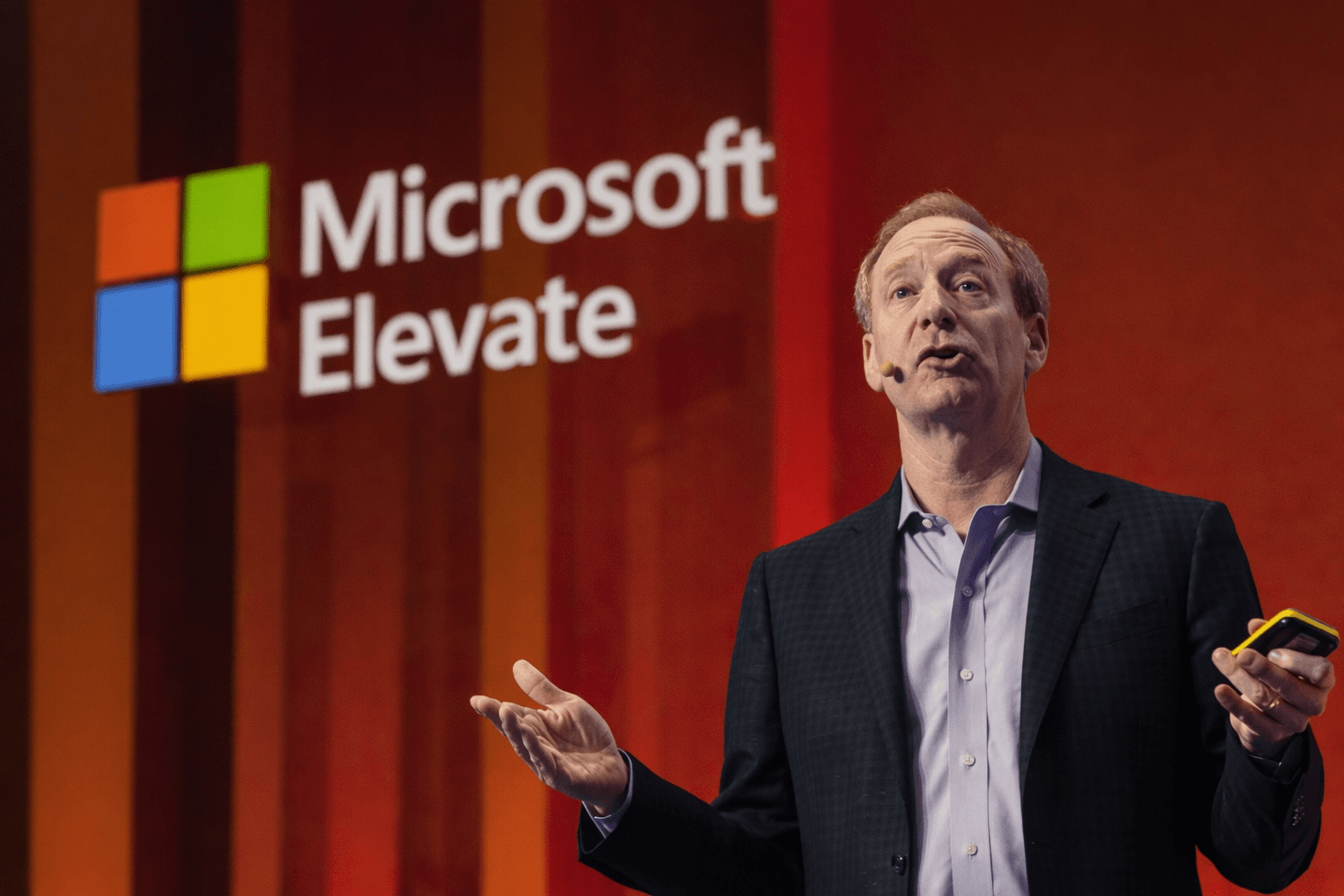
The announcement was made by Brad Smith, Vice Chair and President of Microsoft, and Puneet Chandok, President of Microsoft India and South Asia, in the presence of senior officials from India’s national education bodies.
Microsoft Elevate for Educators is built around three pillars: AI literacy, computational thinking, and responsible technology use, all embedded into everyday teaching workflows rather than treated as a separate subject. The programme will be delivered through a network of government and institutional partners including the Central Board of Secondary Education (CBSE), the National Council of Educational Research and Training (NCERT), the All India Council for Technical Education (AICTE), the National Council for Vocational Education and Training (NCVET), and the Directorate General of Training (DGT), alongside state-level education and skilling departments.
The initiative is projected to expand AI opportunities to eight million students across school, vocational, and higher education systems.
On the infrastructure side, Microsoft will help build AI Ambassadors, Educator Academies, AI Productivity Labs, and Centres of Excellence across 25,000 institutions. A community of two million educators will be brought together for peer learning and professional recognition, supported by a progressive achievement model. The programme also integrates with existing national platforms including DIKSHA and the Skill India Digital Hub.
All 75 CM Shri schools in Delhi will adopt the programme as part of the pilot rollout. India is the world’s largest classroom: home to over 200 million students and nearly 10 million educators. Yet a significant share of those educators have had no formal training in AI even as students increasingly use AI tools in their daily academic lives.
Smith said the goal is for AI to strengthen education and preserve human judgment, not replace it. As AI becomes part of everyday learning, we want to ensure it strengthens education, preserves human judgment, and earns the trust of educators and learners, he said. Chandok described teachers as the architects of India’s AI-first future.
Beginning this academic year, AI and Computational Thinking will be embedded into India’s school curriculum from Grade 3 onwards under the National Education Policy (NEP) 2020. Microsoft Elevate for Educators is designed to support this transition by turning policy into practice at scale.
The bigger picture: Microsoft’s $50 billion Global South commitment
The Elevate for Educators launch is part of a larger announcement made at the India AI Impact Summit. Microsoft Vice Chair Brad Smith revealed that the company is on track to invest $50 billion this decade to bring AI to countries across the Global South, a direct response to data showing that AI usage in the Global North is roughly twice that of the Global South, with the gap widening.
In India specifically, Microsoft already trained 5.6 million people with AI skills in 2025, and has now set a target of equipping 20 million Indians with AI capabilities by 2030. The Elevate for Educators programme targeting two million of those 20 million through the education sector is the centrepiece of that India strategy.
Microsoft Research is also advancing a project called Samiksha a community-centred method for evaluating AI behaviour in real-world contexts in collaboration with Karya and The Collective Intelligence Project in India. Samiksha encodes local language use, culturally specific communication norms, and locally relevant use cases into core AI testing, specifically to catch failure modes that English-first evaluations tend to miss.
India is also the second-largest national developer community on GitHub globally, with 24 million developers and annual growth exceeding 36% in the most recent quarter a foundation that positions the country well to not just consume AI, but build and export it.