© 2026 NervNow™. All rights reserved.

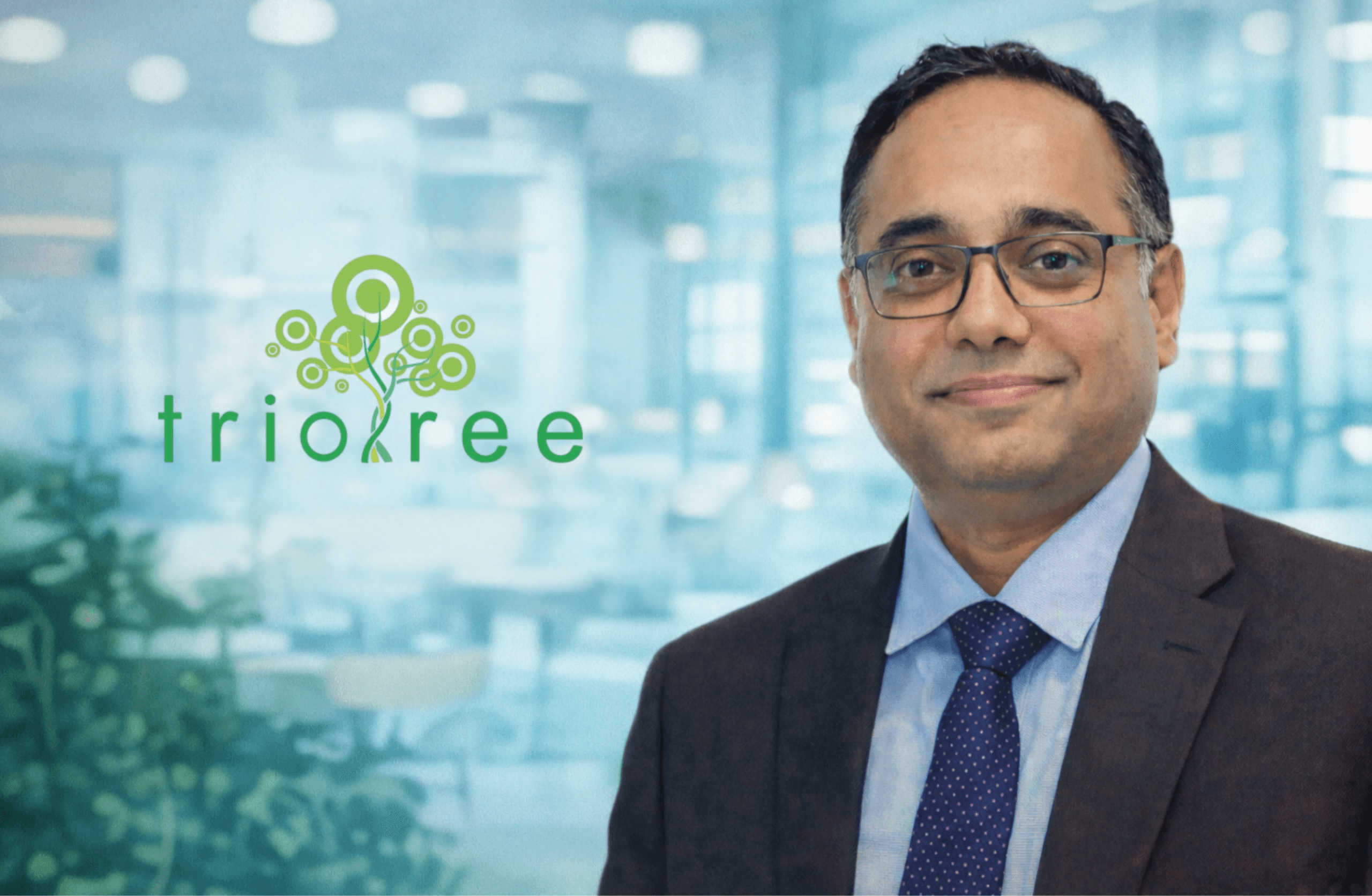

Medicine is Not About Algorithms; Responsibility Must Stay With a Human: Surjeet Thakur, TrioTree CEO
In an interview with NervNow, Surjeet Thakur, CEO & Founder of TrioTree Technologies, speaks on AI in clinical decision-making, the reality of managing 10 million+ patient records, and what healthcare leaders must invest in today to stay competitive by 2030
In an interview with NervNow, Surjeet Thakur, CEO & Founder of TrioTree Technologies, speaks on AI in clinical decision-making, the reality of managing 10 million+ patient records, and what healthcare leaders must invest in today to stay competitive by 2030.
Surjeet Thakur has spent years building health-tech infrastructure at a scale where the margin for error is near zero. As CEO and Founder of TrioTree Technologies, he oversees a platform managing over 10 million patient records with 10,000+ doctors operating on it simultaneously with deployments that span NHS Trust hospitals and government health systems across geographies.
In an interview with NervNow, he speaks about where AI belongs in clinical decision-making, why most hospitals that call themselves digital are still fundamentally reactive, and what the difference between a system that anticipates a crisis and one that merely confirms it actually costs, in lives.
NervNow: TrioTree manages over 10 million patient records and enables 10,000+ doctors to operate simultaneously. At that scale, what architectural decisions become non-negotiable?
Surjeet Thakur: When managing 10 million+ patient records and enabling 10,000+ doctors to operate simultaneously, certain architectural choices become non-negotiable. First, read/write optimization is critical to ensure real-time performance without latency during peak clinical hours. Second, end-to-end data encryption, privacy-by-design architecture, and granular role-based access control are essential to protect sensitive health data. Comprehensive audit trails must be embedded to ensure accountability and regulatory compliance.
At this scale, differentiation is no longer about features. It becomes about reliability under stress, regulatory maturity, and trustworthiness at scale. Hospitals switch vendors because of downtime, security gaps, or compliance risks. Performance, security, and clinical reliability must therefore be built into the core architecture, not added as afterthoughts.
NervNow: Many hospitals have digitized records, but digitization alone doesn’t create intelligence. What separates a digital hospital from a truly AI-native, intelligent hospital ecosystem?
Surjeet Thakur: Digitization is not intelligence; it is a better way of managing work through technology, and we can integrate AI into the built-in software to enhance it further. Earlier, we used to handle physical files and paper records ourselves. Today, those records are shifted to a single digital platform in the form of EMRs, EHRs, and dashboards that make it easier to store and access them. But the system still depends on doctors and admins to interpret the information for the analysis. It remains structured, but it is largely reactive.
Whereas in AI-native hospitals, intelligence is not added later. It is actually built in. It continuously streams real-time data from IoT devices and health records, predicts risks, identifies problems, and works on handling them or advises patients on what to do next. AI generates clinical insights even from unstructured reports, learns from the data through machine learning, and evolves, which makes AI smarter and more intelligent.
NervNow: Healthcare data is fragmented across labs, clinics, insurance systems, and government platforms. How do you design interoperable HIS–EHR systems that enable seamless data exchange without compromising compliance and privacy?
Surjeet Thakur: Healthcare data fragmentation is more than just a technology issue. We can call it an architecture, governance, standards, and trust challenge. Interoperable HIS–EHR systems must be built on strict standards discipline. Clinical exchange should leverage HL7 FHIR for modern API-based interoperability while maintaining legacy compatibility through HL7 v2. Structured vocabularies such as SNOMED CT, LOINC, and ICD-10/11 ensure semantic consistency, while imaging must follow DICOM standards. Claims integration should align with X12/EDI or FHIR Claims frameworks.
Equally critical is embedding privacy by design, incorporating consent management, role-based access controls, encryption, and audit trails into the core architecture. True interoperability succeeds when standards, governance, and compliance work together to build trusted data exchange ecosystems.
NervNow: As AI becomes embedded in clinical decision support, where should we draw the line between augmentation and autonomy in patient care?
Surjeet Thakur: As AI has become a part of our everyday clinical decision-making so far, I strongly believe we must be very conscious about where we draw the line. In my opinion, AI should first act like a sharp assistant for tasks like highlighting patterns, identifying and detecting early risks, and connecting data points humans might miss. But doctors and clinicians must act as the final authority, because medicine is not about data or algorithms. It is more a judgment shaped by experience, empathy, and an understanding of a patient’s fears, values, and circumstances, so it must hold ethical accountability.
Doctors and clinicians must act as the final authority, because medicine is not about data or algorithms.
AI automates repetitive administrative work or operates within low-risk tasks with strict safety boundaries. But in complex diagnoses, decisions that carry emotional weight or serious risk, technology can guide us, but responsibility must always be taken by a human.
NervNow: You have worked with NHS Trust hospitals and government health systems. How does public-sector healthcare digitization differ from private hospital transformation in terms of governance, scale, and risk tolerance?
Surjeet Thakur: While working with the NHS Trust hospitals and several government systems, I have seen differences in both terms of decision-making and framework process. Public-sector digitization is fundamentally governance-led; the decisions there are policy-bound, compliance-heavy, and have population-scale impact as they serve on the regional or national level, so interoperability, data security, and equity become non-negotiable. Risk tolerance is understandably low in public healthcare structures because any disruption can affect millions and carries political and public accountability.
The transformation of private hospitals is more strategy-led. Leadership teams can move faster, pilot innovations quickly, and take calculated risks to improve efficiency, experience, and outcomes. Budgets in private hospitals are more flexible, and decision cycles are shorter. So we can say that public healthcare prioritises stability and inclusivity more, while private healthcare prioritises agility and competitive advantage.
NervNow: IoT, blockchain, and cognitive computing are often discussed in isolation. How do these technologies converge in real hospital environments to create measurable impact?
Surjeet Thakur: The technologies help in strengthening the workflow when they come together, and that is why in smart hospital interfaces, IoT, blockchain, and cognitive computing operate like a single, layered system. IoT devices act as the sensory layer, capturing continuous patient vitals and operational data. Blockchain makes sure that each data point is authentic, secure, and shared with consent. Then comes cognitive AI, which is used to interpret the data and reports, spotting early signs of sepsis, predicting demand for ICU beds, or flagging medication risks before harm occurs.
When this works seamlessly, the results come with fewer errors, better asset use, faster claims, and help doctors save hours otherwise lost to documentation. The technology is creating trust, efficiency, transparency, and safety, and that excites me.
NervNow: In crisis scenarios like pandemics, infrastructure failures, sudden patient surges, how can predictive analytics and AI-driven dashboards transform hospital responsiveness from reactive to anticipatory?
Surjeet Thakur: A crisis is the real test of whether a hospital is merely digital or truly intelligent. As we also witnessed during COVID, hospitals were short of foresight in a global emergency. Beds filled up overnight with 100% occupancy, oxygen ran low, staff burnout peaked, and most dashboards simply confirmed the crisis after it had already escalated. That experience reinforced my belief that crisis management demands anticipation more than reaction. In such situations, predictive analytics allows us to forecast admissions weeks ahead and adjust staffing early.
In crisis situations, predictive analytics allows us to forecast admissions weeks ahead and adjust staffing early.
The same goes for clinical early-warning AI tools — they can flag deterioration before it becomes hard to manage. During a pandemic, the difference between reactive and anticipatory systems is measured in lives. We also use predictive monitoring for system reliability and supply chains, so oxygen, PPE, or critical IT systems don’t fail unexpectedly.
NervNow: Looking toward 2030, what will define the hospital of the future, and what must healthcare leaders invest in today to stay globally competitive?
Surjeet Thakur: The hospital, in upcoming years, will be defined by decentralized, data-driven care. I see the hospitals in the future as a patient-centric intelligence engine that stays connected to individuals wherever they are. The real shift will come from what I call the Healthcare Trinity: the convergence of AI, IoT, and NLP, moving us from reacting to illness to predicting and preventing it. That is where outcomes truly change. Treatment decisions will increasingly rely on integrated clinical, behavioural, and genomic data, enabling precision rather than protocol-based averages.
I see the hospitals in the future as a patient-centric intelligence engine that stays connected to individuals wherever they are.
To stay globally competitive, leaders must focus on investing today in cloud-native, interoperable platforms, HL7-FHIR-aligned data standards, edge infrastructure, predictive analytics, and explainable AI governance. In my view, trust, interoperability, and anticipatory capability will help healthcare leaders thrive in the competitive global ecosystem.
Surjeet Thakur is the CEO & Founder of TrioTree Technologies, a health-tech company specializing in Hospital Information Systems, EHR platforms, and AI-driven clinical solutions at enterprise scale.