© 2026 NervNow™. All rights reserved.


After the Applause: What Did the India AI Impact Summit Actually Deliver?
Founders, operators, and organizers who attended the New Delhi summit share what they got from it -- qualified leads, unexpected government conversations, product pivots, and an unbiased look at where India's AI industry actually stands. Read on.
Founders, operators, and organizers who attended the New Delhi summit share what they got from it — qualified leads, unexpected government conversations, product pivots, and an unbiased look at where India’s AI industry actually stands. Read on.
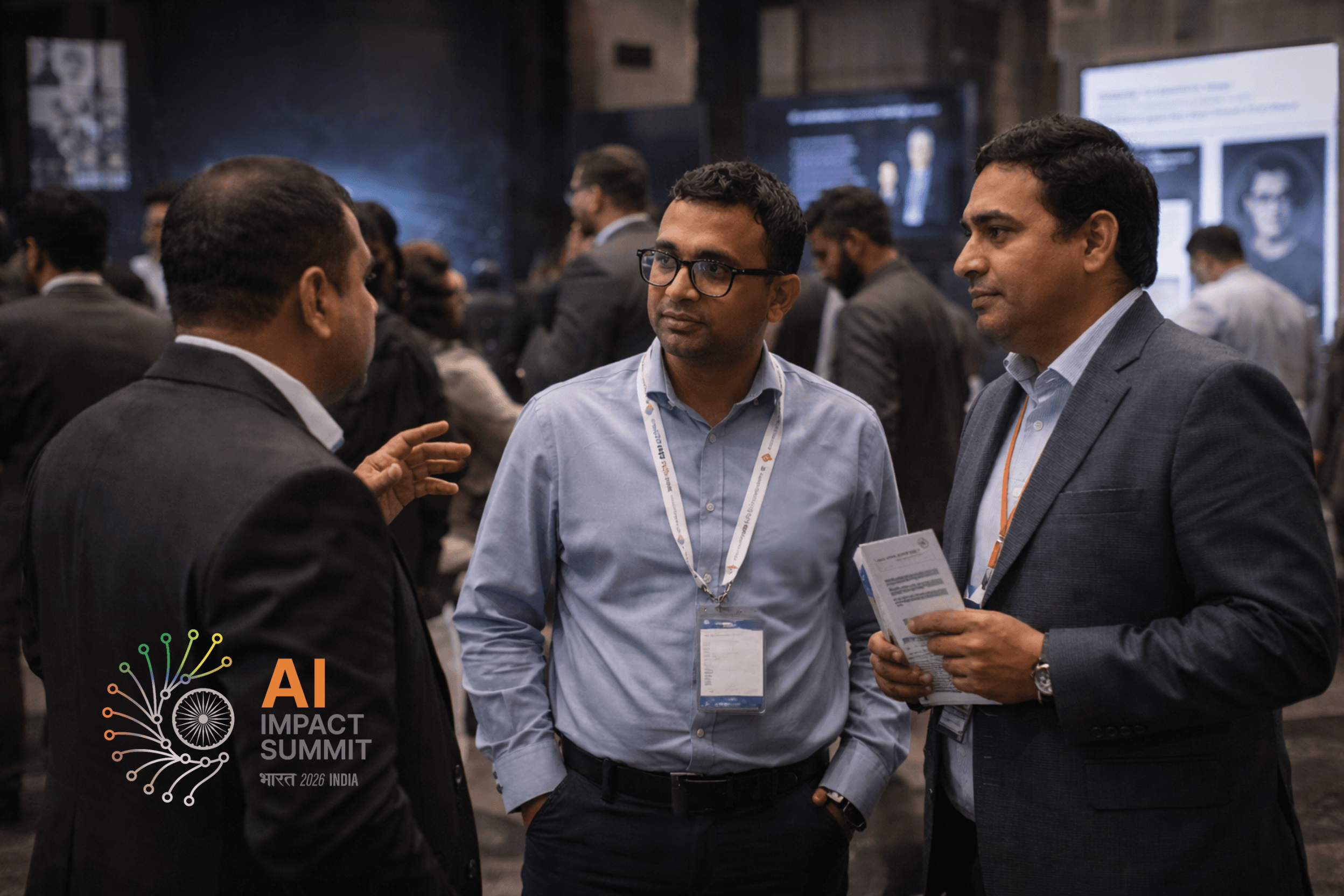
The India AI Impact Summit wrapped up in New Delhi earlier this month with the usual mix of keynotes, pavilion conversations, and business cards exchanged at speed. A few weeks out, we went back to the founders, co-founders, and operators who participated, across startups, media organizations, and tech companies, and asked them to account for what the summit produced. The responses cover leads, revised product strategies, unexpected government conversations, and at least one live product pilot that drew 3,900 sign-ups in three hours.
Across the board, participants pointed to the same factor as the summit’s primary value: the concentration of relevant people in one place, willing to have substantive conversations. Whether those conversations have translated into signed deals or lasting partnerships is a question most are still working through.
Leads, Pilots, and What Came Out of the Conversations
For Ayush Dhadhich, Managing Partner and CEO at Instarto, the summit delivered in volume and specificity. He was held between 15 and 20 qualified conversations spanning IT, supply chain, healthcare, gaming, and BFSI, each focused on real business problems. Of those, four to five had progressed into serious territory: pilot readiness, product-market fit, and finding customers in global geographies, with data infrastructure, chips, and computing all featuring prominently. One or two discussions also touched on AI investment itself.
What Dhadhich also noticed was a pattern shift in the nature of the advisory demand around him. There was, he said, a visible surge in requests related to AI structuring, cost optimization, and investor roadmapping, and perhaps more importantly, traditional sectors that had been slow to engage with AI were now beginning to move. That gravitational shift in enterprise appetite may be the most consequential signal to emerge from his time at the summit.
Shyam Arora, CEO and founder of Meon Technologies, arrived at the summit with measured expectations and left with more than he anticipated. He described serious enterprise leads where conversations went to budgets and integration timelines, early-stage partnership talks with a cloud provider and a cybersecurity firm, and developmental conversations around automation and generative AI.
“Two deals that were moving slowly suddenly gained momentum after face-to-face discussions. In-person trust still matters.”
Shyam Arora, CEO & Founder, Meon Technologies
The unexpected dimension for Arora was government. Meon had not been actively targeting public-sector clients, but summit conversations with government and public-sector leaders opened a line of engagement the company had not previously pursued. He assessed the summit’s pipeline contribution at potentially 15 to 18 percent of Meon’s FY revenue, a number that, if it converts, would make the trip one of the more consequential business development decisions the company has made.
Hardik Pathak, co-founder of Tiesverse, came to the summit wearing two hats — as a participant and as part of the organizing structure — which gave him a broader vantage point than most. On the business side, Tiesverse initiated revenue and lead conversations with Indian AI startups including Sarvam, Gnani, and Evolvve AI, and held a strategic session with Mukesh Jain, CTO of Capgemini, that Pathak described as yielding critical industry perspective. Conversations with Viksit Bharat program officers around border villages in northeast India opened an entirely different category of opportunity, social impact work with policy backing.
The summit also gave Tiesverse a platform to launch a report on India’s information warfare policy in the age of AI, a move that, Pathak said, helped establish the organization’s credibility as a youth-led research and media thinktank with something substantive to say.
Ashish Gupta, Co-founder and CEO of Ednex Global, came to the summit with a specific focus; AI applications in the study-abroad and student counselling space, and left with conversations that had already moved into pilot-stage discussions. He described engagements around AI-led counselling intelligence and predictive student matching, with one ongoing conversation around AI-driven lead scoring accelerating significantly after in-person discussions. He also said the summit opened cross-border AI collaboration opportunities that were not on his immediate roadmap going in but now look strategically relevant. “The summit compressed months of digital conversations into two days,” he said.
How Participants Read India’s AI Ecosystem
Arora described the ecosystem as having moved past the exploratory phase. Enterprises are in active procurement conversations around AI deployment. Startups are producing globally competitive products. Government bodies are engaging with policy frameworks. For Meon, he said, a maturing ecosystem means faster adoption cycles and a growing talent pool to hire from.
Gupta of Ednex Global put it more precisely. India’s AI ecosystem, in his view, has moved from demo mode to deployment mode. Enterprises have shifted from curiosity to budget allocation. What stood out to him at the summit was confidence, a sense that the conversation in the room was no longer about whether AI will disrupt industries, but about how fast it can be scaled responsibly.
“Still feels India lacks a lot in terms of innovation — most Indian startups are replicating international innovation for local needs. That’s not necessarily a bad thing, but it’s where we are.”
Kartik Ahuja, Founder, Jist Club
Kartik Ahuja, founder of Jist Club, took a more critical view. His read was that a significant portion of Indian AI startups are still adapting international innovations for domestic contexts. He acknowledged that market-fit adaptation has produced real businesses, but said the summit made clear how wide the gap is between that work and frontier innovation. Exposure to global companies at the pavilion gave him concrete insight into where the market is heading, which he said directly prompted a revision of Jist Club’s product strategy and go-to-market approach.
Pathak’s read from Tiesverse was that India’s AI startups are moving quickly. Sarvam being the clearest example of a homegrown player with genuine technical ambition, but that reaching global competitiveness requires deeper scaling support and more centralised institutional backing. The talent exists. Getting it to compete on the world stage is a different challenge.
KRSN’s Live Pilot: 3,900 Sign-Ups in Three Hours
The summit also witnessed a demonstration by KRSN.AI, an Indian startup building a real-world social networking platform. The company ran a live pilot at the summit in which students and volunteers distributed flyers to attendees, inviting them to register on the platform. The AI then analyzed professional backgrounds, startup stages, industry interests, and collaboration goals to generate curated introductions, connecting students with mentors, founders with investors, and innovators with potential collaborators who were physically present at the venue.
Within three hours of opening registrations, KRSN.AI reported 3,900 sign-ups, a number the company compared to Facebook’s early 24-hour benchmark of 1,200 to 1,500 users. Kartik Dhawan, Director of KRSN.AI, framed it as proof that community energy and clarity of purpose can substitute for large budgets at the early stage. The company has committed to keeping the summit unit of the platform active so that the connections made at the event continue to develop beyond the conference halls, with a broader launch planned for the near future. All user data, Dhawan emphasized, will be hosted exclusively on Indian servers, data sovereignty being a founding principle of the platform’s architecture.
Was it Worth the Time & Cost?
Ahuja of Jist Club was direct: no revenue came from the summit, no pilots were signed. A promising partnership was initiated and his strategic direction shifted. His six-month measure of success is whether the product improvements that followed those insights create measurable impact for his stakeholders.
Arora at Meon put the summit’s contribution to his FY revenue pipeline at 15 to 18 percent if the leads convert. He also said the summit moved Meon’s standing in certain enterprise circles — from a company people had heard of to one they were actively considering as a transformation partner. He described that shift as worth more, over time, than any single deal closed at the event.
Gupta measured ROI across three dimensions: strategic clarity, access to decision-makers, and speed of execution. He said that if two of the pilot conversations convert in the next six months, the financial return will be significant. The intellectual return, a clearer understanding of where AI is actually heading, he said is already paying off. The summit also sharpened Ednex Global’s product direction. Gupta said the company is now looking at embedding AI across the entire student journey, from enquiry through enrolment to visa readiness, treating it as a foundational layer across the business.
Six Months From Now, What Success Might Look Like
- Instarto (Ayush Dhadhich): Converting pilot discussions into signed engagements across healthcare, BFSI, and supply chain; continued growth in AI advisory mandates from traditional sectors.
- Meon Technologies (Shyam Arora): At least two leads converted into long-term partnerships; one major strategic partnership activated; visible traction in government and regulated sectors.
- TIESVERSE (Hardik Pathak): Networking leads converted into tangible partnerships and revenue; AI Ethics workshops moved from concept to execution; TIES established as a credible voice in India’s AI governance and education sector.
- Jist Club (Kartik Ahuja): Summit insights applied to product improvements that create positive impact for stakeholders; strategic opportunities identified at the pavilion pursued and developed.
- Ednex Global (Ashish Gupta): Two AI pilot conversations converted into scalable deployments; measurable improvement in lead conversion efficiency; AI embedded across the student journey from enquiry to visa readiness.
- KRSN.AI (Kartik Dhawan): Broad platform launch completed; Summit unit connections matured into active collaborations; international expansion underway with data infrastructure anchored in India.
Pathak’s measure of success at Tiesverse is specific: converting networking leads into partnerships and revenue within six months, and moving the AI Ethics workshop programme, currently in development for schools and colleges, from planning into active delivery. The summit, he said, sharpened Tiesverse’s conviction that ethical AI education at the school level is an underserved space, and the organization is now building a programme around it.
Scorecard
Taken together, what participants describe is a summit that compressed months of outreach into a few days. Conversations that would have taken multiple emails, introductions, and scheduling cycles happened in a single afternoon. That speed has real value, and it showed up in every account collected for this piece.
What also came through, with some consistency, is the gap between India’s AI ambitions and its current output. The enterprise appetite is real, the talent is real, and the startups building globally competitive products are also real. Scaling infrastructure like capital, policy, and institutional support, is still being assembled, and participants also said so. That candor, from people with skin in the outcome, is worth taking seriously.
The deals from this summit are still being negotiated. The partnerships are still being tested. The product pivots inspired by what participants saw and heard are still being built. Six months from now, the actual scorecard will be clearer. As Gupta put it: the real question coming out of the summit is whether companies are experimenting with AI, or embedding it into how the business actually runs.
Disclaimer: The responses in this article were shared directly by participants and represent their own views and assessments. NervNow has not independently verified the business outcomes, figures, or projections cited. This article is based on inputs received as of February 2026.
More on India AI Impact Summit 2026
Altman vs Amodei: AI Rivals Refuse to Hold Hands at India AI Summit
Sundar Pichai Meets PM Modi at India AI Summit; Google Signals Deeper AI Partnership with India
With Sarvam and Krutrim, Has ‘Make in India’ in AI Finally Arrived?
Sam Altman Calls for IAEA-Like Global Body to Regulate AI at Summit
AI Impact Summit Extended After Overwhelming Turnout
PM Modi Inaugurates India AI Impact Summit 2026 at Bharat Mandapam