© 2026 NervNow™. All rights reserved.

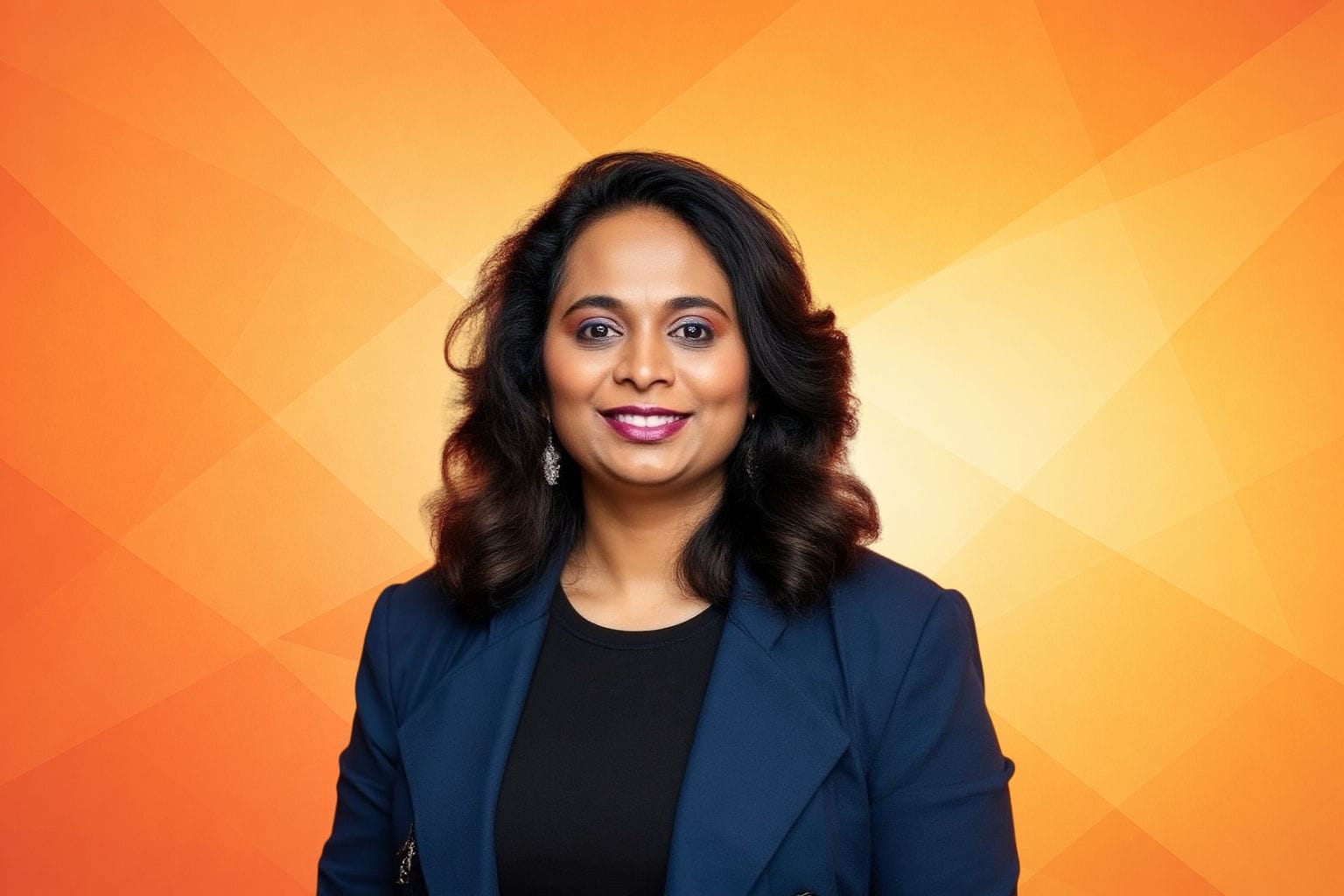

Women Must Understand How AI is Sold, Procured, and Regulated: Chaitra Vedullapalli, Women In Cloud
On International Women's Day 2026, as AI reshapes every layer of the economy, NervNow sat down with Chaitra Vedullapalli to find out what the AI economy gets wrong, and who pays for it.
Vedullapalli does not talk about women in tech the way most people do. She does not reach for representation statistics or panel diversity counts. She reaches for revenue. How much marketplace revenue is generated by women-led partners? Who controls distribution? Who holds equity in the intelligence layer? These are the questions she has been asking, and engineering answers to, for over two decades. On International Women’s Day 2026, as AI reshapes every layer of the economy, NervNow sat down with her to understand how she is engineering women’s growth inside a world of hardcore tech.
Chaitra Vedullapalli
Co-Founder & President, Women In Cloud · Co-Founder & CMO, Meylah · Managing General Partner, MXW Ventures
Chaitra Vedullapalli is a GTM strategist, entrepreneur, and filmmaker who created the 4P Cosell GTM Method, a framework that has reshaped how companies partner with hyperscalers. She was the youngest director at Oracle, has received proclamations in Washington and New York, and sits on boards including the IMPACT Seat Foundation and the Microsoft Alumni Board of Trustees. Born in Bengaluru, she studied electrical engineering at RV College of Engineering before building a career that spans cloud marketplaces, venture investing, policy advocacy, and film. Women In Cloud, which she co-founded, has unlocked $600 million in economic access across 120,000 individuals in 80+ countries.
The AI economy is being built right now, and most of the women architecting its pipelines, governing its data, and wiring its infrastructure will not own any of it. During a discussion with NervNow ahead of International Women’s Day 2026, Vedullapalli made the case that this is not an accident. It is a design flaw embedded in procurement systems, distribution channels, and hyperscaler field incentives that have historically defaulted to exclusion. She has spent two decades building the marketplace access, cosell infrastructure, and policy levers to rewire those defaults, and with $600 million in economic access unlocked and a $1 billion target by 2030, the architecture is already showing results.
Excerpts:
NervNow: What was the insight the industry was missing?
Chaitra Vedullapalli: The industry thought marketplace strategy was technical. It was not. It was distribution architecture. Most companies focused on integration. I focused on incentive alignment. A joint product offer, promotion engine, publicity air cover, and hyperscaler partnership alignment. That is the 4P Colaunch method for Coselling. As a woman entrepreneur, I understood what exclusion feels like. I saw that access is structural. If women are not in the room, you redesign the room. Cosell was not about listing. It was about leverage.
Revenue is the ultimate measure of inclusion.
NN: Women In Cloud has unlocked $600 million in economic access. What’s the honest answer to why that number isn’t $5 billion yet?
CV: Capital, procurement networks, distribution channels, infrastructure, and visibility are still not equitably distributed. Women founders continue to face three structural barriers: limited access to enterprise distribution, constrained access to growth capital, and insufficient proximity to hyperscale field incentives. Until these systemic gaps are addressed, true parity in entrepreneurship will remain a work in progress. Till date, we have unlocked $600 million by engineering access through marketplaces and co-sell partnerships. But to reach $5 billion, capital must align seamlessly with distribution. Without that alignment, scale inevitably slows.
NN: Your #empowHER50 campaign spotlights women behind AI and DevSecOps infrastructure. How does their invisibility shape the AI we are building?
CV: That is a beautiful question. AI is only as inclusive as the pipelines behind it. When the women architecting DevSecOps, data governance, and infrastructure are invisible, their influence is reduced. That shapes product decisions, risk models, and deployment priorities. empowHER50 is about shifting the narrative from models to makers. When you spotlight infrastructure leaders, you change who governs intelligence.
NN: Your workforce programs, like Lab in a Box and AI/Cloud/Cyber scholarships, are on-ramps into the AI economy. How do you ensure women are not just entering it, but positioned to govern it?
CV: Entry is not enough. Governance requires ownership.
Our Lab in a Box and AI scholarships are designed for certification, marketplace fluency, and enterprise career exposure. Women must understand how AI is sold, procured, and regulated. If you control distribution and understand infrastructure, you influence power. That is governance.
AI is now infrastructure. Cosell must be marketplace first.
NN: You pioneered the Cosell model with Microsoft and Google. What does a next-generation Cosell GTM strategy look like for a women-led AI startup trying to break into enterprise distribution?
CV: AI is now infrastructure. Cosell must be marketplace first.
A next generation strategy includes a joint product offer aligned to hyperscaler priorities, community driven promotion, earned media authority, and field level enablement — four components that together reduce brand risk, simplify procurement, and accelerate conversion. That is how a women-led AI startup moves from visibility to enterprise velocity.
NN. Global Capability Centers in India are becoming major AI delivery hubs. What are the three levers that actually move the needle on women moving into leadership, not just execution?
CV: First, certification tied to revenue roles, not just delivery roles. It is not enough to have technical certifications. We need women in customer-facing, revenue-generating, solution-selling, and P&L-aligned roles who are certified. Leadership comes after being responsible for revenue.
Second, executive sponsorship inside GCCs. Mentorship is giving advice. Sponsorship is speaking up for someone. Senior leaders must actively support high-potential women by suggesting them for stretch roles, global mandates, and board-level visibility.
Third, visibility through global marketplace exposure. When talent is visible outside of internal delivery, leadership moves faster. Women get closer to business customers, hyperscalers, and cross-border opportunities through global marketplaces and co-sell ecosystems. When women move from execution to revenue accountability, leadership follows.
NN: India is one of the world’s largest AI talent exporters, yet women’s participation drops sharply at senior levels. How does Women in Cloud’s India strategy address that cliff?
CV: The drop off happens at scale inflection points. Our strategy connects AI skilling with hyperscaler cosell exposure and innovation competence. We are betting on university partnerships, enterprise GCC alliances, and global cloud players. When women control revenue pipelines, not just delivery pipelines, retention improves.
NN: As AI regulation accelerates globally, what is the one policy ask that women in tech should be making loudly right now, and are not?
CV: The issue is that the enterprise distribution channels, cloud marketplaces, and public procurement systems are complex and relationship driven. Women often lack proximity to these networks.
Policy to champion is inclusive procurement quotas in digital infrastructure spending and mandatory transparency reporting on marketplace revenue distribution by founder demographics. Revenue is the ultimate measure of inclusion.
NN: You were the youngest director at Oracle, co-founded two companies and a venture fund, and produced an Oscar-qualifying documentary. What is the cognitive framework that lets you function across all of it?
CV: I think in systems, not sectors. GTM strategy, venture investing, policy, and film all shape narratives and distribution. Capital flows where narrative leads and infrastructure supports. When you understand how ideas move, how capital moves, and how policy shapes both, you design ecosystems. That is AI economy architecture.
Question every B2B tech CEO should be asked: How much marketplace revenue is generated by women-led partners in your ecosystem? Not how many panels you hosted. Not how many posts you shared. Revenue reveals priority.
NN: Women’s Day risks becoming performative. What is the one question every B2B tech CEO should be asked on March 8th that they are never actually asked?
CV: How much marketplace revenue is generated by women-led partners in your ecosystem? Not how many panels you hosted. Not how many posts you shared. Revenue reveals priority.
NN: By 2030, Women in Cloud aims to generate $1 billion in economic access. What needs to be true about the AI economy by 2027 for that goal to feel inevitable, and what is the biggest wildcard that could derail it?
CV: The decoupling of labor from intelligence means value accrues to those who control infrastructure, capital, and distribution. Women in tech must move from representation conversations to ownership conversations. The future of economic power will belong to those who shape policy, control distribution, and hold equity in the intelligence layer. That is the real frontier.
The wildcard is consolidation, energy availability, and geopolitics. If AI infrastructure centralizes into too few hands without inclusive design, access narrows. But if we align capital, distribution, and visibility now, $1 billion becomes a structural outcome, not a hope.
This interview was conducted by NervNow for its Women’s Day Special Edition, March 8, 2026. All responses are reproduced directly from Chaitra Vedullapalli’s submissions and have been lightly edited for formatting only. No responses have been altered in substance.
MORE ON AI
Without System Maturity, AI Remains Just a Tool: Hector’s Meher Patel on What Brands Keep Getting Wrong
AI in Retail: What Reliance, Tata are Building that Other Retailers are Not
Medicine is Not About Algorithms; Responsibility Must Stay With a Human: Surjeet Thakur, TrioTree CEO
After the Applause: What Did the India AI Impact Summit Actually Deliver?