© 2026 NervNow™. All rights reserved.

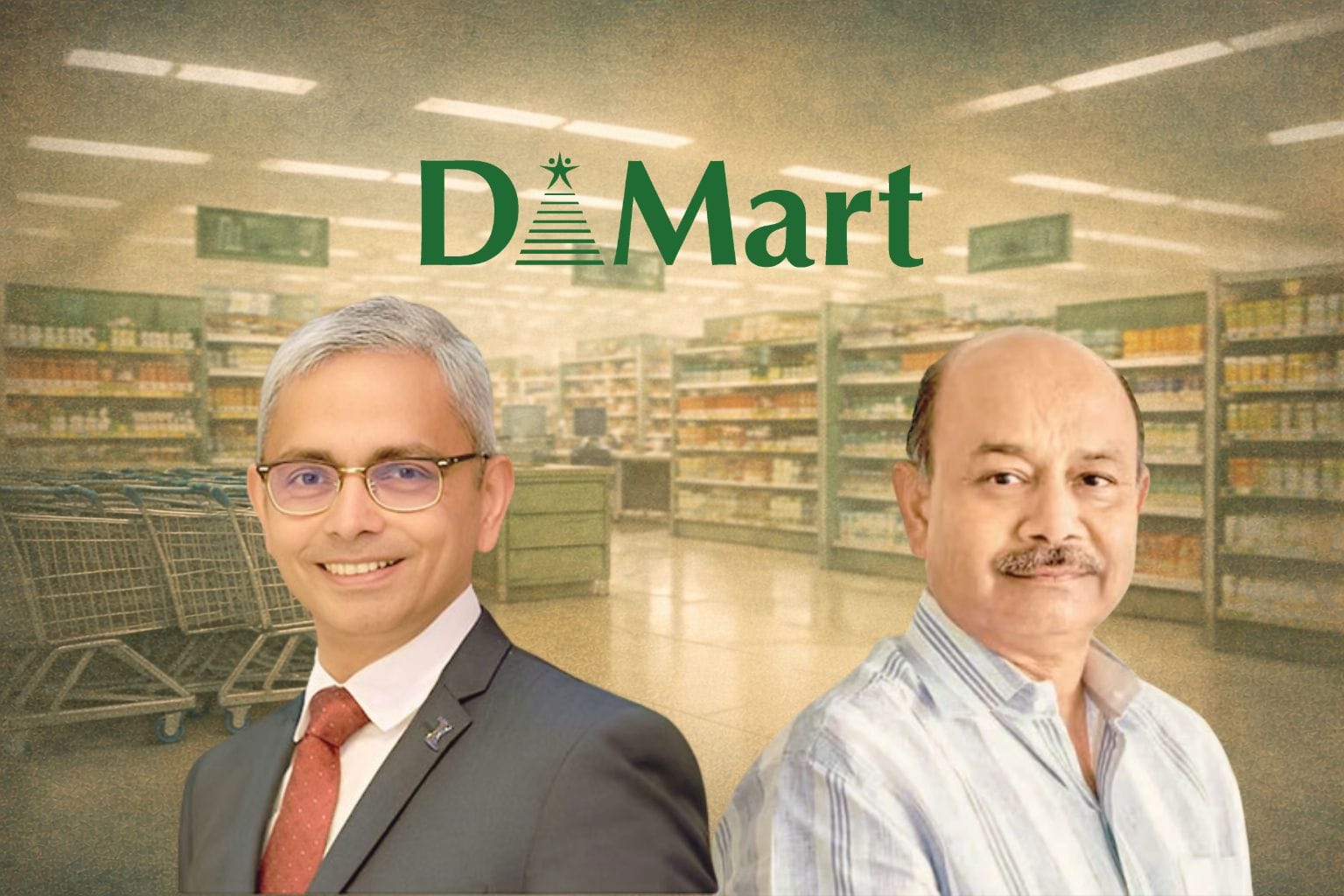

How D-Mart Stays Profitable Without an AI-First Strategy and How Long It Can Last
D-Mart’s operational discipline has kept it ahead of better-funded competitors for years. Its deliberately low-tech approach, once a strategic asset, is becoming a structural question mark as Reliance and Tata build cross-category AI and quick commerce rewrites the expectations of India’s urban consumer.
D-Mart’s operational discipline has kept it ahead of better-funded competitors for years. Its deliberately low-tech approach, once a strategic asset, is becoming a structural question mark as Reliance and Tata build cross-category AI and quick commerce rewrites the expectations of India’s urban consumer. Here is what the numbers actually show, and what retail leadership teams need to understand.
Avenue Supermarts closed FY2025 with revenue of INR 57,790 crore and a profit after tax of INR 2,927 crore, a 16.7 percent increase in revenue and 8.6 percent growth in net profit year on year. In Q3 FY2026, ending December 2025, the company delivered an operational beat: revenue grew 13.3 percent year on year to INR 18,100.88 crore, EBITDA grew 20.2 percent to INR 1,463.37 crore, and EBITDA margin expanded to 8.1 percent from 7.6 percent the prior year, significantly ahead of analyst estimates. PAT for Q3 FY2026 came in at INR 855.78 crore, up 18.3 percent. The store count reached 442 by end of Q3 FY2026, with 27 new stores added in the first nine months of the year. By any conventional measure of Indian retail, D-Mart is a success story that most companies in the sector cannot approach. It has reported net profit in every full financial year since its IPO in 2017, and has not voluntarily exited a physical store location in its operating history.
The Q3 FY2026 margin expansion was attributed by management to better sourcing efficiencies, changes in discounting strategy, and the benefit of GST rate adjustments in certain categories. Some brokerages have flagged that a portion of these gains may reflect one-off factors, including inventory liquidation by FMCG companies ahead of GST changes. The broader question this brief asks is not whether D-Mart’s model works. It clearly does. The question is whether the conditions that made it work are the same ones that will define Indian retail over the next five years, and whether the operational strengths that built this company are sufficient on their own to navigate what is coming.
INR 57,790 crore
revenue, FY2025
20.2%
EBITDA growth, Q3 FY2026
442
total stores, December 2025
5.6%
like-for-like growth, Q3 FY2026
What made D-Mart unbeatable?
The architecture of D-Mart’s competitive advantage has three components that reinforce each other. Understanding them matters since the same architecture that created the advantage also defines its limits.
The ownership model
Unlike virtually every other large-format retailer in India, D-Mart owns the majority of its store properties rather than leasing them. Real estate leasing typically consumes 4 to 6 percent of revenues for a brick-and-mortar retailer. D-Mart’s rental costs come in at less than 0.2 percent of revenue, a structural cost floor that competitors on conventional lease agreements cannot reach regardless of how efficiently they operate. The trade-off is capital intensity and deliberate slowness in expansion, but the compounding effect of that owned-property base is a permanent advantage that no amount of operational efficiency on a leasehold estate can fully close.
Inventory velocity
D-Mart’s product assortment is deliberately narrow: foods, non-food FMCG, and general merchandise, with a focus on fast-moving daily consumption goods and known brands only. D-Mart’s inventory turnover ratio stood at 14.6 times in FY2024 and 13.6 times in FY2025, as reported in the Avenue Supermarts H1 FY2026 Investor Presentation, filed with BSE October 2025. There is a gradual deceleration that reflects the slight elongation in inventory days from 29.2 to 31.4 days over the same period. These remain strong numbers for large-format grocery retail. The mechanism by which D-Mart converts this velocity into procurement advantage is its supplier payment discipline: it settles supplier invoices within approximately 7 days, extracting price concessions that competitors dependent on extended credit cycles cannot access.
The reinforcing loop
Fast inventory turns generate cash, cash pays vendors quickly, vendor terms improve, procurement costs fall, prices to consumers drop, footfall increases, and inventory turns faster still. The entire model is a compounding machine built on physical-world operational efficiency, executed with unusual consistency over more than two decades. D-Mart’s EDLP model consistently prices products below most offline competitors, a price advantage that is the output of its cost structure, not a promotional decision.
What is conspicuously absent from this architecture is any meaningful investment in consumer data. D-Mart runs no loyalty program, collects no structured first-party behavioural data on its customers, and has not built a customer identity layer that would allow it to understand who its shoppers are beyond the aggregate transaction patterns visible at the store level. D-Mart has never disclosed a strategic rationale for this absence. What its filings and management commentary consistently return to is price and operational efficiency, not customer relationship management. Whether the omission was deliberate philosophy or simply a matter of prioritization, the practical consequence is the same: two decades of habitual footfall built entirely on price leadership, without the data infrastructure that would allow the company to understand, anticipate, or retain its customers in any individualised way.
Where the numbers show pressure
Like-for-like growth for mature stores, defined as stores two years and older, has been on a decelerating trend: 6.8 percent in Q2 FY2026 and 5.6 percent in Q3 FY2026, compared to higher levels in earlier periods. Anshul Asawa, then CEO-Designate, noted in the Q3 FY2026 statement that revenue growth was partially impacted by deflation in staples, which is a category-level headwind rather than a structural one. That context matters as the LFL deceleration is real, but attributing all of it to competitive pressure would be imprecise.
On margins: EBITDA margin contracted from 8.1 percent in H1 FY2025 to 7.6 percent in H1 FY2026, with Q2 FY2026 EBITDA margin at 7.3 percent, down 29 basis points year on year, as employee and overhead costs intensified alongside revenue growth. Q3 FY2026 recovered to 8.1 percent, which brokerages have acknowledged as a genuine beat. The honest read is that the margin trajectory has been volatile rather than uniformly compressing, and the Q3 recovery demonstrates that the operational model can still flex. Whether that recovery is structural or reflects one-off sourcing benefits is the question that remains open.
Sales per square foot stood at INR 9,290 in Q3 FY2026, compared to INR 9,317 in Q3 FY2025, a marginal year-on-year decline that, in the context of staples deflation, is not alarming on its own but is directionally worth watching. Avenue Supermarts discontinued DMart Ready order-and-pick-up operations in five smaller cities: Amritsar, Belagavi, Bhilai, Chandigarh, and Ghaziabad, during Q2 FY2026, showing a deliberate pivot toward metro markets where digital grocery demand is strongest. Revenue from DMart Ready grew approximately 20 percent year on year in Q3 FY2026 on the rationalized base.
What makes this move strategically significant is its timing: D-Mart is retreating from smaller cities in its digital channel at precisely the moment quick commerce players are expanding into those same markets. Blinkit, Zepto, and Instamart are moving aggressively into tier-2 and tier-3 cities, building the consumer habits and data infrastructure in those markets now. D-Mart’s physical stores in those cities remain strong, but the company is ceding the digital relationship with those consumers to platforms that will use the data they accumulate to compete more effectively over time. That is the tension worth watching: D-Mart’s metro digital pivot is commercially rational today, but it leaves the field open for quick commerce to build the data moat in smaller cities that D-Mart’s physical stores currently dominate.
The most direct statement on competitive pressure came from the prior CEO, Ignatius Navil Noronha, who said in January 2025: “We clearly see the impact of online grocery formats, including DMart Ready, in large metro DMart stores which operate at a very high turnover per square feet of revenue.” D-Mart does not disclose a metro versus non-metro revenue breakdown in its public filings, so the exact scale of this exposure cannot be quantified from available primary sources. What management has confirmed is that the pressure is concentrated in the highest-revenue-per-square-foot stores, which are the metro locations, and that it is visible. It has not, as of Q3 FY2026, translated into structural deterioration, but it remains the most material disclosed competitive variable in D-Mart’s operating environment.
THE BIG QUESTION: D-Mart’s metro stores are seeing the direct impact of quick commerce. Management has said so on record. The pressure does exist. However, the question is whether D-Mart’s current strategic posture, which does not include a customer data layer or a meaningful speed-of-delivery response, is adequate to manage it over a three-to-five-year horizon.
The data question: What AI-first approach requires?
It would be inaccurate to say that the absence of an AI strategy is hurting D-Mart’s P&L today. There is no evidence in D-Mart’s quarterly results, management commentary, or analyst coverage that links current financial performance directly to the absence of AI. D-Mart’s Q3 FY2026 beat demonstrates that a model built on operational discipline, owned properties, and price leadership can still deliver strong results without any of the data infrastructure that its competitors are building.
The more accurate observation is this: every AI system, whether for personalization, inventory optimization, demand forecasting, or customer retention, runs on data. And the quality of the output is a direct function of the quality and structure of the input. Reliance has 349 million registered customers transacting across grocery, electronics, fashion, pharmacy, and financial services. Tata Neu connects BigBasket, Croma, 1mg, Air India, and Taj hotels under a single loyalty layer. Both companies have been building identity-linked, cross-category consumer datasets for years. When they deploy AI on top of that data, the models learn correlations that a retailer with no customer identity layer structurally cannot see.
ALSO READ: AI in Retail: What Reliance, Tata are Building that Other Retailers are Not
D-Mart’s 35.3 crore bill cuts in FY2025, growing 14 percent year on year, represent a transaction volume that, if properly structured and identity-linked, would be among the most valuable first-party datasets in Indian grocery retail. At present, that data exists as aggregate store-level transaction records without a unified customer identity connecting individual purchases across visits, stores, or time. The consequence is not that D-Mart’s prices are wrong or its stores are poorly run. The consequence is that when the competitive environment shifts toward personalization, predictive assortment, and AI-driven customer retention, D-Mart will be making those decisions from a position of structural data disadvantage relative to competitors who have been building that infrastructure for years.
Avenue Supermarts injected INR 175 crore into the DMart Ready business in March 2025, and the DMart Ready platform added 10 new fulfilment centers in Q2 FY2026. These are signs of investment intent in the digital channel. They are not, however, equivalent to building a customer identity layer across the core physical business, which generates the substantial majority of D-Mart’s revenue, and where the data that would power any meaningful AI system actually resides.
The absence of AI is not hurting D-Mart today. What matters is the precondition for AI: structured, identity-linked first-party data, which D-Mart has not built. Every year that passes without it is a year of compounding data disadvantage against competitors who are already building on top of theirs.
What D-Mart’s model can still defend
The owned-property model, the supplier relationships built over two decades, and the cost structure that produces prices consistently below most offline competitors are genuine advantages that cannot be bought or assembled quickly. The large-basket, planned weekly shop, a family loading up on staples, FMCG, and household goods, is a mission that D-Mart is structurally better placed to serve than a quick commerce dark store, which optimises for speed and convenience rather than breadth and unit economics on large baskets.
D-Mart’s expansion into tier-2 and tier-3 cities, where quick commerce penetration is limited and the price-sensitive consumer remains underserved by organized retail, is a defensible growth strategy. Quick commerce faces real scalability constraints in smaller markets: dark stores are capital-intensive, delivery economics in lower-density areas are challenging, and the behavioral shift toward convenience-first purchasing has not yet reached the depth outside metro India that it has within it. In cities and towns where Blinkit is not economically viable and JioMart’s hyperlocal network has not reached density, D-Mart’s physical presence and price position remain powerful. D-Mart has consistently added 40 to 50 stores annually and has not publicly committed to a long-term store count target. The expansion runway in non-metro India, where organized retail remains underpenetrated and quick commerce economics are unfavorable, is a real structural opportunity.
Three things D-Mart’s leadership needs to decide
Whether to build a customer identity layer
The decision to not build a loyalty program or customer identity layer was rational in a competitive environment where price leadership and physical convenience were sufficient. The question for the current leadership is whether that rationale still holds as competitors build AI systems on top of exactly the kind of data D-Mart is not collecting. Building this infrastructure is more than building a technology project. It is a data governance decision, and it is the precondition for any AI investment that could compound rather than merely automate. The 35.3 crore annual bill cuts D-Mart already processes are the raw material. The question is whether to structure them.
How to position DMart Ready
The platform added 10 new fulfilment centres in Q2 FY2026. That is forward movement. The strategic question is what DMart Ready is being built toward, whether it is a convenience channel competing on delivery speed, a complementary channel for large-basket planned orders, or something else entirely. A clear positioning determines the capital allocation, the technology investment, and the customer data strategy that should underpin it.
Whether expansion strategy accounts for the technology decision
Opening 40 to 50 stores annually in markets where quick commerce is not yet a significant competitive force is rational capital allocation. What makes the technology question more urgent than it appears is that data infrastructure decisions compound slowly in one direction or the other, and D-Mart’s competitors have already been building for several years. Anshul Asawa, who assumed the role of Managing Director and CEO on February 1, 2026, succeeding Ignatius Navil Noronha, will face this as one of the defining strategic questions of his tenure.
D-Mart is not under threat. The Q3 FY2026 results demonstrate that the operational engine is still capable of delivering genuine upside. The argument this brief makes is not that D-Mart is failing, but that the conditions under which operational discipline alone is sufficient as a complete strategy are narrowing, and the window for building the data infrastructure that would allow D-Mart to compete on intelligence as well as price is more valuable now than it will be three years from today.
Sources: Avenue Supermarts Limited Annual Report FY2024-25; Avenue Supermarts Q3 FY2026 Results and CEO Statement, January 10 2026; Avenue Supermarts Q2 FY2026 Earnings Release and CEO Statement, October 11 2025 (Business Standard; Upstox; ICICI Direct Rapid Results); Swastika Investmart, “DMart Q3FY26 Results: Strong Margin Surprise, But Valuation Debate Continues,” January 12 2026; Whalesbook, “Avenue Supermarts Q2 Results Miss Expectations Amidst Margin Pressure; Online Business Retreated in 5 Cities,” October 13 2025; PL Capital, “Avenue Supermarts Q2FY26: Revenue Up 15.5% But Margins Under Pressure,” December 4 2025; Demandsage Quick Commerce Statistics 2026.
Disclaimer: This article has been researched and produced by the NervNow expert editorial and research team. All data points, figures, and strategic assessments reflect information available at the time of publication. This brief is intended for informational purposes only and does not constitute financial, investment, or strategic advice.
READ MORE ANALYSIS
Without System Maturity, AI Remains Just a Tool: Hector’s Meher Patel
Medicine is Not About Algorithms; Responsibility Must Stay With a Human: Surjeet Thakur, TrioTree
After the Applause: What Did the India AI Impact Summit Actually Deliver?
Why Europe Leads AI Regulation, Lags in AI Power