© 2026 NervNow™. All rights reserved.

 ByNN Desk
AMI Labs Raises $1.03B to Build AI That Understands the Real World
Yann LeCun's new Paris-based lab AMI Labs closed largest seed round in European history, a $1.03 billion raise at a $3.5 billion valuation.
Turing Award winner Yann LeCun’s new Paris-based lab has closed what is believed to be the largest seed round in European history, a $1.03 billion raise at a $3.5 billion valuation, to pursue world model AI as an alternative to large language models.
Advanced Machine Intelligence (AMI) Labs officially launched on March 10, announcing a $1.03 billion (approximately €890 million) seed round at a $3.5 billion pre-money valuation. The round is co-led by Cathay Innovation, Greycroft, Hiro Capital, HV Capital, and Bezos Expeditions, with strategic backing from NVIDIA, Temasek, Samsung, Toyota Ventures, Mark Cuban, Sea, SBVA, New Legacy Ventures, Alpha Intelligence Capital, Association Familiale Mulliez, and Groupe industriel Marcel Dassault, among others. Additional participation comes from Eric Schmidt, Xavier Niel, Publicis Groupe, Jim Breyer, Bpifrance Digital Venture, and Tim and Rosemary Berners-Lee.
ALSO READ: Nexthop AI Raises $500M at $4.2 Billion Valuation
The lab is co-founded by Yann LeCun, who left Meta at the end of 2025 after more than a decade as VP and Chief AI Scientist, where he founded FAIR, the company’s AI research lab. LeCun serves as executive chairman. Day-to-day operations are led by CEO Alexandre LeBrun, a French entrepreneur who previously co-founded Wit.ai (acquired by Facebook) and Nabla, the medical AI startup, where he continues as co-founder and CEO. The founding team also includes Laurent Solly, former VP of Meta Europe, as Chief Operating Officer; Saining Xie as Chief Science Officer; Pascale Fung as Chief Research and Innovation Officer; and Michael Rabbat as VP of World Models.
AMI’s thesis is a direct challenge to the current AI mainstream. LeCun has argued for years that large language models, which learn by predicting the next word in a sequence, cannot develop reasoning or planning abilities, and are structurally prone to hallucination. His alternative is JEPA: the Joint Embedding Predictive Architecture, a framework he proposed in 2022, which learns abstract representations of how the world works rather than generating pixel-by-pixel or word-by-word predictions. AMI is building on this foundation to create AI systems with persistent memory, the ability to reason and plan, and controllability across unpredictable real-world environments.
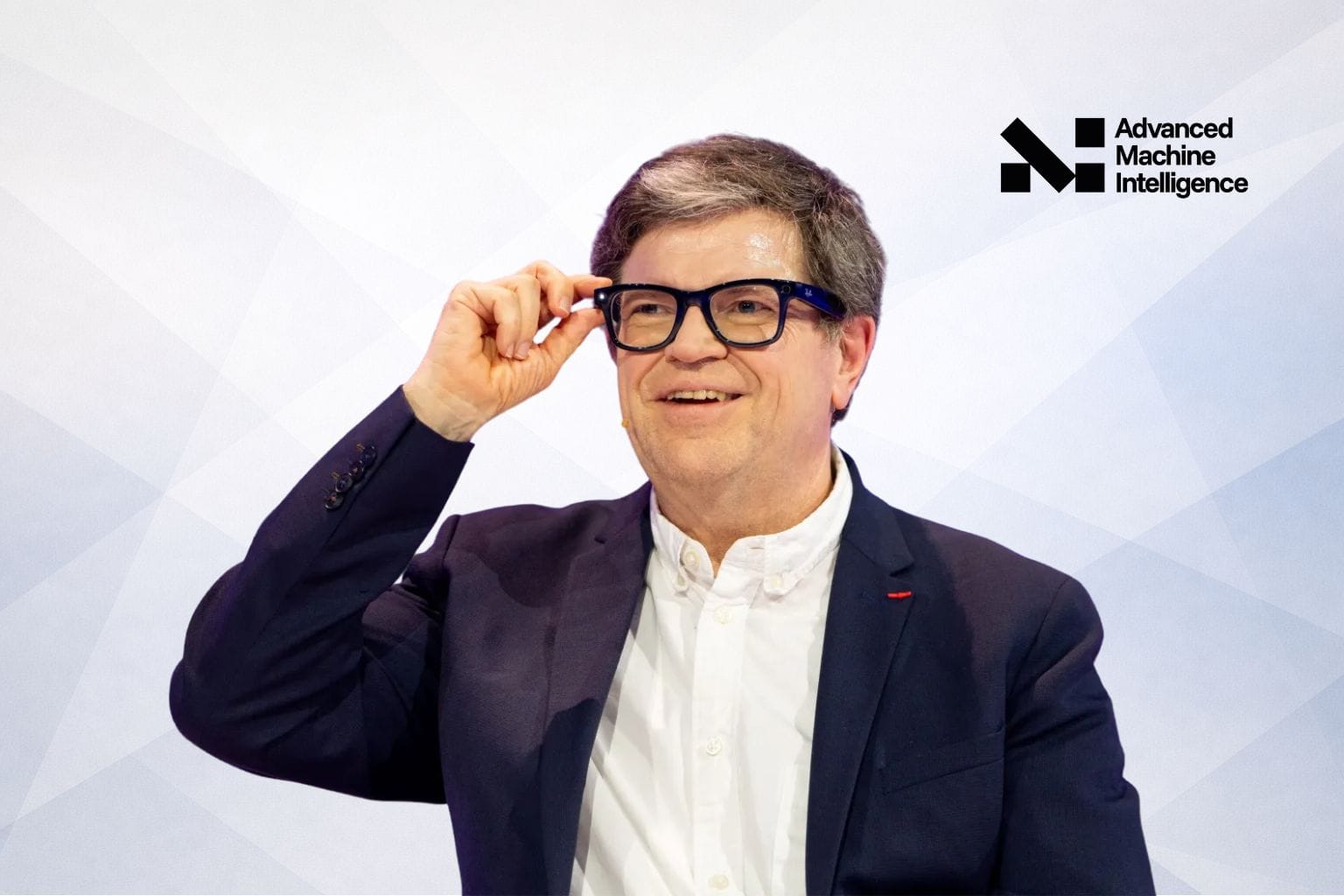
Target applications include industrial process control, automation, robotics, wearable devices, and healthcare. AMI’s first partner is Nabla, LeBrun’s former company, which has secured privileged access to AMI’s emerging world model technologies. LeCun has also told reporters he is in early discussions with Meta about applying the technology to Ray-Ban Meta smart glasses. LeBrun is candid about the timeline: the company will spend its first year on fundamental research, with corporate partner discussions beginning in six to twelve months and commercially viable products potentially years away.
AMI is headquartered in Paris, with offices in New York, Montreal, and Singapore. LeCun has been explicit about the company’s positioning as a European and specifically French alternative to the American and Chinese AI giants. The company plans to publish research papers and open-source portions of its code as it builds. The round is widely reported to be the largest seed in European history, surpassing AMI’s own initial target of €500 million, demand from investors, according to LeCun, exceeded what the company needed.
Sources: AMI Labs official announcement (amilabs.xyz), March 10, 2026; Yann LeCun (@ylecun) on X, March 10, 2026; TechCrunch, The Next Web, MIT Technology Review, SiliconAngle, Silicon Republic. Quotes attributed to named publications.
MORE ON STARTUPS & FUNDING
Meta Acquires Moltbook, the AI-Only Social Network
OpenAI to Acquire Promptfoo, an AI Security Testing Platform
AI Cloud Startup Nscale Closes $2B Series C Funding
Moglix Bets on AI with Animesh Srivastava as New CTO
DiligenceSquared Raises $5M to Let AI Do What McKinsey Charges $1M For