© 2026 NervNow™. All rights reserved.

 ByNN Desk
India’s AI Data Centre Boom Raises Urgent Water and Energy Scarcity Concerns
As global tech giants commit over $200 billion to AI data centres across India, environmental experts warn that expanding infrastructure in already water-scarce cities like Hyderabad and Chennai poses a serious long-term sustainability risk that the AI Summit largely ignored
As global tech giants commit over $200 billion to AI data centres across India, environmental experts warn that expanding infrastructure in already water-scarce cities like Hyderabad and Chennai poses a serious long-term sustainability risk that the AI Summit largely ignored.
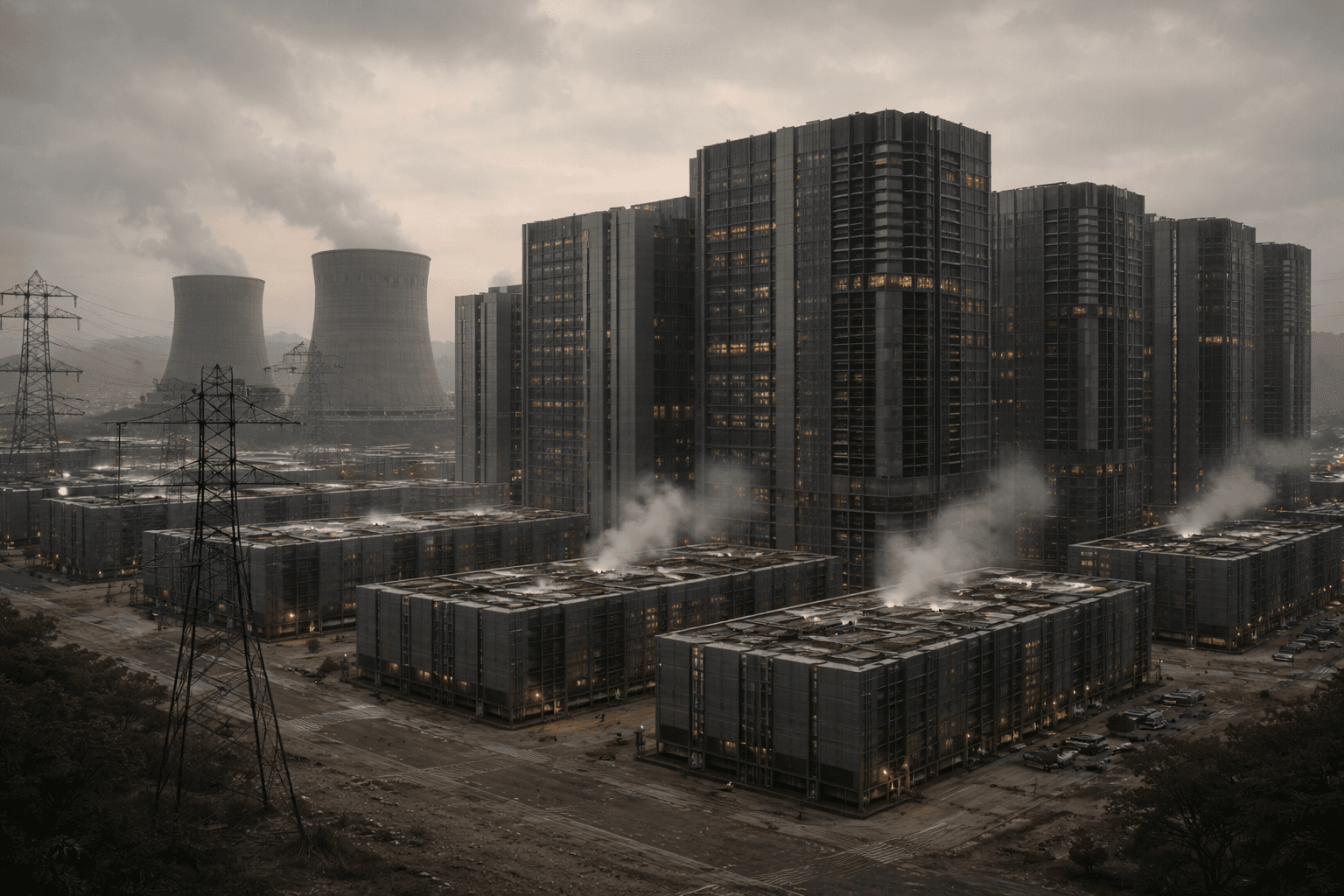
While the India AI Impact Summit 2026 celebrated hundreds of billions of dollars in AI infrastructure commitments from Microsoft, Amazon, Google, Reliance, and Adani, a significant concern received little attention on the main stage: the environmental cost of building massive AI data centres in one of the world’s most water-stressed countries.
Data centres require enormous quantities of water for cooling systems. India’s existing and proposed AI infrastructure hubs including Hyderabad, Chennai, and Mumbai are located in regions already facing acute resource scarcity. Hyderabad, for instance, is projected to face a water shortage of approximately 909 million litres per day for both domestic and industrial use within two years, yet Amazon is actively expanding its data centre operations there.
Google announced a $15 billion AI hub and data campus in Visakhapatnam in partnership with Adani Group and Bharti Airtel. Combined with Microsoft and Amazon’s earlier commitments, the three US hyperscalers have pledged a combined $68 billion for AI projects in India concentrating data centre development in areas where water and energy infrastructure is already strained.
Environmental experts and policy analysts have called for mandatory disclosure frameworks so the public can assess the environmental impact of these facilities. We do not have full information on what technologies the companies are proposing, said Shalu Agrawal, Director of Programs at the Council on Energy, Environment and Water (CEEW) in New Delhi. India generates nearly 20 per cent of the world’s data but stores only 3 per cent of it and while the coming AI buildout will change that ratio dramatically, the environmental cost remains an open and largely unaddressed question.
Related Read:
With Sarvam and Krutrim, Has ‘Make in India’ in AI Finally Arrived?
OpenAI Partners with Tata, Anthropic Opens Bengaluru Office at AI Summit