© 2026 NervNow™. All rights reserved.

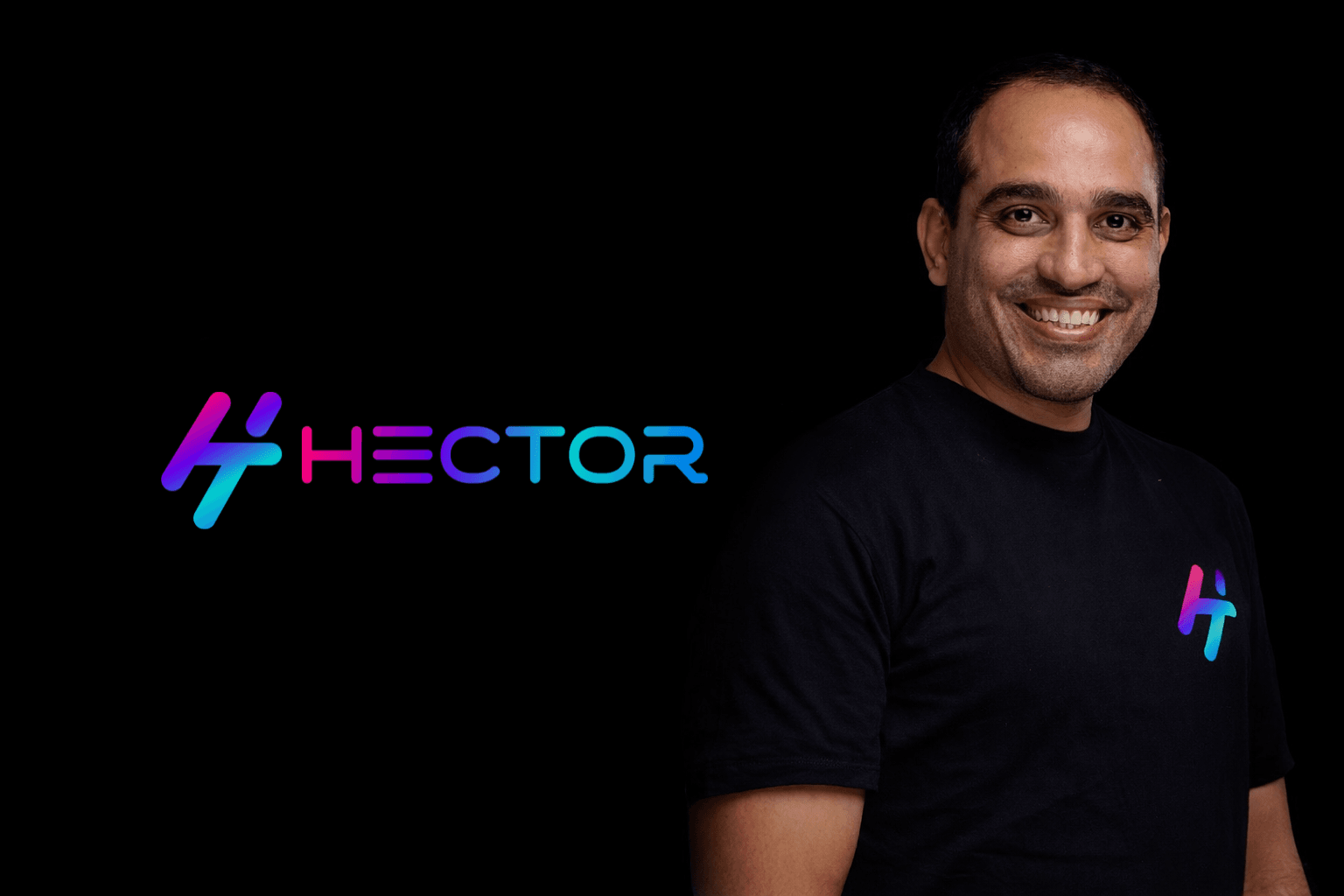

Without System Maturity, AI Remains Just a Tool: Hector’s Meher Patel on What Brands Keep Getting Wrong
Patel has spent years watching brands spend money at performance marketing dashboards that tell them what already happened. During a conversation with NervNow, the Hector founder makes the case that most brands are not ready for AI, and explains what readiness actually looks like.
Patel has spent years watching brands spend money at performance marketing dashboards that tell them what already happened. During a conversation with NervNow, the Hector founder makes the case that most brands are not ready for AI, and explains what readiness actually looks like.
Most conversations about AI in marketing follow a familiar arc: everything is about to change, the tools are here, the only question is who moves fastest. Meher Patel is more measured than that. The founder of Hector acknowledges the shift is real but spends most of his time on the part that gets glossed over: the work that has to happen before AI becomes useful. Without organized campaign structures, clear KPIs, and the operational discipline to act on an insight within minutes, he argues, AI does not fix a brand’s marketing, it amplifies whatever is already broken. That is a harder sell than most people in this space are willing to make. It is also probably why the brands that take his advice seriously tend to listen carefully.
NervNow: Performance marketing has gone through a lot of claimed revolutions. What is actually different about what AI is doing to customer acquisition right now?
Meher Patel: Performance marketing is no longer just about improving campaigns in isolation. AI is reshaping customer acquisition from a channel-based approach to an intelligence-led system. In the past, growth teams manually adjusted bids and budgets using platform dashboards. Now, AI can interpret search intent, audience behavior, time-based demand patterns, and conversion probabilities all at once.
The shift is towards integrating decision-making. Brands are adding intelligence directly into their growth strategies. With execution tools, advertisers can pull Amazon Ads data into platforms like ChatGPT and Claude, analyze performance in natural language, and make immediate changes to bids, budgets, or audiences. This changes acquisition from reactive adjustments to ongoing decision-making.
NervNow: Dashboards have been the center of performance marketing for years. What is fundamentally broken about that model?
Patel: Dashboards are meant to describe past performance. They explain what happened yesterday. AI allows for recognizing patterns that show future outcomes. When we analyze performance data from campaigns, placements, targeting, and time blocks together, we can spot small changes before they affect key metrics like ROAS or TACOS.
True progress happens when insights connects directly to actions. Marketers should be able to ask which campaigns are becoming inefficient, which keywords might scale profitably, or where contribution margin risks are rising, and make structured changes right away. Reporting becomes an active tool for control instead of just a passive summary.
NervNow: Quick commerce is an extreme environment: margins are razor thin and a bad decision at 2 pm can cost you the day. Is that category actually ready for AI-driven spending decisions?
Patel: Quick commerce tightens both timeframes and profit margins. Delays in decision-making directly lead to lost income. AI lets brands analyze detailed demand signals throughout the day, monitor inventory movement, and assess contribution metrics almost in real time. Rather than reacting to daily ROAS fluctuations, brands can match spending with demand patterns that protect profitability.
In these settings, intelligence needs to be actionable. In the near future, I will allow users to analyze live performance data conversationally and make adjustments to budgets, bids, or placements within minutes. This way, speed becomes orderly instead of hasty. AI ensures progress without losing financial sense.
Rather than reacting to daily ROAS fluctuations, brands can match spending with demand patterns that protect profitability.
NervNow: Generative AI has made it cheap and fast to produce creative at scale. Does that make the creative itself less valuable, or does it just shift where the real work happens?
Patel: Generative AI has made producing creative variations much easier. Now, the edge goes to brands that can interpret data quickly. Brands that connect creative exposure to customer journeys, retargeting logic, and multi-touch influences will outperform those that look at creative performance in isolation.
Pretrained AI systems let marketers see which creative-driven campaigns affect specific conversion paths and reallocate investments accordingly. The feedback loop becomes tighter, more structured, and informed by economic factors. Creative advantage shifts from how much is produced to how intelligently it performs.
NervNow: ROAS is still the number most brands lead with. Is that a measurement problem, a culture problem, or both?
Patel: Focusing solely on short-term ROAS often leads to ignoring the importance of discovery and retention. AI helps brands link acquisition points to future behavior, like repeat purchasing and contribution margin effects. By examining the path to conversion and cohort behavior, marketers can identify which campaign sequences lead to steady profits.
When we activate the data from Amazon Ads through execution tools, brands can explore how specific keyword segments or campaign groups affect profitability. This shifts the focus of acquisition from single-transaction efficiency to long-term management. Growth becomes aligned with profitability instead of just surface metrics.
NervNow: A lot of brands are rushing into AI tooling right now. What do you see going wrong when they move before they are ready?
Patel: AI improves the quality of the underlying system. Without organized campaign structures, clear tracking, and well-defined KPIs, AI can worsen inefficiencies instead of improving performance. Brands need a disciplined taxonomy, measurable contribution metrics, and clear goals before implementing intelligence systems that produce reliable results.
Operational readiness is also crucial. Insights must lead to swift actions. Platforms like Hector MCP show that AI becomes transformative when it reduces the gap between recognizing an issue and taking action. Without maturity in the system, AI remains just a tool. With a mature system, AI can lead to significant growth.
Without organized campaign structures, clear tracking, and well-defined KPIs, AI can worsen inefficiencies instead of improving performance.
NervNow: There is a version of this story where AI just replaces growth teams entirely. How close is that, and what does it get wrong?
Patel: AI adjusts various factors and humans set the direction. Decisions about positioning, pricing, category expansion, and the brand story are still human responsibilities. While autonomous bidding systems can improve efficiency, they cannot establish goals.
The best growth models combine machine accuracy with human oversight. When AI reveals patterns and humans apply context, scaling becomes more deliberate. The best tools maintain this balance by enabling intelligence-driven actions while keeping human strategic input intact.
NervNow: If every brand eventually has access to the same AI tools, does optimization just become table stakes? What actually differentiates a brand five years from now?
Patel: AI will enhance predictability in areas like bid management, audience segmentation, and pattern recognition. Overall market performance will likely improve as intelligent systems become commonplace. However, this will increase competition rather than lessen it.
The real differentiator will be how thoroughly brands integrate intelligence into their growth strategies. When commerce data can be discussed, acted upon, and integrated into daily workflows, quicker decision-making becomes a valuable asset. AI may standardize optimization, but it will favor those who create smarter systems around it.
Meher Patel is a performance marketing strategist focused on AI-driven customer acquisition in e-commerce and quick commerce. His work centres on closing the gap between campaign data and real-time decision-making for growth-focused brands.
MORE ON AI
Medicine is Not About Algorithms; Responsibility Must Stay With a Human: Surjeet Thakur
LLM SEO: How to Get Your Brand Mentioned by AI?
AI Attribution vs GA4: What Really Drives Conversions in 2026?
Founder Warns of AI Shift in Marketing After Claude “Killed” Her Startup