© 2026 NervNow™. All rights reserved.

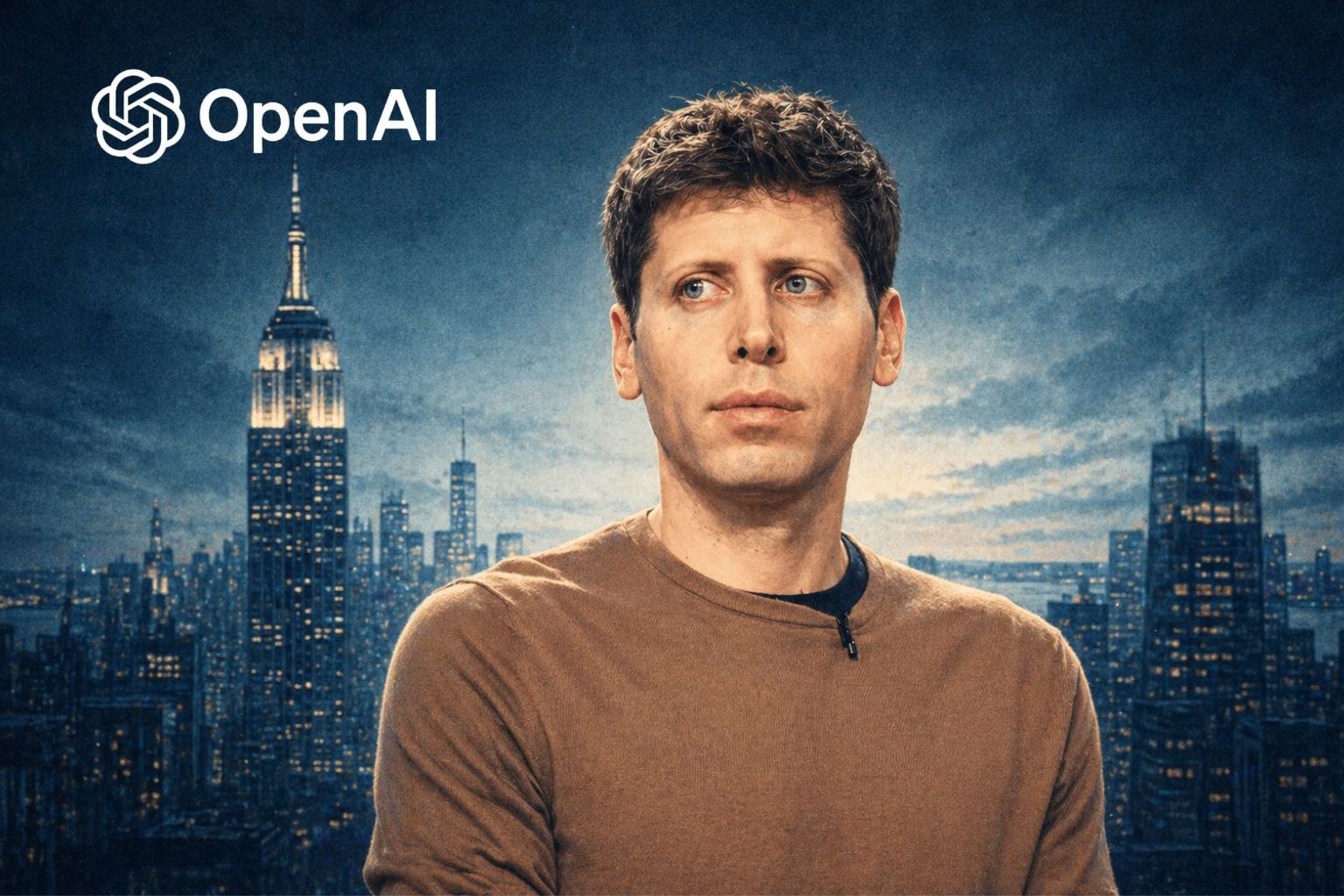

Is OpenAI Losing the AI Race to Anthropic and Gemini as Revenue Targets Fall Short?
OpenAI entered 2026 as the dominant force in generative AI. It is ending April with a different story. ChatGPT's share of generative AI web traffic has fallen from 86.7% to 64.5% in under a year.
Analysis
AI Industry
OpenAI
April 29, 2026
Is OpenAI Losing the AI Race to Anthropic and Gemini as Revenue Targets Fall Short?
ChatGPT’s share of generative AI web traffic has dropped from 86.7% to 64.5% in a year. Anthropic has overtaken OpenAI in annualized revenue. And OpenAI’s CFO has told colleagues internally that the company may be unable to fund its own compute contracts if revenue does not accelerate. Here is what the numbers show.
NN Quick Analysis
ChatGPT Web Traffic Share
Down from 86.7%. Gemini now at 21.5%.
64.5%
↓ Lost 22pp
OpenAI Annualized Revenue
Behind Anthropic’s $30B+ as of Apr 2026.
$25B
↓ Trailing
Compute Commitments
Oracle, Azure, partners thru 2030.
$600B
Latest Valuation
Post-money, $122B round, Mar 2026.
$852B
IPO Target
Altman: Q4 2026. Friar prefers 2027.
2026
Disputed
A year ago, ChatGPT held 86.7% of generative AI web traffic. By January 2026, that share had fallen to 64.5%. Over the same period, Google’s Gemini climbed from 5.7% to 21.5%. Anthropic crossed $30 billion in annualized revenue in April 2026, overtaking OpenAI, which sits at approximately $25 billion, while spending roughly a quarter of what OpenAI allocates to model training. The ground Anthropic has taken is concentrated in enterprise and coding, the same segments OpenAI had positioned as core growth drivers.
Generative AI Web Traffic Share
Early 2025 vs. Jan 2026 · Source: Invezz / TheStreet
ChatGPT
Gemini
↓
−22.2 pp ChatGPT lost in ~12 months
↑
+15.8 pp Gemini gained in ~12 months
The consequences of that competitive shift are now visible in OpenAI’s internal numbers. The company missed multiple monthly revenue targets in early 2026 and fell short of its goal to reach one billion weekly active ChatGPT users by the end of 2025. Subscriber losses were recorded during the same period. These are not isolated misses. They are the direct result of two competitors gaining sustained traction in the segments OpenAI was built to dominate.
Annualized Revenue Comparison
April 2026 · The Next Web, Wall Street Journal
OpenAI
$25B
Multiple monthly revenue targets missed in early 2026.
Behind Anthropic
Anthropic
$30B+
Crossed $30B annualized in April 2026.
Now Ahead
Anthropic reached $30B at roughly 25% of OpenAI’s model training spend — per The Next Web, April 2026.
The revenue shortfall would be a contained problem for most companies. For OpenAI, it collides with a capital structure that was sized for a faster-growing business. The company has committed approximately $600 billion in compute spending through 2030, including a reported $300 billion five-year infrastructure agreement with Oracle and a $250 billion commitment on Microsoft Azure through 2032. CFO Sarah Friar has told colleagues internally that if revenue does not accelerate, the company may be unable to honor its future compute agreements. The board has begun scrutinizing existing data center deals and has applied new oversight to CEO Sam Altman’s push to accumulate additional computing capacity.
OpenAI Compute Commitments
Wall Street Journal, Dave Friedman (Substack) · Apr 2026 · Figures may overlap
Oracle
Five-year infrastructure agreement
$300B
Microsoft Azure
Compute commitment through 2032
$250B
Total through 2030, signed by Altman
~$600B
The organizational dimension adds further weight. Friar does not report to Altman. She reports to Fidji Simo, OpenAI’s CEO of Applications, an arrangement in place since August 2025. The Information reported in early April 2026 that Altman had excluded Friar from conversations with investors and from meetings concerning key financial decisions, including server procurement. Friar has also told colleagues she believes OpenAI is not organizationally ready for the Q4 2026 IPO Altman has committed to, preferring a 2027 listing instead.
Friar’s job is to figure out where the money comes from to meet $600 billion in compute commitments. The board has begun asking the same question.
Altman and Friar responded to the Wall Street Journal’s April 28 report with a joint statement issued to Reuters:
“This is ridiculous. We are totally aligned on buying as much compute as we can and working hard on it together every day.”
Sam Altman, CEO and Sarah Friar, CFO, OpenAI · Joint statement to Reuters, April 27, 2026.
The statement addressed alignment on compute acquisition. The Journal’s reporting had focused on whether existing revenue is sufficient to fund commitments already made. Those are two distinct questions, and the statement answered only one of them.
Markets responded to the distinction. Oracle fell 7.7%. CoreWeave, which holds an $11.9 billion infrastructure contract with OpenAI, dropped 7.4%. SoftBank, which has committed $60 billion to OpenAI, declined nearly 10% in Tokyo trading. Nvidia, Broadcom, and AMD each fell between 2 and 6%.
OpenAI closed a $122 billion funding round at a post-money valuation of $852 billion as recently as late March 2026. The company has pointed to GPT-5.5, which performed strongly across recent industry benchmarks, and to Codex, which has been gaining users in the developer segment, as evidence that its technical position remains competitive. The restructured Microsoft partnership, announced the same week as the Journal report, ends Microsoft’s exclusive distribution rights and opens OpenAI’s products to Amazon Web Services and Google Cloud customers, expanding its direct sales reach.
The question the numbers have not yet resolved is whether that expanded reach and product performance will generate revenue at a pace sufficient to meet obligations that were sized for a faster-growing company.
Read More Analysis
Sources
01Wall Street Journal, April 28, 2026. Primary reporting on missed targets and CFO concerns.
02Reuters, April 27, 2026. Joint statement from Altman and Friar.
03The Information, April 2026. Reporting on Friar’s exclusion from financial meetings.
04TheStreet, April 28, 2026. Web traffic data citing Invezz.
05The Next Web, April 28, 2026. Anthropic revenue and market reaction.
06Dave Friedman, Substack, April 2026. Azure commitment and IPO timeline analysis.
07CNBC, April 28, 2026. Market reaction and joint statement.
08Fortune, April 28, 2026. CFO spending concerns.