© 2026 NervNow™. All rights reserved.

 ByNN Desk
Meesho Says Over 70% of Its Code Is Now AI-Generated
Meesho CEO Vidit Aatrey reveals that over 70% of the company's code is AI-generated, as the e-commerce giant reports strong FY26 results driven by artificial intelligence.
Meesho CEO Vidit Aatrey reveals that over 70% of the company’s code is AI-generated, as the e-commerce giant reports strong FY26 results driven by artificial intelligence.
Meesho, India’s e-commerce platform, has disclosed that more than 70% of its codebase is now generated using artificial intelligence, a milestone that places the Bengaluru-based startup alongside some of the world’s largest technology companies in its adoption of AI-assisted development.
Vidit Aatrey, co-founder and chief executive of Meesho, made the disclosure in the company’s Q4 FY26 shareholder letter, released Tuesday. Moreover, he said platform experiments had doubled year-on-year a direct result, he noted, of faster AI-powered development cycles.
Beyond the code itself, Meesho’s broader AI transformation is reshaping the shopping experience for hundreds of millions of users across India.
More than 75% of orders on the platform now originate not from search queries, but from AI-driven personalised recommendation feeds powered by PRISM short for Personalised Ranking and Intent Signal Module. In other words, the system infers what a shopper may want before the user has typed a single word.
The shift represents a move from traditional intent-based shopping to AI-led discovery where the platform predicts user preferences before they are explicitly searched for.
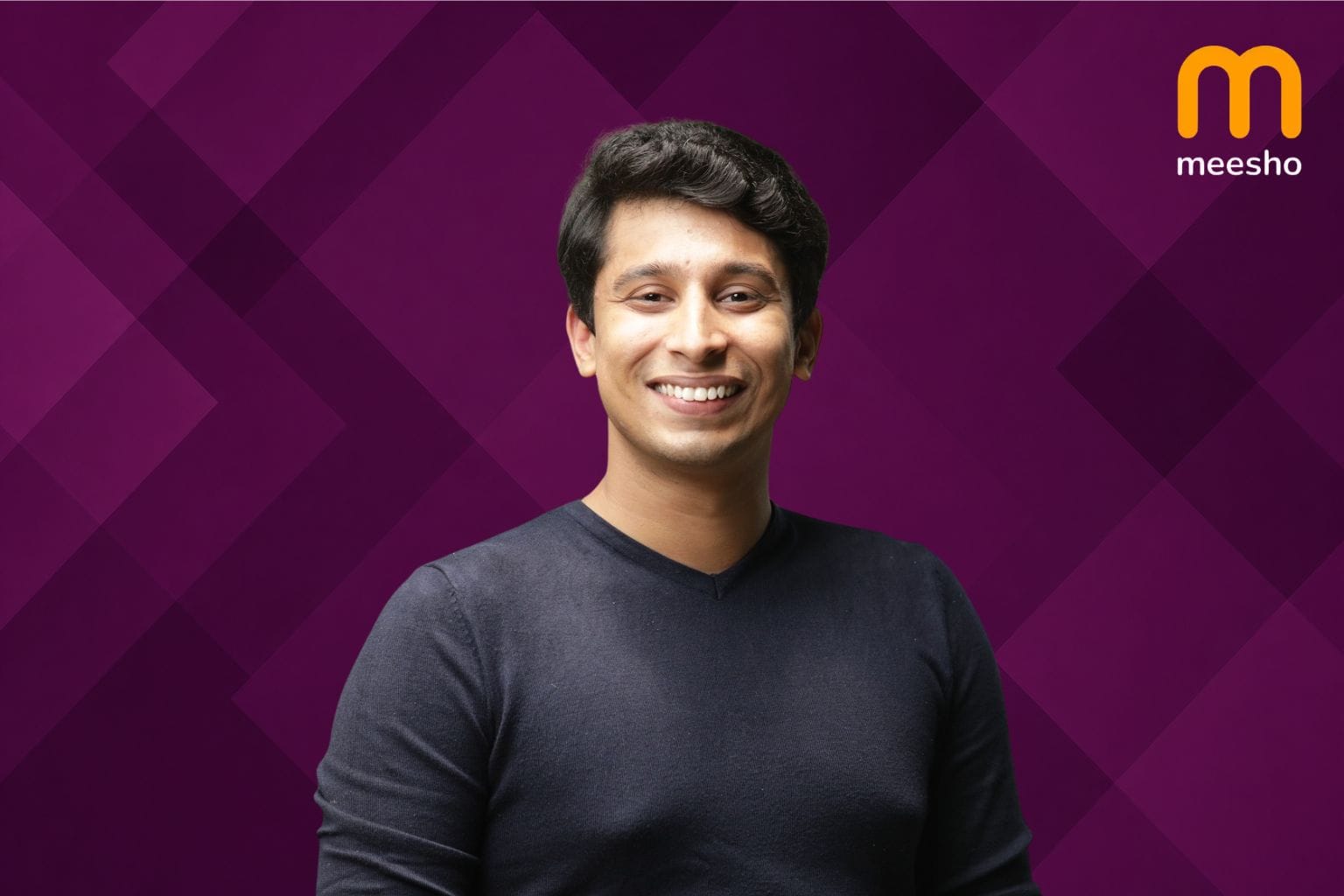
Vidit Aatrey, Co-founder and Chief Executive of Meesho
Additionally, Meesho launched Vaani, a voice-based AI shopping assistant designed for vernacular-language speakers and first-time internet users. Within its first month, Vaani crossed 1.5 million users and delivered a 22% conversion lift for adopters, a significant indicator of AI’s role in widening India’s e-commerce base.
Furthermore, Meesho has developed a suite of AI tools calibrated specifically for the Indian market. These include GeoIndia LLM, a location intelligence model built to parse complex Indian addresses, and TrustMesh, a risk-detection engine that blocked 9 million high-risk transactions during FY26 alone.
On the seller side, the company scaled GenAI-powered voice agents to handle up to 300,000 calls per day helping small businesses participate in promotional events and onboard to advertising tools with minimal friction.
For the full fiscal year FY26, annual transacting users grew 33% to 264 million, while total placed orders rose 45% to 2.67 billion. The company said full-year losses narrowed approximately 66%, attributing the improvement to operating leverage and AI-driven efficiencies.
Notably, Meesho’s 70% figure puts it in company with some of the world’s most AI-forward organisations. For context, Google’s CEO Sundar Pichai had stated in early 2025 that more than 30% of the company’s new code was AI-generated; that figure has since climbed significantly. Meanwhile, Anthropic’s CPO has said the company’s AI-generated code share has effectively approached 100%.
What distinguishes Meesho’s benchmark, however, is context. Unlike frontier AI labs or Silicon Valley giants, Meesho is a consumer e-commerce platform serving Tier 2 and Tier 3 cities across India markets historically underserved by digital commerce.
As competition in India’s e-commerce sector intensifies, Meesho appears to be positioning AI as both a product differentiator and an operational efficiency lever. The company remains the most downloaded shopping app in India and, by its own count, the largest platform by both annual transacting users and placed orders.
Aatrey, in closing the shareholder letter, reaffirmed Meesho’s long-term goal of making online commerce accessible to underserved users, including homemakers, small shopkeepers and manufacturers with limited distribution reach.
Disclaimer: This article is based on publicly available reporting and is intended for informational purposes only. Nervnow has not independently verified any claims.
RELEVANT READS
Top 20 AI Companies in India to Watch in 2026
James Dyett Exits OpenAI, Joins Thrive Capital in Latest Executive Shakeup
Portkey Heads to Palo Alto Networks in Latest India-to-Global AI Exit
JuliaHub Raises $65M to Build AI for Industrial Engineering