© 2026 NervNow™. All rights reserved.

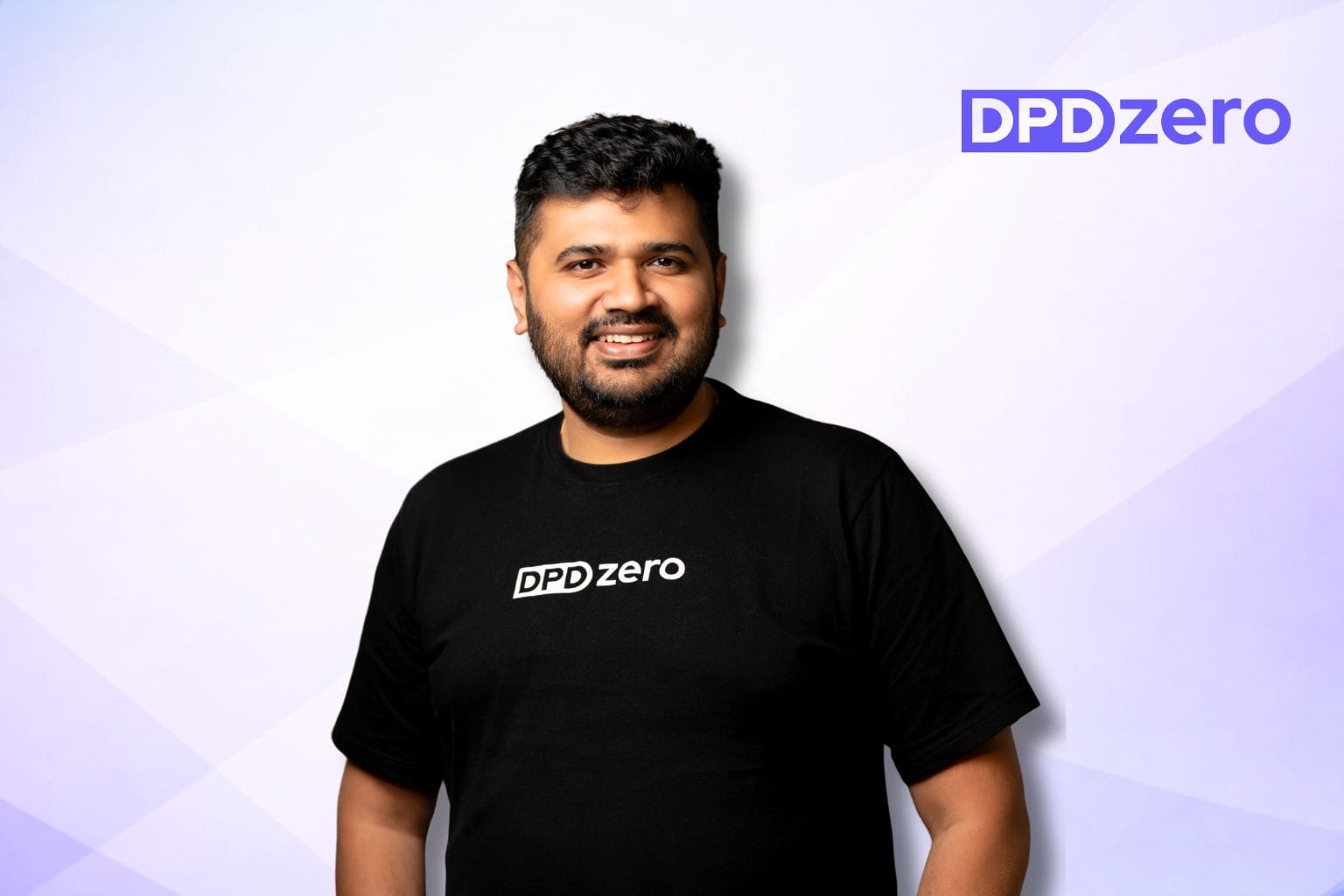

DPDzero Founder Ranjith BR on What 10 Million AI Insights Reveal About Debt Collections in India
Ranjith BR, Co-Founder and CTO of DPDzero, spoke with NervNow about what is actually broken in India's collections stack, what 10 million borrower interactions reveal about repayment intent.
Interview
›
Fintech and AI
›
India Edition
NervNow Interview Series · Fintech x AI Special
Collections Is a Communication Problem, Not a Payments Problem.
Ranjith BR, Co-Founder and CTO of DPDzero, spoke with NervNow about what is actually broken in India’s collections stack, what 10 million borrower interactions reveal about repayment intent, how AI enforces compliance where humans have historically failed, and why the biggest insight from the data directly contradicts how the entire industry has been operating.
R
Ranjith BR
Co-Founder and CTO, DPDzero · AI-Native Debt Collections · India
Ranjith BR began his career in 2011 at Deloitte and Mammoth, where he built deep expertise in automation and analytics. His work on the Bharat Bill Payment System gave him an early and unusually clear view of India’s financial infrastructure from the inside. What he saw was that payments were not the hard problem. Communication was. That insight led to DPDzero, which he co-founded in 2023 to build an AI-native collections platform designed to transform how financial institutions engage with borrowers at scale. His broader mission extends to financial education in India, using AI to build a repayment culture where awareness, not just access, determines financial outcomes.
India’s lending stack has been transformed in a decade. But the collections layer, the unglamorous back end of every loan book, has barely moved. It still runs on field agents, manual call queues, and rule-based nudges designed for a world with far less data and far fewer borrowers. Ranjith BR looked at that gap and saw not a technology problem but a communication problem. NervNow went inside the machine to find out what that means, what 10 million borrower interactions have revealed about how repayment actually works, and what an AI-native collections stack looks like when it is built from first principles.
Why This Story Matters Now
The Back End of India’s Lending Boom Is Under Stress
Indian fintechs disbursed over 1 lakh crore rupees across 10 crore personal loans in FY25 alone. Unsecured loan defaults are rising. Microfinance NPAs are approaching 6%. The Reserve Bank of India is tightening its scrutiny on recovery practices. DPDzero, founded in 2023, has already engaged 10 million-plus borrowers, partnered with 30-plus financial institutions, and facilitated over 6,000 crore rupees in collections in two years.
System Diagnosis: What Is Actually Broken
NervNow
DPDzero was founded in 2023. India’s default loan problem has existed for decades, with well-capitalized incumbents, large BFSI IT budgets, and regulatory pressure. Why has this not been solved before? Is the honest answer that the technology did not exist, or that nobody with the right incentives tried?
Ranjith BR
For years, India’s lending ecosystem has optimized for growth, with most technology investments flowing into originations and disbursals. The numbers reflect that bias. Retail credit in India is growing at 18% annually, and disbursals have surged as much as 40% year-on-year in recent periods.
Collections, in comparison, have been the overlooked half of the equation. Where investments were made, they largely went into scaling people and processes, call centers, field agents, and manual workflows, rather than rethinking collections through a technology-first lens. This created a clear imbalance: while lending became increasingly data-driven, collections remained fragmented and reactive.
At the same time, the risk on the system has not disappeared. It has just evolved. Even as overall NPAs have come down to 2 to 3% levels, stress in segments like personal loans and credit cards has seen sharp spikes in recent years, and banks are still offloading tens of thousands of crores in bad retail loans to recovery channels.
There is also a structural reason for this gap. In any capital-constrained environment, the best technology talent and budgets gravitate toward revenue-generating functions. Collections, historically seen as a cost center, simply did not get the same attention.
What is changing now is a shift in mindset. As credit scales rapidly and borrower profiles become more complex, collections are being recognized as a strategic lever for risk management and customer engagement, not just recovery. The issue was not that the problem could not be solved earlier. It is that, until now, it was not prioritized.
NervNow
When you say collections is a communication problem, not a payments problem, what does that actually mean at the system level? And how did that reframing change every architectural decision you made at DPDzero?
Ranjith BR
India has seen decades of innovation in payments, from the scale of UPI to platforms like JusPay and Razorpay. Today, payments are largely commoditized: fast, frictionless, and deeply embedded into consumer behavior. Most borrowers are digitally fluent and comfortable completing transactions in a few clicks.
Yet when it comes to collections, the challenge is not how to pay. It is why and when a borrower chooses to pay. That is fundamentally a communication problem.
At a systemic level, collections break down not at the point of transaction, but across the borrower journey leading up to it: awareness, intent, trust, and timing. Unresolved debt often involves friction, lack of clarity, financial stress, or avoidance. Simply providing a payment link does not solve for these underlying barriers.
This reframing shaped every architectural decision we made at DPDzero. Instead of building another payments layer, we chose to integrate seamlessly with lenders’ existing payment infrastructure. Our focus has been on building the layers that actually influence repayment: messaging, telephony, and voice AI. We have designed a multi-channel communication stack that engages borrowers across SMS, WhatsApp, calls, and AI-driven voice interactions, continuously and contextually, across the entire lifecycle of a loan.
In essence, payments are the final step. But collections are everything that happens before that. By solving for communication at scale, we enable payments to happen more naturally, rather than forcing them.
Payments are the final step. Collections are everything that happens before that.
NervNow
Microfinance NPAs are approaching 6%. Unsecured defaults are rising. The RBI is watching. How much of this stress is a collections failure specifically, and how much would a better collections architecture have actually prevented?
Ranjith BR
The more important question here is not just about rising NPAs. It is whether enough borrowers are getting access to formal credit, and whether institutions like microfinance institutions are still serving the segments they were originally designed for.
At a fundamental level, default rates are driven by two variables: who you underwrite, and how you collect. On underwriting, if you are extending credit to thin-file or high-risk borrowers, as microfinance is meant to do, some level of delinquency is inevitable. Trying to engineer that risk away entirely would defeat the purpose of financial inclusion. Over-correcting on risk often comes at a much higher cost: reduced access to formal credit, pushing borrowers toward informal and more expensive alternatives.
That said, collections is the second, equally critical lever. While no collections infrastructure can override a borrower’s ability to pay, it can significantly influence their willingness and timing of repayment. With the right use of data, segmentation, and communication, lenders can engage borrowers earlier in the delinquency cycle, personalize outreach based on intent and behavior, and resolve friction points before they turn into defaults.
In many cases, what appears as default is actually a breakdown in engagement: missed communication, lack of clarity, or poor timing. Rising stress is not purely a collections failure, but collections cannot be absolved of it either. Underwriting determines the odds. Collections determine how much of that risk actually materializes.
Architecture: Inside an AI-Native Collections Stack
NervNow
You have trained a behavioral intelligence engine on 10 million borrower journeys. Walk us through what that actually means. What signals go in, what decisions come out, and what a traditional rule-based system would have done wrong at each step.
Ranjith BR
When we say we have trained a behavioral intelligence engine on 10 million borrower journeys, it means we have built a system that continuously learns how borrowers behave across the collections lifecycle and uses that to drive better decisions in real time.
At an input level, we are looking at a wide set of signals. This includes past repayment behavior, responsiveness to different communication channels, contactability across SMS, WhatsApp, and calls, as well as engagement patterns over time. Layered on top of this are contextual signals: when a borrower is more likely to respond, how they have reacted to specific messaging in the past, and how their behavior evolves across collection cycles.
From these inputs, the system is able to predict two key things with increasing accuracy: propensity to pay and ability to pay. Based on this, it determines the optimal intervention: what channel to use, what message to send, and when to engage to maximize the likelihood of repayment.
The key difference from traditional rule-based systems is adaptability. Legacy collections typically rely on static rules: fixed call schedules, uniform messaging, and broad segmentation without any borrower context. These systems assume all borrowers within a bucket behave similarly, which often leads to over-contacting some users while completely missing others.
In contrast, our approach is dynamic and self-learning. When we onboard a new lender, the system begins by segmenting borrowers into risk cohorts, and within two to three collection cycles, it starts to significantly refine its accuracy. Each interaction feeds back into the model, making future decisions sharper. Importantly, every month is not treated as a reset. It is a continuation of a learning loop where each cycle builds on the previous one. Over time, this compounds into a much deeper understanding of borrower behavior, allowing us to move from reactive collections to predictive, highly personalized engagement.
Instead of applying one set of rules to everyone, we are enabling a system that learns, adapts, and optimizes for each borrower individually at scale.
NervNow
Your system determines who to contact, when, how, and through which channel. What does the hybrid model actually look like in practice? At what point does a human agent enter the loop, and what has the AI already done before that human picks up the phone?
Ranjith BR
The hybrid model is not a fixed sequence where AI takes over from humans at a predefined step. It is a dynamic system where both continuously complement each other based on borrower behavior and context.
At its core, the system uses data to determine which segments of borrowers are most likely to convert through which channel, whether that is AI-led communication, telecalling, or field interventions. This level of certainty fundamentally improves the unit economics of collections, because effort is directed only where it has the highest impact.
In early delinquency, a large proportion of borrowers can be effectively engaged through AI-led channels, whether that is messaging or voice. At this stage, the system is already doing the heavy lifting: establishing contact, understanding responsiveness, identifying intent, and resolving straightforward cases without any human intervention. Human agents come into the loop selectively, typically for more complex or sensitive cases where nuance, negotiation, or judgment is required. By the time an agent engages, the AI has already established right party contact, mapped borrower behavior across channels, and identified the optimal moment for intervention.
In later stages of delinquency, AI continues to play a critical role, not by replacing humans, but by enabling them. It helps refine borrower intelligence, improve contactability, and signal when a borrower is most likely to convert, allowing agents to intervene with far higher effectiveness.
The result is a system where AI delivers scale and consistency, while humans focus on high-impact interactions, driving better outcomes for both lenders and borrowers.
Borrower Intelligence: What 10 Million Interactions Reveal
NervNow
Ten million borrower interactions is a dataset that no academic researcher and very few lenders have access to. What is the most counterintuitive thing that data has told you about repayment intent, something that directly contradicts how the collections industry has been operating?
Ranjith BR
When you start analyzing repayment behavior at the scale of millions of borrower interactions, you begin to see patterns that challenge some of the industry’s most deeply held assumptions.
One of the most counterintuitive insights is around timing of engagement. Conventional wisdom suggests that reaching out to borrowers before they become overdue is the most effective form of prevention. However, what we have observed is that early-stage delinquency, those initial days past due, actually creates just enough urgency to prompt action, without triggering avoidance. As a result, promise-to-pay rates in early DPD are often higher than in the pre-due stage.
Another surprising finding is around digital affinity versus repayment behavior. There is a natural assumption that younger, digitally native borrowers, Gen Z and millennials, would be easier to convert given their comfort with digital channels. In reality, we have seen that older borrowers are often two to three times more likely to repay, and typically require significantly less effort to convert. Behaviorally, this cohort tends to be more responsive and consistent once engaged.
A third insight challenges the industry’s long-standing belief that more effort drives better outcomes. Traditional collections models often rely on repeated follow-ups with the same borrower: more calls, more messages, more touchpoints. But the data shows that diminishing returns set in very quickly. Beyond a point, increasing intensity does not improve outcomes and can actually lead to disengagement. What works better is coverage over intensity: reaching a larger set of borrowers intelligently, rather than over-contacting a smaller group.
It is not about maximizing effort. It is about optimizing timing, targeting, and approach. At scale, small behavioral nuances can significantly change recovery outcomes.
NervNow
You have spoken about building a repayment culture in India through financial education embedded into the collections flow. That is an unusual thing for a collections company to claim. How does that actually work in practice?
Ranjith BR
When we are leveraging our digital channels, including WhatsApp, SMS, and IVR, we are making a conscious effort to educate borrowers about the consequences of not making loan repayments in due time. Some of the messages include the impact of CIBIL score on future loan possibility, one-time waiver offers by lenders, and the ease of partial payments. These go on to make borrowers understand the importance of on-time payments.
What we have found is that after posting these messages, we see a surge in inbound borrower requests to connect and discuss or resolve the loan case. Our commitment to building a repayment culture does not stop at educating borrowers. We also engage in time-to-time training for our advisors, calling and field agents, so that they are equally aware of the gaps, the consequences, and how to educate borrowers about the same across touchpoints in the collections lifecycle.
Compliance, Ethics and Regulatory Design
NervNow
You have built compliance-by-design into the architecture, with RBI-aligned recovery practices enforced at the system level, not left to human discretion. Walk us through a specific scenario where a human agent in a traditional system would have violated a recovery guideline, and explain exactly how your architecture prevents that from happening.
Ranjith BR
In traditional collections setups, compliance often depends on individual agent behavior, which is where most risks emerge. It is not uncommon for an agent under pressure to recover dues to call a borrower outside permitted hours, use a personal device, or make repeated calls in a single day. In some cases, conversations may also cross the line in terms of tone or language. These are clear violations of regulatory guidelines, but they are hard to monitor and control in real time when systems are not tightly enforced.
At DPDzero, we have approached this very differently by embedding compliance directly into the system architecture, so it is enforced by design, not left to discretion.
Take the same scenario. An agent simply cannot call a borrower outside permitted hours because the system will not allow it. Advisors are automatically logged out and cannot log in before 8 a.m. Similarly, all digital and AI-led communications are restricted to the prescribed 8 a.m. to 7 p.m. window and can only be triggered from authorized work devices. On frequency, the system enforces caps on the number of communication attempts per borrower per day, ensuring that no one is over-contacted regardless of intent.
On the calling process itself, every interaction must go through a centralized dialer. This eliminates the possibility of agents using personal devices, which is a common gap in traditional setups. Every call is recorded, creating a complete audit trail for compliance checks and quality assurance.
We have also built in behavioral safeguards. At the start of each day, agents are required to explicitly acknowledge the code of conduct before they can begin outreach. Beyond that, an AI layer continuously monitors conversations in real time, flagging any use of inappropriate or non-compliant language by either the agent or the borrower.
Compliance is enforced by design, not left to discretion. An agent simply cannot call a borrower outside permitted hours because the system will not allow it.
Vision, Risk and What Comes Next
NervNow
You raised $7 million in Series A from GMO Venture Partners, SMBC Asia, and Blume Ventures, a notably international investor set for an India-focused collections company. What did those investors understand about your model?
Ranjith BR
I would not frame this as something international investors understood that Indian investors did not, because one of our key partners, Blume Ventures, is deeply India-focused and has been a strong believer in our model from early on.
What stood out across both domestic and global investors was a shared conviction around two things: the scale of the problem and the structural shift underway in how collections will be built going forward. With partners like GMO Venture Partners, this was not a recent discovery. We have been in conversations with them for a couple of years, during which they have seen the product evolve and, more importantly, how we are solving this problem at scale for leading financial institutions in India. That long-term engagement built a strong understanding of both the opportunity and our execution capability.
More broadly, sophisticated investors are recognizing that while lending in India has seen massive innovation, collections remain under-penetrated from a technology standpoint. As credit expands rapidly, the need for a more data-driven, compliant, and borrower-centric collections infrastructure becomes inevitable.
NervNow
In three years, if DPDzero works exactly as intended, what does India’s collections ecosystem look like, and what does the role of a human collections agent become?
Ranjith BR
If DPDzero works as intended, the biggest shift you will see in India’s collections ecosystem is that it becomes as structured, data-driven, and integral to lending as originations are today. Collections will no longer be treated as a back-end recovery function but as a core part of the credit lifecycle, deeply integrated with underwriting, risk, and customer engagement. Lenders will operate on AI-led infrastructure that brings together technology, operations, and compliance into a single, cohesive stack. Decisions around who to engage, when, and how will be driven by data and real-time intelligence, rather than static rules or manual processes.
You will also see a fundamental shift in how collections are perceived, both by institutions and borrowers. It will move from being reactive and often adversarial to more proactive, transparent, and borrower-centric. Compliance will be embedded by design, and engagement will be far more personalized and contextual.
Importantly, this does not mean humans disappear from the system. Quite the opposite. As AI takes over scale, repetition, and early-stage engagement, the role of human agents becomes more specialized and high-impact. Agents will increasingly focus on complex, high-value interactions, cases that require empathy, negotiation, and judgment. They will be better equipped, with richer borrower context and clear signals on when and how to intervene. In many ways, the role evolves from that of a caller executing scripts to an advisor driving resolution.
So three years out, the vision is not AI replacing humans. It is AI elevating the entire collections function, with humans playing a more strategic, empathetic, and outcome-driven role within it.
Three years out, the vision is not AI replacing humans. It is AI elevating the entire collections function, with humans playing a more strategic, empathetic, and outcome-driven role within it.
Do Not Miss These Interviews
- Lovable’s Whitney Menarcheck on AI Opportunity, Community-First Thinking, and More
- Europe Lost AI, Quantum is Next Unless We Act Now: Aneli Capital’s Daiva Rakauskaitė
- Women Must Understand How AI is Sold, Procured, and Regulated: Chaitra Vedullapalli, Women In Cloud
- Georg Langlotz, UBS: India Does Not Have an AI Talent Problem, It Has an AI Ambition Problem
- India’s AI Problem is Product Thinking: Hoonartek’s CEO Peeyoosh Pandey