© 2026 NervNow™. All rights reserved.

 ByNN Desk
Is OpenAI Losing the AI Talent War to Anthropic? Karpathy’s Defection is the Latest Sign
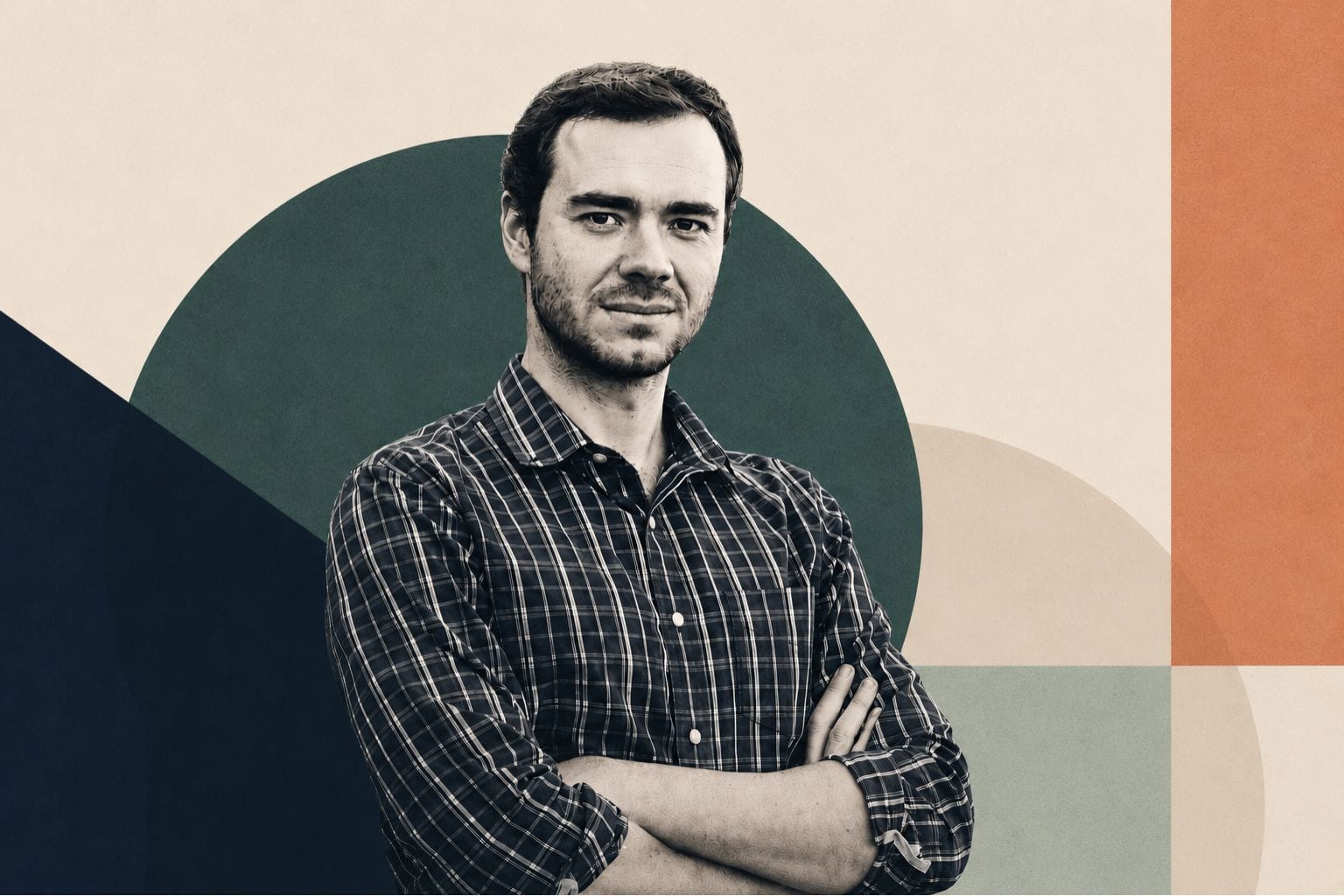
Karpathy helped found OpenAI and later led the AI behind Tesla's Autopilot before starting his own company. His move to Anthropic adds to a run of senior researchers joining the lab, and raises questions about how OpenAI is retaining top talent.
What OpenAI Cannot Buy: Karpathy’s Move to Anthropic Exposes a Deeper Talent Problem
Karpathy helped found OpenAI and later led the AI behind Tesla’s Autopilot before starting his own company. His move to Anthropic adds to a run of senior researchers joining the lab, and raises questions about how OpenAI is retaining top talent.
~8x
More likely OpenAI engineers leave for Anthropic than the reverse
80%
Anthropic two-year retention, vs OpenAI’s 67%
12+
OpenAI senior exits over two years
Andrej Karpathy did not need a job. The OpenAI founding member had already led AI at Tesla, started his own education company, and built an independent following large enough to sustain its own ventures. So when he announced Tuesday that he had joined Anthropic to work on frontier research, the move said less about his career than about the two companies competing for people like him. For OpenAI, the lesson is uncomfortable: the talent contest it is losing to Anthropic is not one a bigger paycheck can win.
The Pattern
An Alumni Association at a Rival Lab
The pattern is by now well established. Over the past two years OpenAI has lost more than a dozen senior executives and researchers, including former chief technology officer Mira Murati and former chief scientist Ilya Sutskever, both of whom went on to start their own ventures, and co-founder John Schulman, who joined Anthropic in 2024 to work on alignment. Not every departure landed at Anthropic, but enough did to give it a distinctive senior bench. Others left for the investment side, including former sales leader James Dyett, who joined OpenAI backer Thrive Capital.
Karpathy now joins a leadership group heavily populated by former OpenAI staff. His new team lead, Nick Joseph, came from OpenAI. So did Schulman. Anthropic itself was founded in 2021 by a group of senior OpenAI employees who left over concerns about how the company was scaling its technology. One of OpenAI’s chief rivals is, at the leadership level, substantially built by people who once built OpenAI.
The Reporting LineKarpathy will work under Nick Joseph, Anthropic’s pre-training lead and himself a former OpenAI researcher, building a new team focused on using Claude to accelerate the company’s own model research.
The Data
A Structural Gap, Not a Run of Bad Luck
The data behind the anecdotes is what makes this a structural problem rather than a run of bad luck. Venture firm SignalFire’s 2025 State of Talent Report found that OpenAI engineers were roughly eight times more likely to leave for Anthropic than to move the other way. The same report put Anthropic’s two-year retention rate at about 80 percent, against 78 percent for Google DeepMind and 67 percent for OpenAI. In a field where the pool of researchers capable of advancing the frontier is small and the cost of replacing them is steep, a retention gap of that width compounds quickly.
OpenAI has the resources to fight on price, and it has. The company has deployed large counteroffers and retention packages and continues to hire across hundreds of open roles, backed by the most recognized brand in the industry. Yet the competition keeps being described as one-sided, which points to the core of the issue. If compensation were the deciding factor, the best-funded labs would not be losing senior people at this rate. The decisive variable sits elsewhere.
That variable is reputation, and specifically the kind that money does not directly purchase. Departing researchers have repeatedly framed their exits around a sense that commercial pressure has come to outweigh research and safety work. Anthropic has positioned itself as the counterweight, marketing researcher autonomy and a safety-first identity that traces straight back to why its founders left OpenAI. Whether that identity fully matches the company’s behavior is contested, since Anthropic is also racing to scale and is under its own commercial pressure. As a recruiting proposition, though, it has plainly succeeded.
What It Means
The Risk Is Narrative, Not Headcount
This is where the analysis matters more than the headline. The operational damage to OpenAI from any single departure is limited. The company is large, deep in talent, and well-capitalized. The real exposure is narrative. Each prominent move to Anthropic reinforces a story in which OpenAI is the lab people leave and Anthropic is the lab they join. In an industry where perception drives both hiring and investment, that story becomes self-reinforcing: the more talent flows one way, the more the destination looks like the place serious researchers want to be, which pulls more talent in the same direction.
Karpathy’s decision crystallizes the dynamic precisely because he was insulated from the usual incentives. He had financial security and a company of his own, and he still chose frontier research at a competitor over both. That is the form of the talent war OpenAI cannot resolve by spending more, and it is the form Karpathy’s move has put back at the center of the conversation. The risk for OpenAI is not that it loses one founder. It is that the loss fits a story it has not yet found a way to change.
More on OpenAI
→
OpenAI Rolls Out Personal Finance Assistant Inside ChatGPT Pro
→
OpenAI Appoints The Trade Desk’s Samantha Jacobson as Monetization Lead
→
SoftBank Blinks, Broadcom Stalls: OpenAI’s Big Week Gets Bigger for the Wrong Reasons
→
OpenAI Resolves Microsoft Dispute Over $50B Amazon Deal
Sources
- 01Andrej Karpathy, X, May 19, 2026 — announcement of move to Anthropic
- 02TechCrunch, May 19, 2026 — pre-training role, Nick Joseph, new team mandate
- 03Reuters via PYMNTS, May 19, 2026 — Nick Joseph as former OpenAI researcher
- 04SignalFire, 2025 State of Talent Report — departure ratio and retention rates
- 05The Next Web, May 19, 2026 — more than a dozen senior OpenAI departures
- 06NervNow, May 5, 2026 — James Dyett move to Thrive Capital
- 07NervNow, April 29, 2026 — OpenAI revenue, traffic, and compute commitments