© 2026 NervNow™. All rights reserved.



Accountability Cannot Be Outsourced to an Algorithm, Says MobiKwik’s Ashish Dhar
MobiKwik's head of data science and analytics, Ashish Dhar on AI in fintech, credit for the Invisible, and where governance must hold.
Interview › AI in Fintech › Payments & Credit
NervNow Interview Series
MobiKwik’s Ashish Dhar on AI in Fintech, Credit for the Invisible, and Where Governance Must Hold
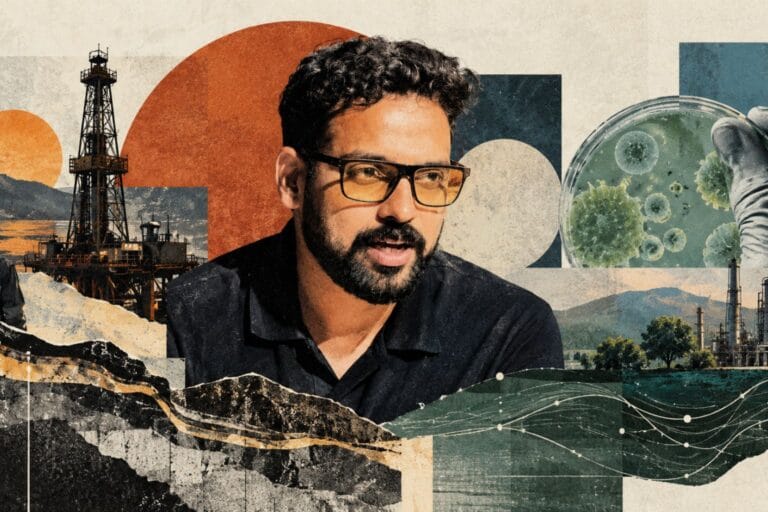
The Head of Data Science and Insights at MobiKwik has spent over 13 years building AI and analytics functions across telecoms, payments, and e-commerce. He talks to NervNow’s Ojasvi Nath about where AI is delivering measurable impact inside a fintech today, how behavioral signals from the payments layer are opening credit to customers invisible to traditional systems, and why responsible AI governance demands continuous discipline rather than periodic review.
Ashish Dhar
Head of Data Science and Insights, MobiKwik
Ashish Dhar is an AI, ML, and data analytics leader with over 13 years of experience across telecoms, payments, and e-commerce. At MobiKwik, he leads data science and insights. Prior to this, he served as AVP and Head of Analytics at Airtel Digital, where he worked across multiple use cases spanning analytics, data science, and AI-powered data platforms. He has also held senior analytics roles at Vodafone Global through _VOIS and at Jio’s payments arm JioMoney.
Part One
Where AI is delivering inside a fintech
NervNow
Where is AI delivering the most measurable business impact inside a fintech like MobiKwik today, and where is it still being figured out?
Ashish DharAt MobiKwik, AI is delivering its clearest business impact in credit, fraud, and collections. These are areas where model output changes a real business decision, so the outcome can be measured clearly. Credit scoring, fraud interception, and collections prioritization all have strong feedback loops, which helps the models improve faster.
The area still evolving is personalization at scale. Good recommendations are easy to discuss. Changing customer behaviour responsibly in production is much harder. We are making progress, but the industry is still early on this journey.
NervNow
Credit decisioning for thin-file and no-file customers, how is AI changing the approach?
Ashish DharThis is one of the most important problems in Indian fintech because the scale is unlike anywhere else. A bureau-only approach can miss a large pool of creditworthy people simply because they have limited or no formal borrowing history. AI helps us read consent-led behavioral signals from the payments layer, covering UPI frequency, merchant diversity, bill payment consistency, inflows, outflows, and repeat usage.
These signals do not replace underwriting discipline, but they create a sharper starting point for assessing customers who are otherwise invisible to traditional credit systems.
A bureau-only approach can miss a large pool of creditworthy people simply because they have limited or no formal borrowing history.
NervNow
Fraud detection in real-time payments, what does the architecture actually look like?
Ashish DharIn real-time payments the architecture has to be layered. Fraud patterns in India evolve quickly. A signal that worked six months ago may not be strong enough today. The focus is on reading behaviour at scale across the user, merchant, device, and transaction layers. Fraudsters can fake a transaction, but it is much harder to fake a consistent behavioral fingerprint over time. We look for deviations from normal patterns and tune the response based on risk.
The trade-off is speed versus accuracy. Every millisecond added by a richer model affects transaction latency, and in payments that matters. The model must be sharp without hurting the customer experience.
Also Read
BNI’s Chief Data & AI Officer Franck TIA on What Banks Consistently Get Wrong Before They Deploy AI
Part Two
Data science as a function
NervNow
You work at the intersection of data science use cases, analytics, and business insights at MobiKwik. Most organizations keep these separate. What is the case for closer integration?
Ashish DharThe common failure in data teams is simple. Model builders may not always see the business context, and analysts stop at reporting what happened. That creates reports no one acts on and models that solve the wrong problem. Closer integration keeps both sides honest. When analytics, insights, and data science work together, teams move faster from “what happened?” to “what should we do next?”
It also improves decision-making. Leadership gets one business narrative across credit, fraud, growth, and collections, rather than disconnected dashboards and model outputs.
NervNow
There is a difference between technically impressive models and ones business teams actually trust and use. How do you close that gap?
Ashish DharMost modeling projects fail at adoption, not accuracy. Trust starts before the model is built. Business teams need to help define the problem, the risk threshold, and the action that will follow. If risk or collections teams co-own the definition, they are far more likely to use the output.
The second piece is explainability. Teams trust a model when they understand the drivers and know where human review is needed.
Most modeling projects fail at adoption, not accuracy.
Part Three
Responsible AI in financial services
NervNow
AI models can encode socioeconomic biases around gender and geography. How do you audit for that?
Ashish DharThis is a real issue, and the industry is still building mature practices around it. Historical financial data can carry bias. If a model learns only from that data without checks, it can reproduce the same patterns.
The audit must go beyond overall model accuracy. We review outcomes across cohorts such as geography, income segments, and where appropriate, gender. A model can look strong on average and still underperform for a specific customer group. When a gap appears, the fix may involve reweighting variables, changing features, or adding human judgment. Responsible AI in financial services is an ongoing process requiring continuous review.
Part Four
Agentic AI in regulated environments
NervNow
Is MobiKwik exploring agentic workflows? What is your threshold for trusting an AI agent with a decision that directly affects a customer’s money?
Ashish DharYes, but in controlled use cases. We are exploring agentic workflows in areas such as customer experience, collections outreach, internal workflows, marketing, and developer productivity. Experimental here does not mean fully autonomous. These are systems we are learning with.
For anything that directly affects a customer’s money, the threshold is high. Agents can assist, recommend, draft, or trigger low-risk actions. Consequential financial decisions still need a human review layer. As reliability improves, the boundary can move, but not ahead of controls.
NervNow
In a regulated environment, how do you define the boundary between what an agent can decide and what needs a human?
Ashish DharThe boundary should be drawn on three filters: reversibility, consequence, and regulation. If an action is reversible and low-risk, an agent can have more room with oversight. If it affects credit, limits, loan disbursal, collections intensity, or customer money, human review is non-negotiable today.
Consequence also matters on its own. A small error in a customer response can be corrected. A systematic error in collections prioritization at scale is a very different risk. The regulatory point is clear: accountability cannot be outsourced to an algorithm. In financial services, someone inside the organisation must own the decision and the control framework behind it.
Accountability cannot be outsourced to an algorithm. Someone inside the organisation must own the decision and the control framework behind it.
Part Five
The road ahead
NervNow
What separates organizations that will genuinely build AI-native financial products from those just wrapping existing products in AI language?
Ashish DharAI-native means the product could not exist at scale without AI. Credit for new-to-credit customers is a good example. A chatbot placed on top of a legacy FAQ system is AI-adjacent, regardless of how it is described.
The second difference is data. A fintech that has built deep payments behaviour, repayment history, and app engagement data over years has an advantage that compounds. It cannot be replicated quickly by a competitor deciding to do AI this year. The third is organisational muscle. Teams must move quickly from business problem to deployed model, and leadership must know the difference between a demo and a responsible production system.
NervNow
If you could solve one unsolved AI problem in Indian fintech in the next two years, what would it be?
Ashish DharReliable income estimation for India’s informal economy. India’s credit gap is often an income verification gap. We can model behaviour and read transactions, but underwriting finally comes down to one question: can this person repay? For a small merchant, gig worker, or daily wage earner, formal proof may not reflect real earning capacity.
If AI can responsibly infer income from alternative, consent-led signals, it can bring more deserving customers into formal credit. That is the real prize: broader and safer financial access, built on signals that actually reflect people’s lives.
NervNow
With AI moving faster than internal governance, how does MobiKwik ensure the roadmap does not outpace risk and compliance?
Ashish DharThis is an active challenge. The first principle is to build governance into product design rather than treating it as a final approval gate. Risk, compliance, product, data, and business teams need to be in the conversation early.
We also tier models by maturity and risk. A model running in production for six months cannot be governed the same way as a pilot deployed last week. High-impact use cases need stronger controls, monitoring, and human oversight. The bigger need is talent that understands both AI and regulation. Governance works only when people can hold innovation and accountability in the same frame. Building that muscle is one of the most important investments a fintech can make now.
Governance works only when people can hold innovation and accountability in the same frame.
Advertise on NervNow
To advertise with us, email business@nervnow.com
Editor’s note: Interview responses have been lightly edited for clarity and formatting only. No responses have been altered in substance.
The views and opinions expressed in this interview are those of the interviewee and do not necessarily reflect the position of NervNow or any organization.
For more conversations on AI across fintech, banking, and enterprise technology, explore the NervNow Interview Series.