© 2026 NervNow™. All rights reserved.


Tata’s Varadharajan Ragunathan on AI, Retail Media and Shopping Agents
Varadharajan Ragunathan talks to NervNow about what changes when generative AI is present from day one, why retail media measurement is more broken than the industry admits, and the guardrail problem nobody has solved before AI agents start shopping on our behalf.
Interview › Retail Media › AI and Commerce
NervNow Interview Series
Varadharajan Ragunathan built an ads engine at BigBasket before moving to Tata Group, where he now leads retail and commerce media across retail, travel and hospitality. He has also spent 25 years studying how people make choices. He talks to NervNow about what changes when generative AI is present from day one, why retail media measurement is more broken than the industry admits, and the guardrail problem nobody has solved before AI agents start shopping on our behalf.
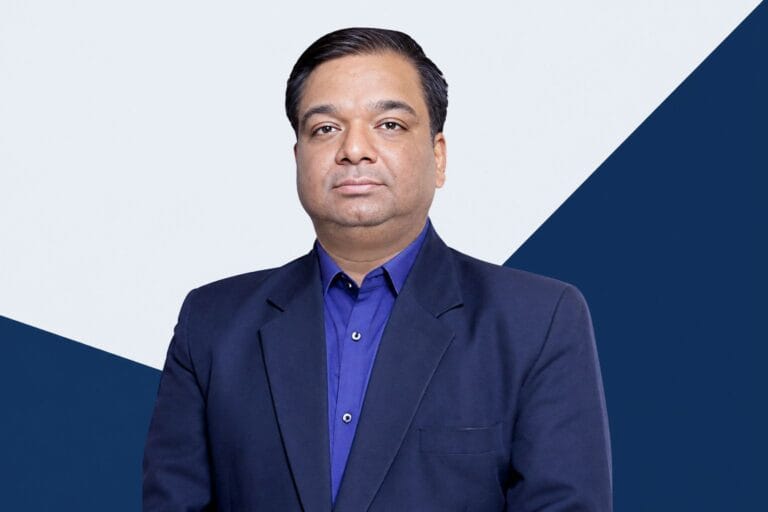
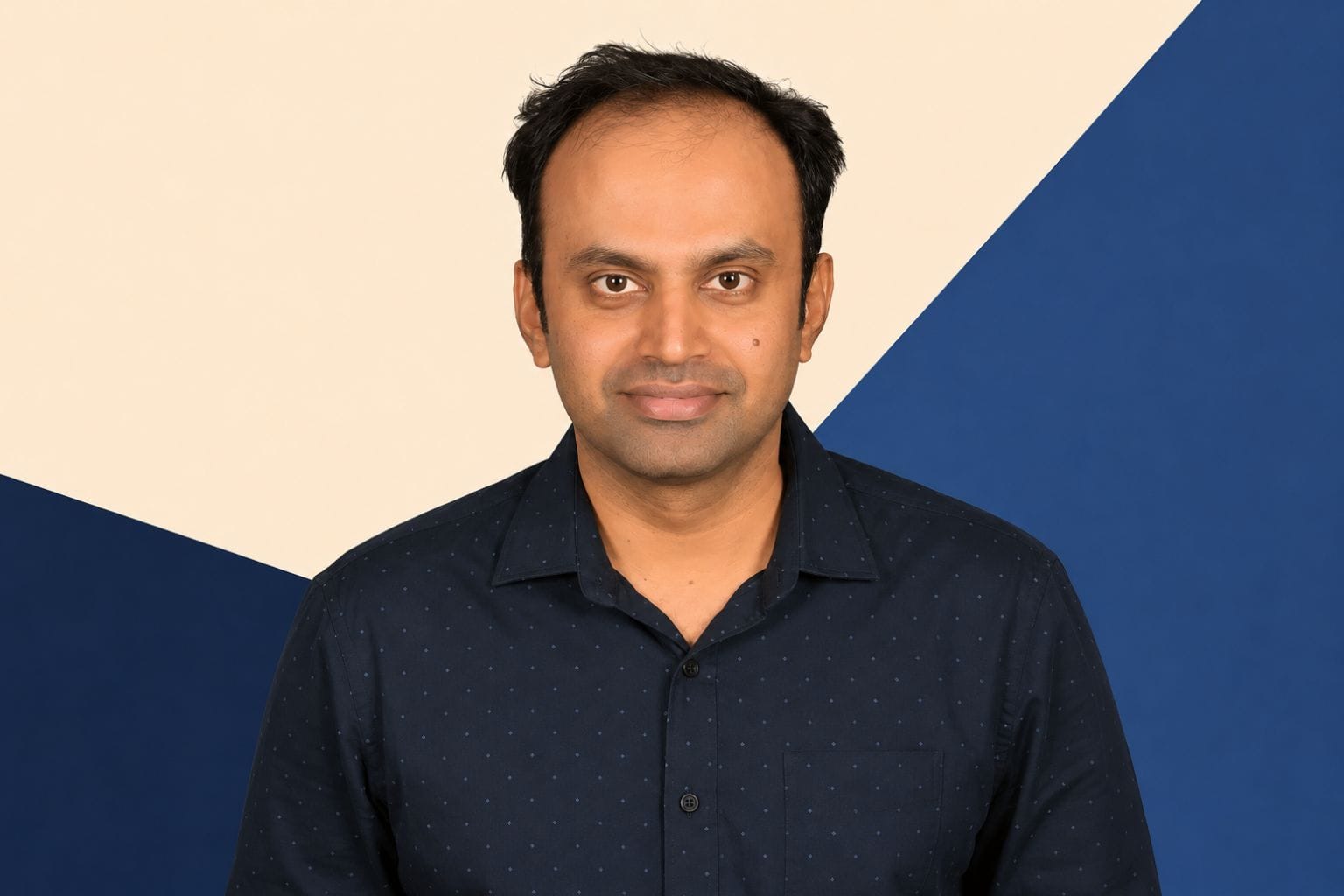
Varadharajan Ragunathan
Head of Retail Media and Adtech, Tata Group
Varadharajan Ragunathan leads retail and commerce media at Tata Group, building the business across retail, travel and hospitality. Before this he ran monetization and customer engagement at BigBasket, where he built the ads engine, and spent four years at Amazon. His earlier career spans investment banking, private equity and management consulting at Equirus Capital, Peepul Capital and KPMG. He studies cognitive psychology and behavioral science alongside his operating work, and holds degrees from IIT Madras, IIM Ahmedabad and Babson College.
What changes when AI is there from the start
Building an advertising business inside a retailer is a different exercise from building one inside a publisher. The retailer knows what people bought, when they bought it and what they bought alongside it. That first-party purchase data is the closest thing advertising has to certainty, and it is why nearly every large retailer now wants a media network of its own.
Ragunathan has built one of these before. At BigBasket he built the ads engine when generative AI was a capability bolted onto an architecture that had already been decided. At Tata he is starting with it in place, which changes what gets designed first.
“The biggest change is fresh grounds-up thinking. Media was called well, just that, media. Now media can be a concierge with relevant content, surface reviews and recos and incidentally also surface paid ads. So the number of degrees of freedom unearthed by AI has gone up.”
The word doing the work in that sentence is incidentally. In the model he is describing, the paid placement is no longer the point of the surface. It arrives inside something the shopper already wanted, which is a different design problem from the one most ad tech was built to solve.
A publisher selling ads has one revenue line and every incentive to maximize it. A retailer has two, and Ragunathan argues the wall between them is coming down.
“As a retailer you are indifferent to getting money for an ad or selling more of a product that the customer wants. We are now entering a world where merchandising, offers and media are all three sides of the same coin.”
Merchandising, offers and media are all three sides of the same coin.
Guardrails on a persuasion system
Ragunathan has spent a long time reading cognitive psychology, which puts him in an unusual position. He is building systems whose function is to influence purchase decisions while understanding, better than most people in that job, exactly which mental shortcuts such systems can exploit.
An optimizer told to maximize conversion will find those shortcuts on its own. Nobody has to instruct it to. The controls he puts around such a system are procedural, governing how often a message runs and how much it is allowed to repeat itself.
“By building a layer of governance that a) avoids over exposure b) rotates messages and angles of persuasion, one day on price, one day on product quality, one day on reviews.”
Rotation is a deliberate constraint. A system left to optimize freely will converge on whichever angle works hardest on a given person and then keep pulling that lever. Forcing it to alternate between price, quality and social proof caps how far any single line of persuasion can be pushed.
The same instinct toward restraint shows up in how he thinks about personalization. Generative AI makes it possible to produce thousands of creative variants and aim each one at an individual. More variants also mean more opportunities to misread someone at scale.
“Rather than personalize sharply, a more acceptable trade-off is to customize for a cohort, say moms or athletes, and that gives you a larger safety net to fall on.”
Cohort targeting is less precise by design, and the imprecision is the safety net he is describing. A misread cohort produces an irrelevant ad that a shopper scrolls past. A misread individual, with the full weight of their purchase history behind the guess, produces something that can feel invasive.
The waiter and the meal
The pitch for retail media has always been closed-loop measurement. You show someone an ad, they buy the product, and for the first time in advertising you can draw a straight line between the two. Ragunathan thinks that line is drawn far more confidently than the evidence supports, and he is not alone in worrying about it.
“More and more brands are asking themselves if mere last touch attribution is enough to justify such spends on retail media and are moving towards incrementality.”
Last-touch attribution credits whichever ad appeared immediately before the purchase. Incrementality asks a harder question, which is whether the purchase would have happened anyway. The two produce very different numbers, and the industry has been more comfortable with the first.
Pressed on where measurement breaks down in practice, he identifies two failures.
“The years that a brand built as equity is assumed to be zero. The entire path to purchase is ignored. It is the equivalent of the waiter claiming credit for the entire meal. There is a chef, a cook, a vegetable cutter and possibly even someone who trained the chef who all need to be credited too.”
What last-touch attribution does structurally is take the final visible contact and assign it everything, treating years of brand building and every earlier touchpoint as though they contributed nothing to the sale. The waiter did appear last, and that is the entire basis of the claim.
It is the equivalent of the waiter claiming credit for the entire meal.
The sovereignty question
India is building its commerce media infrastructure now, which means the rules governing data use, consent and how aggressively AI can target are being written while the systems are being built. Asked which decision being taken today the industry will look back on differently, Ragunathan points away from the operational questions entirely.
“The decision to give away so much power to big tech given the geopolitical and sovereign risks, including not having a sovereign LLM.”
The concern is structural. The models that will increasingly mediate what Indian shoppers see, and the infrastructure those models run on, are largely controlled elsewhere. Whether that dependency matters is a question the industry has mostly deferred while it works on more immediate problems.
When the agent does the shopping
The capability that worries him has nothing to do with persuasion. It is the prospect of AI agents transacting on a shopper’s behalf.
“That agents can shop for you. Without adequate guardrails how do you prevent a catastrophe from happening, like someone eating a food he or she is allergic to. We are not thinking through enough guardrails.”
The allergy example is a useful test because it exposes what an agent does not have. An agent optimizing for price, availability and delivery speed has no reason to know about a household allergy unless someone deliberately built that constraint into it. The failure would be silent, correct by every metric the system tracks, and visible only after the fact.
Without adequate guardrails, how do you prevent a catastrophe from happening. We are not thinking through enough guardrails.
Advertise on NervNow
To advertise with us, email business@nervnow.com
Editor’s note: This feature is based on a written exchange with Varadharajan Ragunathan. Quotes have been lightly edited for punctuation and clarity. No statements have been altered in substance.
The views and opinions expressed are those of the interviewee and do not necessarily reflect the position of NervNow or any organization.
For more conversations on how AI is reshaping commerce, media and enterprise technology, explore the NervNow Interview Series.