© 2026 NervNow™. All rights reserved.

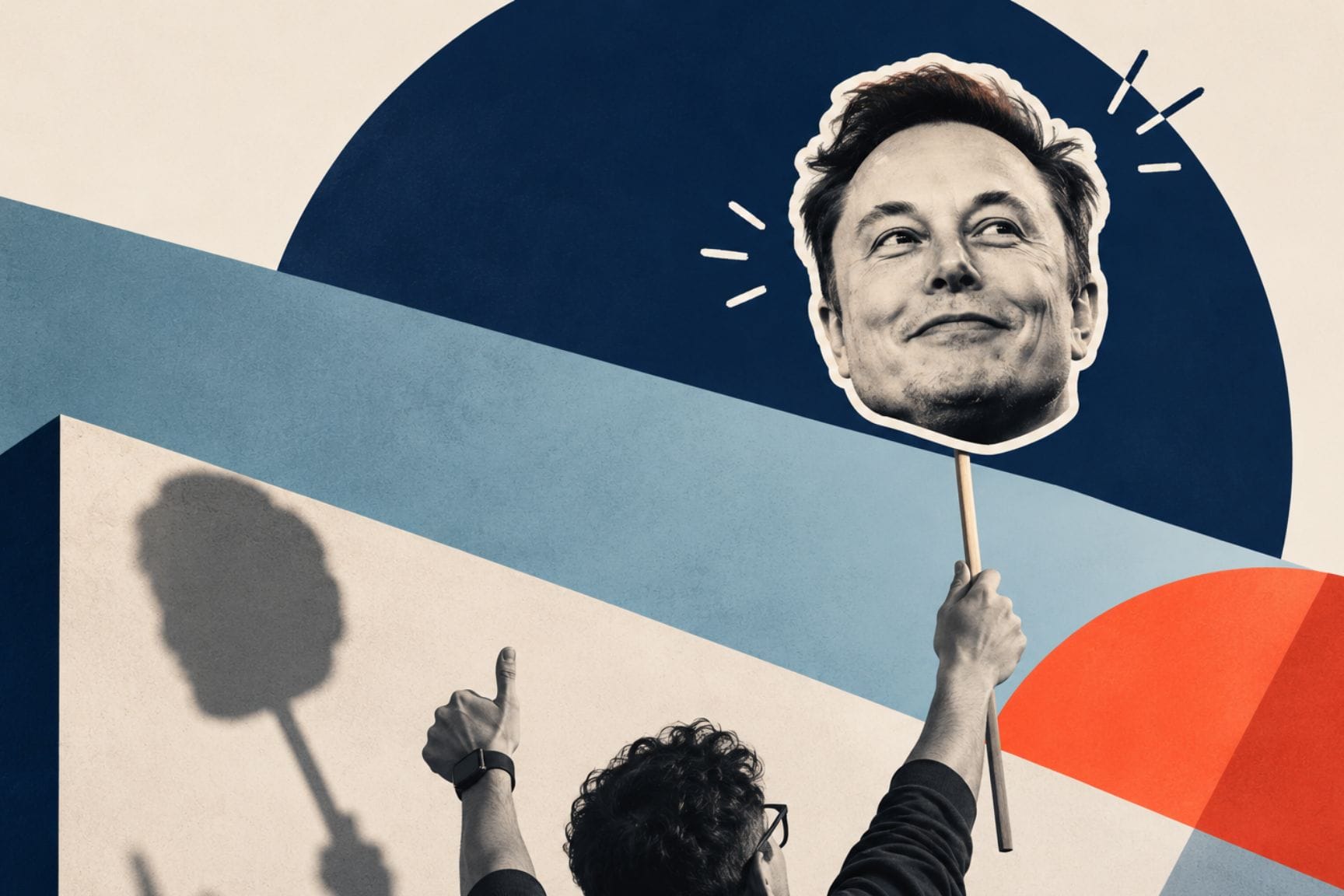

Who Started AI Appreciation Day? A Non-AI Elon Musk Fan
Every July 16, LinkedIn fills up with AI Appreciation Day posts, most written by companies that make AI products. Almost none of them know who actually invented the day, and the answer has nothing to do with a lab, a product launch or a boardroom.
Deep Dive · AI Culture/Explainer
Who Invented AI Appreciation Day?
Every July 16, LinkedIn fills up with AI Appreciation Day posts, most written by companies that make AI products. Almost none of them know who actually invented the day, and the answer has nothing to do with a lab, a product launch or a boardroom.
Every July 16, a small corner of the internet marks Artificial Intelligence Appreciation Day. Most people who scroll past the hashtag assume it is another manufactured occasion, the kind of calendar filler that exists to sell something. The origin story is stranger than that, and the intent behind the day is more specific than most people give it credit for.
Where the Day Came From
AI Appreciation Day traces back to a single person. Jason Kirton, a freelance advertising professional, created the observance in 2021. To get it listed on National Today, a website that catalogs annual observances and requires a registered company and a fee from anyone submitting a new day, he formed a company called A.I. Heart LLC. That company is why some accounts describe a separate founder, when it was actually the entity Kirton created to complete the listing.
A persistent but inaccurate version of the story holds that the day was invented to promote a film. Kirton had separately been developing an idea for a movie about a sentient AI that helps rather than harms humanity, and its synopsis once appeared on the same website he used for the listing. That overlap led some outlets to wrongly conclude the observance was built to market the film, which was never made. Some AI chatbots still describe the founding incorrectly or call it unclear.
Kirton has said his real motivation was to create a recurring occasion for people to think about AI ethics and regulation, an interest partly shaped by public figures who have called for stronger AI oversight, Elon Musk among them. Kirton has described himself as an admirer of Musk and once spent nearly a year camping near SpaceX’s Starbase facility in Texas hoping for a chance to discuss AI regulation with him in person.
None of the accurate reporting describes the day as a celebration of AI companies or their products. It was built from the start as an occasion for appreciation paired with scrutiny.
“
Not uncritical hype. Not reflexive fear. An honest accounting of what AI actually does, where it falls short, and who bears responsibility when it fails.
A separate but similarly named event, National AI Day, also falls on July 16. It was introduced by the National Day Calendar organization in 2025 and carries a lighter framing, focused on learning about AI’s development and its role in shaping the future. The two observances share a date and a general theme but originate from different organizations.
Why “Appreciation” Is the Deliberate Word Choice
The word “appreciate” does more work here than it might first appear. To appreciate something is not only to feel gratitude for it. It also means understanding its value accurately, in the same sense that a person might appreciate the gravity of a situation. That second meaning is closer to what the day’s founder intended.
The History Behind the Observance
The scientific foundation for AI predates the appreciation day by roughly seven decades. Alan Turing published “Computing Machinery and Intelligence” in 1950, proposing what became known as the Turing Test, a framework for judging whether a machine’s conversation could be mistaken for a human’s. In 1956, a group of researchers including John McCarthy, Marvin Minsky, Nathaniel Rochester and Claude Shannon organized a summer workshop at Dartmouth College, where the term “artificial intelligence” was coined.
Progress after that point was uneven. The field went through multiple periods of reduced funding and interest, often called AI winters, as early promises outpaced what the technology could deliver. That pattern changed with the arrival of large datasets and more powerful computing hardware in the 2010s, which set the stage for the generative AI systems that reached mainstream attention in the early 2020s.
OpenAI’s release of ChatGPT in November 2022 marked a turning point in public awareness. The application reached one million users within five days of launch, a growth rate that had no real precedent among consumer software at the time. GPT-4 followed in March 2023 with multimodal capabilities, expanding what the systems could handle beyond text.
Adoption has grown just as fast.
55%
of organizations used AI in at least one business function in 2023
McKinsey, 2025
78%
reported the same a year later, in 2024
McKinsey, 2025
88%
report AI use today, per McKinsey’s most recent survey
McKinsey, Nov. 2025
Market size estimates vary by research firm depending on what they count, ranging from roughly 244 billion dollars to more than 750 billion dollars for 2025, but they agree the trend is steep growth. Separately, PwC estimates AI could add up to 15.7 trillion dollars to global GDP by 2030, a measure of economic impact rather than market size, with roughly 6.6 trillion dollars from productivity gains and 9.1 trillion dollars from consumer-side benefits. These figures explain why an appreciation day built around ethics and governance has grown more relevant each year rather than fading as a novelty.
What the Day Asks of Business Leaders
For executives, the more useful version of AI Appreciation Day has little to do with hashtags. Most organizations are using AI in some form, but adoption has outpaced governance in a large number of cases. Employees exposing sensitive company data to AI tools through personal accounts, often without their employer’s knowledge, has become common enough that it has its own shorthand among security teams: shadow AI. The relevant question for leadership is not whether to adopt AI, since that decision has largely already been made. It is whether an organization can account for how AI is used inside it: what data goes into these systems, who approved that use, and what happens when a model makes a decision that turns out to be wrong.
A Day Built for a Harder Conversation
AI Appreciation Day is not a public holiday. Banks, schools and offices remain open. It functions more like World Mental Health Day or Earth Day: a fixed date meant to prompt a conversation that would otherwise get lost in daily routine. The person who created it did not design it as a marketing opportunity for AI companies. He designed it as a checkpoint, a recurring moment to ask whether the relationship between people and the systems they are building is developing on purpose or by default.
Electricity followed a similar arc. So did the internet. Both were once treated as marvels worth a headline of their own, then slowly disappeared into the background of ordinary business, until almost no one thought to call a factory “electrified” or a company “online.” Most analysts who study technology adoption expect AI to follow the same path: the current wave of hype, fear and daily news coverage is a phase, not a permanent condition. Within a decade or two, using AI well may be as unremarkable as using a spreadsheet.
That endpoint does not remove the responsibility that comes before it. Every prior technology that reached that quiet, infrastructural stage did so only after a period when governance had to catch up with capability. Electricity needed safety codes. The internet needed data protection law that took decades to mature. AI is moving through that same catch-up period now, at a faster pace than either of its predecessors. The businesses that treat this stage seriously, building oversight and accountability into how they use AI rather than bolting it on after a failure, are the ones likely to still be trusted once the technology stops making headlines and simply becomes part of how work gets done.
A Note on Sources
Figures are attributed and linked inline, and were checked against primary or high-quality secondary sources: PC Gamer’s interview with Jason Kirton, McKinsey’s State of AI global surveys (2024 and 2025 editions), and PwC’s “Sizing the Prize” global AI economic impact report.
Editorial Note
The day’s origin is sometimes reported as a joint effort or attributed to a separate company. Reporting based on a direct interview with the founder traces both the observance and the company used to register it to one person.
More NN Analysis
- Musk Opens SpaceXAI Hiring to Engineers, Physicists With No AI Background →
- Tesla and SpaceX Launch Terafab: A $25B Bet to Build AI Chips In-House →
- Top Seven AI Stories That Mattered This Week →
- Is OpenAI Losing the AI Talent War to Anthropic? Karpathy’s Defection Is the Latest Sign →
- How the .ai Boom Made Anguilla One of the Biggest Winners in AI →