© 2026 NervNow™. All rights reserved.

 ByAnu Nair
Who Prepares India’s Media Talent for AI?
AI is changing how media is researched, produced and consumed. Dr. Anu Nair on whether India's media schools are training students for it.
Op-Ed
Education | AI & Media Training
Dr. Anu Nair writes on what AI means for the future of media education. From newsrooms, ad agencies, movie production houses and digital studios, AI will change the way media is researched, produced, distributed and consumed. Are India’s media schools ready to prepare future journalists, editors and students? Her take is cautiously optimistic.
Part I
Are India’s media schools ready?
Artificial intelligence promises to be the next big challenge for the media industry. From newsrooms, ad agencies, movie production houses and digital studios, AI will revolutionize the way media is researched, produced, distributed and consumed. But what does this mean for the future of media education? Are India’s media schools ready to prepare future journalists, editors and students?
My take on this is cautiously optimistic.
While many educational institutions have taken baby steps to prepare future professionals for working alongside AI, I feel there is a need to focus more on educating students about the basics of artificial intelligence so that they are not rendered irrelevant in the wake of exponential technological advancements.
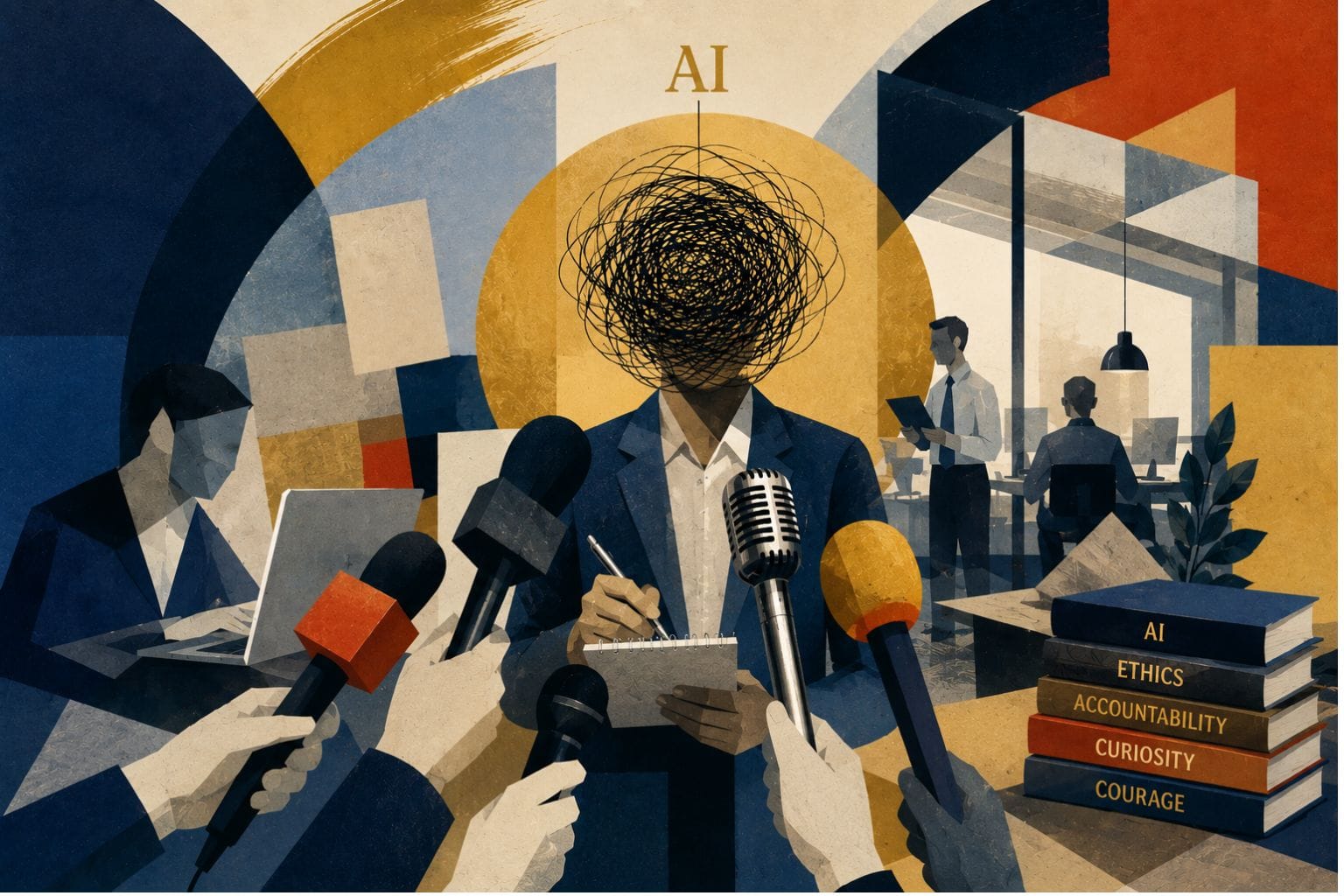
As educators, it is our responsibility to prepare students to understand and benefit from the opportunities and threats posed by AI. Future students and professionals must know the basics of ethics, algorithms, copyright, synthetic media, misinformation, analytics and data privacy, along with other competencies pertinent to this field. Students are, after all, our future professionals, and it is only by educating them about these topics that they will be able to keep up with this industry’s paradigm shift.
Media schools should put creative intelligence ahead of software training. No matter how advanced the tools get, there will always be a need for talented professionals who can think outside the box, and a demand for good writers and directors who can churn out groundbreaking content. I hope that one day we see India transform into such a future media education landscape.
No matter how advanced the tools get, there will always be a need for talented professionals who can think outside the box.
Part II
Should media schools teach prompt engineering?
One interesting question that comes to my mind is whether media schools should teach prompt engineering and storytelling. 100% yes.
It goes without saying that prompt engineering has become an integral part of today’s world. By being able to communicate with computers in their language, humans can benefit tremendously from harnessing the potential of AI to its maximum, whether it be in terms of research, creative writing, computer graphics or automating time-consuming media production processes.
Prompt engineering has become an important aspect of the media production process, making it a valuable skill to have in today’s competitive media landscape. It has also become a key differential for many organizations that are at the forefront of this AI revolution.
With that being said, while I think students must learn prompt engineering, it should not come at the expense of losing sight of age-old skills such as storytelling. Prompt engineering itself is just a digital language that allows humans to get the most out of their AI collaborator.
Prompt engineering is just another tool in the ever-expanding media professional’s toolkit.
It is important to remember that prompt engineering is one tool that must be wielded in tandem with foundational digital-age competencies such as writing, interviewing, observation, analytics and critical thinking.
To advertise with us, write to nervnow.com/contact
Part III
Will AI kill media jobs?
Artificial intelligence will also transform the media job landscape forever, ushering in brand new careers while rendering others irrelevant. Many may wonder, “Will AI kill media jobs?”
In my opinion, while AI promises to disrupt the way media is produced, it will not necessarily kill jobs in this sector. Humans will focus more on the creative aspects of media production, delegating mundane, transactional tasks to AI.
AI can be leveraged to automate time-consuming media production processes, allowing humans to focus on more investigative, creative and strategic tasks. Many new jobs will be created as India’s media industry adopts AI to stay ahead of the global curve and keep up with changing consumer demands.
Careers that could shape India’s media industry after AI
AI Content Strategist
AI News Editor
Synthetic Media Producer
Generative Media Designer
AI Ethics Consultant
Prompt Specialist
Virtual Production Expert
AI Fact-Checking Professional
Part IV
Can India build its own AI media ecosystem?
One pertinent question that needs to be asked is whether India can develop an indigenous AI media ecosystem like China’s booming AI micro-drama industry. I think India has the know-how and tools to build such an ecosystem.
By leveraging India’s diverse language landscape and centuries-old storytelling traditions, we can localize groundbreaking content and take it global. However, I feel it is important for us to develop our own unique take on this AI media revolution and not rest on other nations’ achievements.
We need to create authentic content in local languages so that we can provide our diverse population, which speaks more than 200 languages, with wholesome content that they can connect to.
I think we need to focus on developing tools that will help us create more ethical content while protecting our intellectual property. I do not think audience members will hesitate to support transparent content creators who operate with a sense of honesty and ethics. Similarly, content creators must be compensated for their original work so that they can continue to create authentic content without having to resort to desperate measures just to fund their passion.
India has the potential to be the world’s largest ethical, innovative content creator.
I hope we can stake our claim in the AI-powered content creation space soon.
Part V
What media schools must build
As media schools, it is our responsibility to prepare future professionals to be agile and versatile in their approach to this ever-changing industry. We must equip future journalists, editors and students with multidisciplinary and multifunctional skills so that they can meet the diverse needs of this modern-day media landscape.
We need to prepare future media leaders to be storytellers and technologists, data analysts and strategists, and even entrepreneurs, to meet the rising demands of this industry.
AI foundations
Ethics, algorithms, copyright, synthetic media, misinformation, analytics and data privacy.
Creative intelligence
Storytelling, writing, interviewing, observation and critical thinking, the age-old skills AI does not replace.
Soft skills
Communication, critical thinking and cultural intelligence, prioritized to help students stand out in a competitive job market.
I think it is extremely important for media schools to design a multidisciplinary curriculum that will allow students to gain the competence required to operate in this quickly evolving media landscape. Technical skills always need to be supplemented with ethical and creative competencies, while soft skills such as communication, critical thinking and cultural intelligence must be prioritized to help students stand out in this highly competitive media job market.
Part VI
The long game
While students must learn to supplement their creative competencies with technical skills, it is of utmost importance for them to hone their creative intelligence to stay ahead of the curve. The future belongs to the most talented and innovative minds who can leverage their capabilities to impact society positively. The most successful educational institutions of the future will be the ones that nurture such individuals and encourage them to channel their energy and resources to make the world a better place.
It is important that we encourage future media leaders to become responsible custodians of this powerful medium while still encouraging them to leverage cutting-edge technologies such as AI to disseminate information more efficiently. There will always be a need for talented writers and directors who can truly understand human nature and create content that resonates with consumers.
This is the kind of media-savvy future citizen that I think India must strive to develop. Media education will play a crucial role in shaping such future professionals, and it falls upon us, as educators, to ensure that we give our students the necessary skills and competencies to thrive in an industry that is undergoing such a shift.
Get the next NervNow deep dive in your inbox
Reporting on the people, policy and money shaping enterprise AI, sent direct.
Subscribe to the newsletterDr. Anu Nair is Program Director and Assistant Professor in the Department of Media and Communication at MIT World Peace University, Pune, with more than 13 years in media and communication education. Her academic interests focus on the integration of artificial intelligence into media education. The views expressed in this op-ed are the author’s own.
Sources & method
Edited for NervNow style. Section headings were added by NervNow editors; the original submission ran as continuous prose. Author biographical details are drawn from MIT World Peace University’s faculty profile. The reference to India’s language diversity reflects the author’s own figure. The comparison to China’s AI micro-drama industry is the author’s characterization. To flag a correction, write to editorial@nervnow.com.