© 2026 NervNow™. All rights reserved.

 ByNN Desk
Behind Majorana 2: A Quantum Claim Under Fire and an AI Tool on Sale
Microsoft unveiled Majorana 2 and made its R&D AI platform generally available. The quantum claim is contested. The enterprise tooling is real.
The company says agentic AI helped build a more reliable quantum chip. The bigger move for enterprises is that the same AI platform is now on sale.
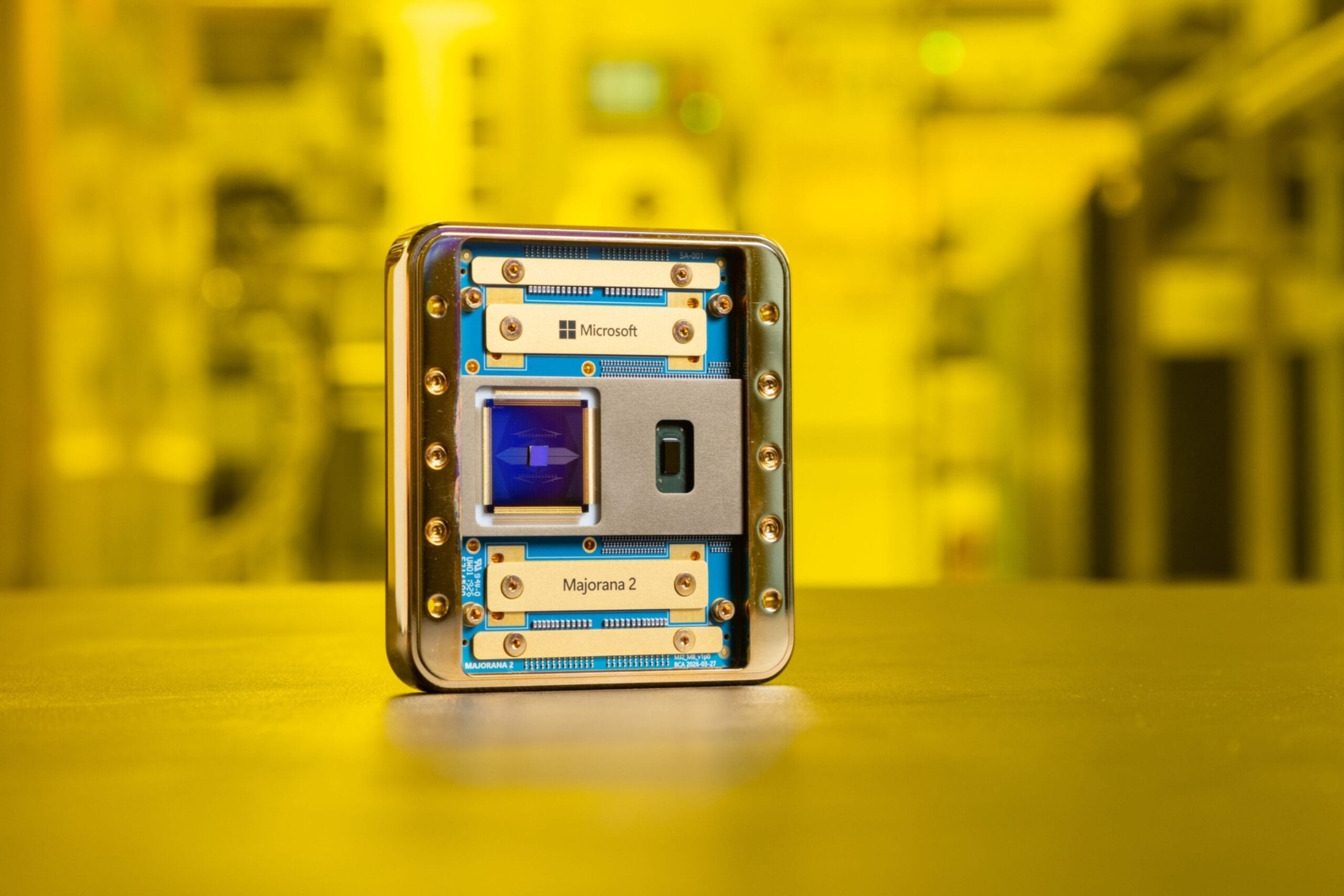
Microsoft used its Build conference on June 2 to unveil Majorana 2, the next version of its topological quantum chip. The company says the new chip is 1,000 times more reliable than last year’s model. Less noticed in the headlines was the product launch underneath it.
On the same day, Microsoft made Microsoft Discovery generally available. Discovery is the agentic AI platform its quantum team used to help build the chip. The company also previewed a free app that individuals can run locally with a GitHub Copilot account.
For enterprise leaders, that second announcement carries more weight than the physics. The tech giant is now selling the research tooling it built for its own frontier science.
What changed in the chip
Majorana 2 holds its quantum state far longer than its predecessor. Microsoft reports a mean qubit lifetime of 20 seconds, with some instances reaching a full minute. Most rival approaches measure that lifetime in microseconds.
The gain came from a materials change. Microsoft swapped the aluminum superconductor in the first chip for lead, and reworked the semiconductor layer. Lead helps shield fragile qubits from interference, but it proved hard to keep on the chip during manufacturing.
Microsoft credits its AI tools with helping manage the chip’s manufacturing and measurement. On the strength of the result, the company pulled its roadmap forward. It now targets 2029 for a scalable, commercially useful quantum computer, down from an original goal of 2035. That date puts it level with IBM.
The AI story enterprises should track
Microsoft’s quantum team describes agentic AI as a normal part of daily work. Agents managed fabrication, automated measurements that once took weeks and filtered noise from nearly two decades of lab data.
Zulfi Alam, the corporate vice president for quantum, said automating the measurements was a turning point, noting that an earlier attempt to automate the same work with older machine learning had failed. He added that the system keeps a scientist in control and offers guidance rather than decisions.
That workflow is the part Microsoft is commercializing. Discovery lets teams deploy AI agents that generate hypotheses, optimize experiments and synthesize knowledge across disciplines. Microsoft says customers in life sciences, chemicals, energy and manufacturing are already using it.
Why the proof point is shaky
Here is the catch. The quantum result that anchors the launch is disputed.
Parts of the physics community say Microsoft has not released enough data for independent researchers to verify its claims. Henry Legg of the University of St Andrews questions whether the company has a working topological qubit at all. The journal Science placed an expression of concern on a 2020 Microsoft-backed paper claiming similar Majorana evidence, then replaced it last year with a lengthy correction.
Scientific American went further, reporting that the new chip drew a cold response from physicists and continues a pattern of large claims backed by limited evidence. Microsoft says proprietary concerns limit what it can publish, though it has shared results confidentially with DARPA.
The market reaction was muted. Microsoft shares closed June 2 down about 1 percent.
The takeaway
Microsoft has bundled a verifiable product launch with a contested scientific claim. The agentic AI platform is real, available and aimed squarely at enterprise research and development. The 1,000-fold quantum improvement is a company self-report that outside experts are still challenging.
For decision makers, the useful signal is the first part. The race to embed AI agents in frontier research now has a major vendor with a shipping product and a flagship case study. Whether that case study holds up is a separate question, and one worth watching well before 2029.
MORE ON MICROSOFT
Workday Integrates Sana AI Agent With Microsoft 365 Copilot
OpenAI Resolves Microsoft Dispute Over $50B Amazon Deal
PW Skills, Microsoft Launch AI Certification Programs for Job-Ready Learners
Microsoft Warns Copilot AI Is “For Entertainment Only”