© 2026 NervNow™. All rights reserved.

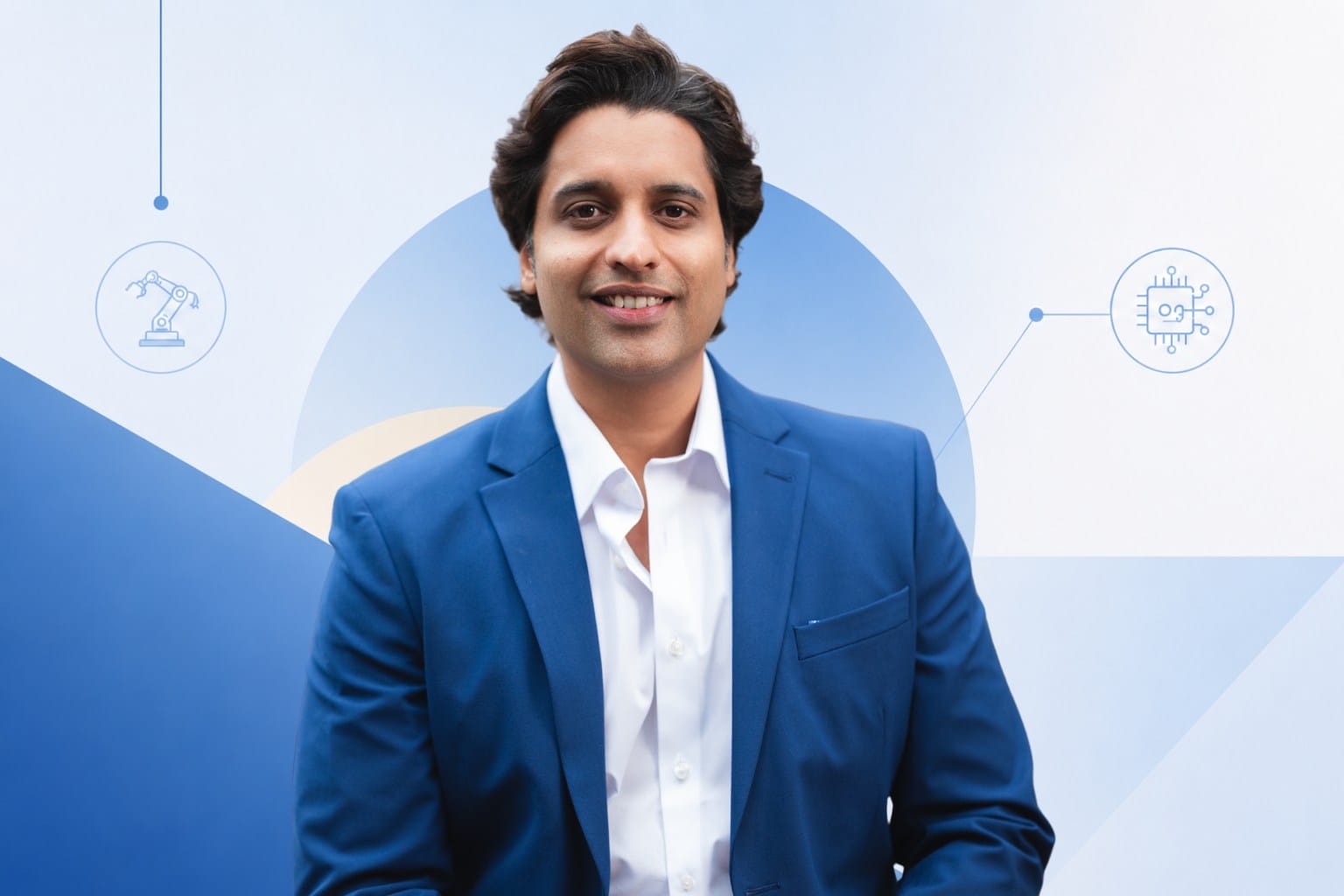

Nirman Ventures’ Nikhil Choudhary on the Next Big $100B Bet in AI
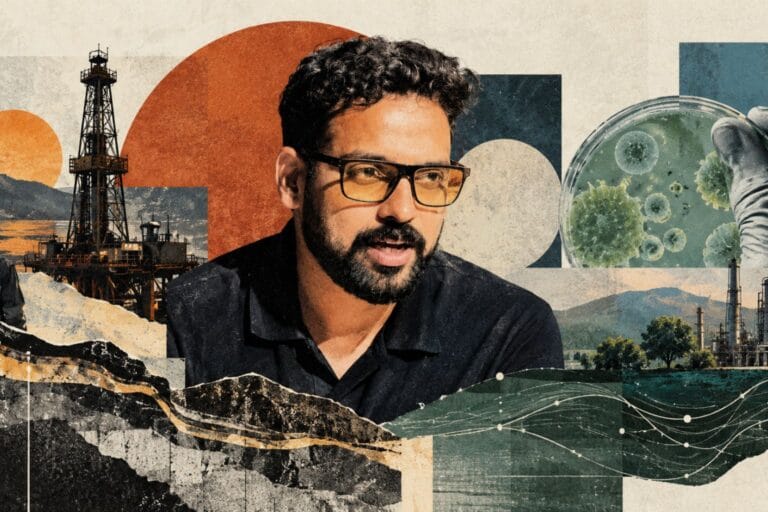
Nikhil Choudhary, Managing Partner at Nirman Ventures, spoke with NervNow about why legacy industries finally opened up to AI, what separates real-world physical AI from polished demos, why he is betting on humanoids despite the hype gap, and where he sees the next hundred-billion-dollar category being built.
NervNow Interview Series
The Decade of Value That Was Left Behind in Physical AI
Nikhil Choudhary, Managing Partner at Nirman Ventures, spoke with NervNow about why legacy industries finally opened up to AI, what separates real-world physical AI from polished demos, why he is betting on humanoids despite the hype gap, and where he sees the next hundred-billion-dollar category being built.
N
Nikhil Choudhary
Managing Partner, Nirman Ventures · San Francisco Bay Area
Nikhil Choudhary is the Managing Partner of Nirman Ventures, a globally focused venture capital firm that writes early checks into robotics, autonomy, and applied AI systems deployed in real-world environments. Nirman’s portfolio includes Field AI, Noble Machines, Ultra, VECROS, Pegbo, Qubu, Citian and Tsavorite Scalable Intelligence. Before turning to venture, he spent more than two decades in construction and real-asset-driven industries, including as founder and former CEO of Zenith Engineers, an AECM firm.
Nikhil Choudhary has spent more than two decades on job sites, in board rooms, and now writing early checks into companies building AI for the physical world. Much of the AI investment world is chasing software multiples and foundation model hype. He is betting on the layer where AI meets concrete, steel and labor. NervNow spoke with him about where that bet came from, what the market is getting wrong, and where physical AI is actually headed.
How We Got Here
NervNow
For decades, venture capital looked at construction, logistics and infrastructure and walked the other way. Too slow, too messy, too resistant to disruption. Then something shifted. What actually broke open the industry, and looking back, do you think it opened at the right moment or did it leave an entire decade of value sitting on the table?
Nikhil Choudhary
Legacy industries like construction, logistics and infrastructure have always been slower to adopt new technology. They did want it. They simply could not afford it. Before the AI revolution, cutting-edge technology was almost always priced higher than the net margins these industries allowed for. These sectors combined also employ the largest workforce on the planet, and software intervention carries real liability when something breaks. If code breaks in a fintech consumer app, a few transactions are lost. If code breaks on a safety feature at a construction site, a human life could be lost. That is the core reason adoption was slower in legacy sectors.
What is opening things up now is a combination of forces arriving at the same time. There is unprecedented demand for new infrastructure driven by data centers and rising utility consumption. The foundational models that drive autonomy are suddenly accessible. The cost of technology itself is falling because of AI. And there are severe workforce shortages around the world, especially in skilled trades.
So yes, I do feel an entire decade of value was left behind. The value was always there. The tech stack was missing. We are in a generational shift with AI, and we are going to see real abundance and efficiencies in these industries in the decade to come.
NervNow
The first wave of construction tech and industrial automation had real capital, real ambition and real promise. Most of it did not scale the way anyone hoped. What did that generation teach the industry, and does today’s wave of physical AI companies carry those lessons forward, or is it writing a new playbook entirely?
Nikhil Choudhary
The first generation of construction tech and industrial automation companies were not that many to begin with. These industries were still unappealing for most founders. The people who did build in that first wave were rarely coders. They were almost always from the industry itself. And the larger startups that failed to scale tried to go end-to-end too early. Jumping from zero to 100 in one move tends to break midway, and that is what happened.
What has changed now is that founders no longer need to be the best at writing code. They need to be close to the problem to ship a great product. We are also seeing repeat founders building their second or third company in these industries, because they see this moment as a generational shift to finally build what they always wanted to, with AI as the unlock.
So it is a new playbook on how these industries react to technology. The playbook on how you actually scale inside them is still the old one.
An entire decade of value was left behind. The value was always there. The tech stack was missing.
What’s Actually Happening Now
NervNow
Every physical AI company has a demo that works. The real test is what happens when that technology leaves the building: a warehouse that does not behave like the training data, a job site that changes every day, or an environment where GPS does not exist. How do you tell the difference between a company that has actually solved that problem and one that has simply postponed it?
Nikhil Choudhary
Real-world deployment is far harder than controlled demonstrations. A warehouse does not care how polished the fundraising story sounded. A deployment either works consistently under operational pressure, or it does not.
The founders we like to back understand where deployment friction will emerge and plan for it. They are aware why previous solutions failed. And most importantly, they stay close enough to operational reality to adapt quickly once their assumptions stop matching the field. Assessing that quality in a founder early on is the single biggest part of our diligence process.
NervNow
Humanoid robots are pulling in some of the largest venture capital checks ever written. You have made that bet yourself. The gap between what is being promised and what is actually shipping is hard to ignore. What do you see or believe that the skeptics are missing?
Nikhil Choudhary
Let me go back to the fundamentals of venture capital for a second. The job of a good early-stage investor is to back solutions that will capture meaningful market share in the near-to-mid-term future. Backing what is ready for adoption today is a different game altogether. It is essentially fortune-telling, backed by research, data and conviction.
Whether I am right or wrong on humanoids and general-purpose robotics, time will tell. I can share the thesis behind that belief. The entire world we live in is structured around the human form. Door heights, stairways, tools, workstations, controls. Everything is built around human interaction. Putting a rover or a robot on tracks into a human-designed environment introduces another variable, which becomes a friction point at integration.
What most skeptics miss is that maturity in any technology takes time. The viral videos of fully working humanoids out there do not help the skepticism either, because they over-promise. What I can see as an insider is that the speed of humanoid maturity is exponential. The progress is moving much faster than public perception suggests.
The speed of humanoid maturity is exponential. The progress is moving much faster than public perception suggests.
NervNow
You back companies at the very earliest stage: first check, no revenue, unproven in the field. Walk us through what conviction actually looks like at that moment. What are you seeing that makes you move?
Nikhil Choudhary
The thing about our team is that we read, research and have operated businesses in these industries. Most of our partners have technical backgrounds. Our firm is partner-led, with no analyst layer. We practice what we preach about staying close to the problem.
Every quarter we assess as a team what we are looking for to complement the portfolio, and we form our own conviction from there. About 2,000 startups cross our desks every year. Roughly half are working on something we want to learn more about.
What conviction looks like for us at the pre-seed stage comes down to a few questions. Has the founder been close to the problem? Is the market large enough? Is there a clear and present need for the product? Has the founder thought through team formation seriously? Are they motivated enough? Are the early customers or pilot users genuine fans of the founder and the product? And will the founder hold up when the times get hard?
NervNow
Enterprise leaders are being pitched physical AI from every direction right now. Most pilots quietly stall before they ever scale. Is that a technology problem, a vendor problem, or are buyers themselves part of the reason physical AI is not moving faster inside large organizations?
Nikhil Choudhary
I feel pilots stall mostly for reasons that are not on the buyer. It is on the startup to assess why a pilot did not move forward. Founders should not expect to experiment on the buyer’s dime, and they need to understand that there is a real opportunity cost attached to the buyer’s time.
That said, the flip side exists too. I have witnessed predatory behavior in organizations from emerging venture markets like India, where the buyer wants a piece of the startup alongside a promise to pilot. The Indian ecosystem has a trust deficit, and honestly, that is the single biggest friction point I see for founders in India trying to scale.
A deployment either works consistently under operational pressure, or it does not.
Where This Goes
NervNow
The dominant AI narrative right now is about replacing knowledge work. Your entire portfolio is betting on something different. AI augmenting and replacing the hardest physical jobs in the world. Which narrative plays out faster, and what has to happen for physical AI to reach the scale that software AI already has?
Nikhil Choudhary
Replacing knowledge work is old news. Physical AI is the generational shift we all need to gear up for. We are betting on the latter because we want to back category-defining companies.
What we have seen happen in the knowledge-work layer is AI tools and AI co-pilots riding on top of large language models. Those have had their moment. We are now watching the incumbent model companies come out with their own versions and solve those problems for a fraction of the cost. There have been acquisitions in that space, and there will be more for a few years, though they have been relatively small in scale, in the hundreds of millions if not tens of millions. Most of them are driven by software incumbents that did not have an AI product in their portfolio, by acqui-hires, or by simply taking competition out of the market.
The physical AI narrative will take longer to come full circle. When it does, we are talking hundreds of billions, not millions. We are currently only scratching the surface with physical AI.
NervNow
In five years, which parts of the physical AI investment landscape will look overcrowded, which will be abandoned, and where will the value actually concentrate? What is the bet you are making today that could either define the next decade of physical AI or look completely wrong by 2030, and why are you making it anyway?
Nikhil Choudhary
No one can really predict which subset of physical AI will be abandoned. What I can say is that there will be many winners. We are in a generational shift greater than the industrial revolution, and it is going to change how humans work, how future companies are built and how money flows.
On overcrowding, I feel the theory of natural selection will work its way through. The startups that can deliver real value on factory floors and construction sites will survive. The ones that cannot will be wiped out.
We just made a bet on a foundational dexterity model company that is still in stealth. One of the last frontiers in robotics that has yet to be solved is fine manipulation, and our portfolio company solves for exactly that. We are also currently researching and assessing startups in alternative energy, water and wastewater, small models and world models.
When physical AI comes full circle, we are talking hundreds of billions, not millions.
Disclaimer: The views expressed in this interview are personal to Nikhil Choudhary and do not represent the positions of Nirman Ventures or NervNow.
Do Not Miss These Interviews
- LinkedIn’s Guna Grace on India’s Enterprise AI Gap: Deep at the Top of the Funnel, Shallow Everywhere Else
- Amit Sinha on AI’s Breakthrough Role in Payments, Fraud and Programmable Money
- Enhancement Does Not Fix a Weak Foundation: Dilpreet Singh, ITC Hotels, on AI & Loyalty
- SportsEdTV CEO Victor Bergonzoli on How AI is Turning Athlete Data Into a Financial Risk Model