© 2026 NervNow™. All rights reserved.

 ByNN Desk
LetinAR Raises $18.5M to Scale AI Smart Glasses Optical Technology Ahead of 2027 IPO
LetinAR has closed an $18.5 million funding round led by Korea Development Bank, with participation from Lotte Ventures, the investment arm of retail conglomerate Lotte Group, and additional undisclosed investors.
The LG Electronics-backed startup LetinAR makes the optical module that determines whether AI smart glasses are actually wearable, and it has raised $18.5 million to scale production as the market moves toward mass adoption.
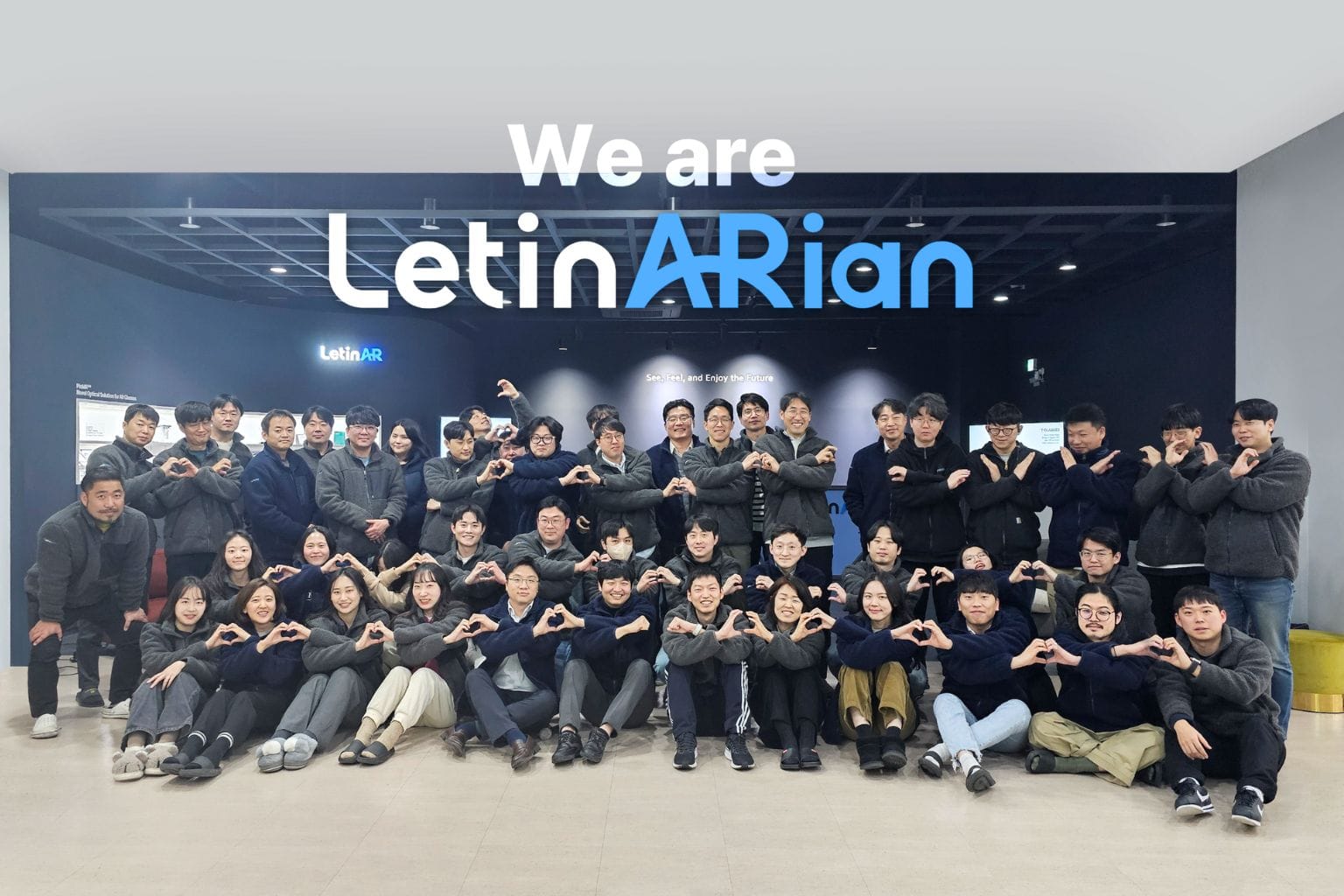
South Korean optical technology startup LetinAR has closed an $18.5 million funding round led by Korea Development Bank, with participation from Lotte Ventures, the investment arm of retail conglomerate Lotte Group, and additional undisclosed investors.
The raise brings total funding to $41.7 million. The company is targeting a public listing in South Korea in 2027.
Founded in 2016 by CEO Jaehyeok Kim and CTO Jeonghun Ha, who have been friends since high school, LetinAR builds the optical modules embedded inside AI smart glasses and augmented reality devices. Kim said the capital will go toward manufacturing scale-up to meet growing demand from global device makers.
LG Electronics, an early backer, has since launched its own AI eyewear development program, an indication of how seriously South Korea’s largest consumer electronics manufacturer views the category’s commercial potential.
ALSO READ: South Korea’s Naver Signs AI and Cloud MoU with TCS
The optical module is the component that determines whether a pair of AI smart glasses functions as a consumer product or stays a laboratory prototype. It must project a clear image into the user’s eye while remaining thin, light, and power-efficient enough to sit inside a frame that looks like ordinary eyewear.
Most current approaches involve a trade-off. Waveguide systems disperse light broadly across the lens, discarding a significant portion before it reaches the eye, which reduces image brightness and drains battery faster. Mirror-based birdbath systems direct light more efficiently but require a structure too bulky for everyday frames.
LetinAR’s PinTILT technology takes a hybrid approach, combining elements of both architectures to address the core limitations of each. The company says this produces brighter images and lower power consumption within a lens profile that resembles conventional eyewear. Competitors in the space include WaveOptics, DigiLens, and Lumus.
LetinAR’s modules are already shipping commercially. Japan’s NTT QONOQ Devices and Dynabook, formerly Toshiba Client Solutions, are among its existing customers. The company is also in R&D discussions with several major technology companies on next-generation AI eyewear, though it has not disclosed names.
One active deployment involves Aegis Rider, a Swiss deeptech company spun out of ETH Zurich’s Computer Vision Lab. Aegis Rider is developing an AI-powered augmented reality motorcycle helmet that overlays navigation, speed, and hazard alerts within the rider’s line of sight, rendered so the information appears tied to the road surface ahead rather than projected onto the visor. The helmet targets a commercial launch across European and Swiss markets in 2026.
Global shipments of AI smart glasses reached 8.7 million units in 2025, a more than 300 percent increase year on year, according to market research firm Omdia. Analysts project volumes will exceed 15 million units in 2026, with Meta, Google, Samsung, and Apple all advancing products in the category.
Disclaimer: This news is based on publicly available information. NervNow has not verified from the source independently.
LATEST FUNDING ROUNDS
Modal Labs Valued at $4.65B After Fresh $355M Raise
AI Startup Hark Valued at $6B After New $700M Funding
Status AI Bags $17M to Reinvent Social Media With Entertainment
Sigma Gets $80M to Grow Its AI Analytics Business