© 2026 NervNow™. All rights reserved.

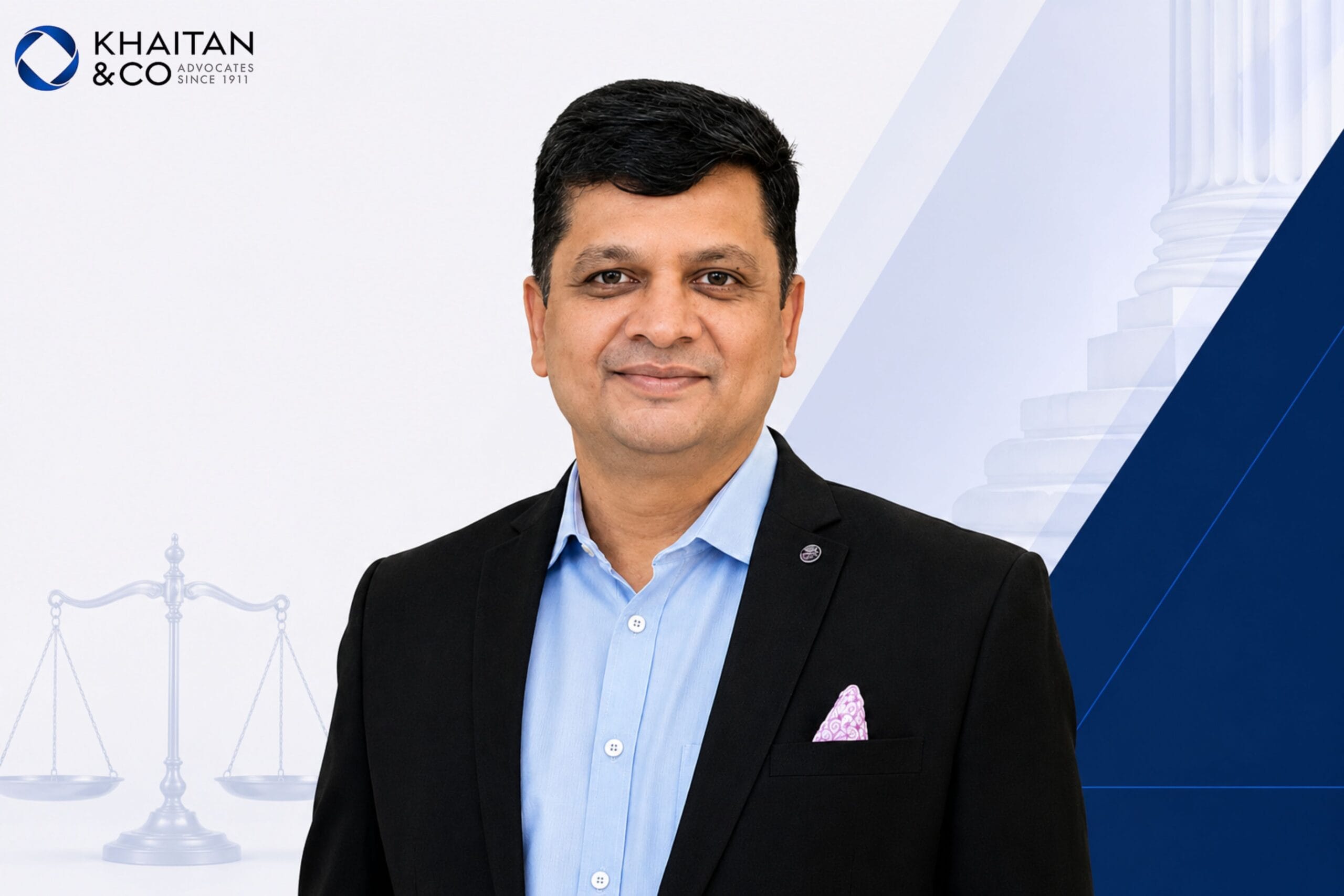

COO Vimal Choudhary on How Khaitan & Co is Putting Its Own AI to Work
Khaitan & Co built its own AI, a secure in-house platform called KAI 2.0, and set about teaching its lawyers to use it. COO Dr. Vimal Choudhary explains what that took, and what it changes.
NervNowSpecial Report
June 2026
AI inside India’s law firms
Part one of two · A NervNow conversation with Khaitan & Co
Putting AI to work inside a law firm
Khaitan & Co built its own AI, a secure in-house platform called KAI 2.0, and set about teaching its lawyers to use it. Chief operating officer Dr. Vimal Choudhary explains what that took, and what it changes.
For a profession that treats precedent as scripture and bills its work by the hour, artificial intelligence arrives as both promise and provocation. Khaitan & Co, one of India’s oldest law firms, spent the past year doing the thing most firms its size are still debating in committee, which is to build its own AI rather than wait for a vendor to sell them one. KAI 2.0 is an internal platform, sealed off from the open internet, that takes the first pass at research and document review and lets the firm’s lawyers build their own tools inside walls the firm controls, and the harder, slower half of the project has been convincing its lawyers to trust it.
Dr. Vimal Choudhary, the chief operating officer spearheading the transformation at the firm, shares why the firm built its own system rather than buying one off the shelf, where AI earns its place first inside a working practice, and what it actually takes to move a room full of trained sceptics from caution to confidence.
In conversation with
Dr. Vimal Choudhary
Chief Operating Officer, Khaitan & Co
Choudhary took over as Khaitan’s chief operating officer in December 2025 and sits on its executive committee, with the firm’s AI transformation within his remit. A chartered accountant by training, he spent more than twenty-three years at McKinsey, where he led the firm’s global capability centers in India. He was also a council member at NASSCOM.
The goal is not to automate legal work; it is to free up our lawyers to focus on the parts of their work where their expertise is irreplaceable.
QAI is already changing how legal work is delivered. How is Khaitan & Co using AI to become future-ready?
At Khaitan & Co, we have been deliberate about how we approach AI, treating it as a tool that can genuinely enhance the quality of legal work, rather than something to adopt simply because it is being talked about everywhere. We built proprietary infrastructure to deploy AI in a controlled, secure environment before rolling anything out more broadly, which gave us the space to learn without compromising client confidentiality or compliance standards.
Our AI platform, KAI, has now matured into KAI 2.0, and what makes it meaningful is that it was built around how our people actually work. It supports initial research, document review tasks, and also helps members develop precise prompts and purpose-built AI agents for their specific team needs. But the platform is only part of the story. The bigger investment has been the training and sensitization of people, ensuring that members, regardless of their comfort level with technology, understand how to use these tools well. When AI stops being something we experiment with and becomes part of how we naturally work each day, that is when the real impact will start to fully show.
QWhat are some use cases you are already seeing, or expect to see, at scale?
The areas with the clearest near-term potential are initial document review, legal research, and automating specific time-intensive internal processes. We have already started deploying tools in some of these areas, though we have been intentional about not rushing the rollout. Getting the training right and testing it before scaling matters more to us than being first.
For research and document review, I expect meaningful scale within the next few years. For more nuanced legal work, the kind that requires deep contextual judgment, professional expertise, and knowledge of how law actually operates on the ground, the timeline will be longer, and rightly so. The goal is not to automate legal work; it is to free up our lawyers to focus on the parts of their work where their expertise is irreplaceable.
QWhat safeguards are in place to ensure compliance? Are you using safe sandboxes to test new tools?
KAI 2.0 is an internal platform. It does not interact with external servers, and sensitive client information stays within our own infrastructure. In that sense, yes, it functions as a secure sandbox where members can explore, experiment, and build familiarity with AI without any risk to data security or client confidentiality. Our compliance protocols are built into the platform itself, not layered on top of it as an afterthought. This architecture was a conscious decision; we wanted a foundation that members could trust before asking them to embed it into their work.
QHow do you see law firm operations changing over the next decade because of AI?
The pace of change is faster than most people in the profession are willing to publicly acknowledge. Within the next two to three years, I expect AI to be doing substantive first-pass work on contract review, due diligence, regulatory mapping, and litigation research, not as an experiment, but as a standard part of how legal work is done. That is not a distant horizon; some of this is already happening.
What excites me more is what comes next. AI that can synthesize large bodies of precedent to surface risk patterns a lawyer might take days to identify, tools that can model how a regulatory change affects a client’s entire contract portfolio simultaneously, or systems that flag emerging compliance exposure before the client even knows to ask the question. These are not incremental efficiency gains; they change the very nature of the legal advice.
At the same time, none of this displaces the lawyer’s judgment. It sharpens it. The lawyer who uses these capabilities well will consistently outperform the one who does not, and that gap will widen quickly. The firms that will define the next decade are the ones investing now into building those capabilities thoughtfully and at scale.
QWhat are the biggest challenges to firm-wide AI adoption, and how are you addressing them?
Across the legal profession broadly, the challenges are fairly consistent regardless of firm size or geography. The technology itself is often the most straightforward part. The harder work is cultural and organizational.
The first challenge is trust. Lawyers are trained to be precise and accountable, and AI hallucinations, where a system produces confidently wrong output, cut directly against that instinct. That concern is legitimate and should not be dismissed. The way to address it is not to oversell AI’s reliability, but to design workflows where human oversight is genuinely built in, and to be transparent with practitioners about where AI tools are strong and where they are not.
The second challenge is relevance. Generic AI training programs that do not connect to how a specific practice group actually works tend to produce polite attendance and limited adoption. What drives real change is when a lawyer sees a tool solve a problem they personally experience every day. That is the moment skepticism turns into advocacy.
QWhat are the most common concerns lawyers raise about AI, and how can they be addressed?
Hallucinations, that is, AI generating plausible-sounding but factually incorrect information, top the list, and with good reason. In legal work, the cost of an undetected error is high. The answer is not to pretend this limitation does not exist, but to design workflows where human review is built in as a non-negotiable step, not as an optional check. Right now, all AI-assisted work at the firm involves careful human oversight, and we expect that to remain the case for the foreseeable future.
The broader concern underneath the hallucination question is really about trust. Lawyers want to know that a tool will not quietly make their work worse while appearing to make it faster. Building that trust takes demonstrated reliability over time, transparent communication about what AI can and cannot do, and an organizational culture where raising concerns about a tool’s output is encouraged rather than seen as being resistant to change.
Part one of two · The Khaitan report
This is the first of two conversations from NervNow’s report on AI inside Khaitan & Co. The second, with partner Madhav Khosla on the legal questions the move raises, from privilege to precedent to the rules still taking shape, is here: Where the Law Stands on AI.
More interviews from NervNow
- Tata 1mg’s Anubhav Mehrotra on AI, digital empathy, and why the technology is the easier part
- Nirman Ventures’ Nikhil Choudhary on the next big $100B bet in AI
- Amit Sinha on AI’s breakthrough role in payments, fraud, and programmable money
- Enhancement does not fix a weak foundation: Dilpreet Singh, ITC Hotels, on AI and loyalty